Vrak – Museum of Wrecks Review
Tickets & Tours
Compare ticket options and guided tours from trusted booking partners.
We may earn a commission if you book through these links.
Historical Context
Vrak – Museum of Wrecks, located in Stockholm, Sweden, offers a focused lens on maritime archaeology and the underwater cultural heritage of the Baltic Sea region. Emerging from a tradition of Swedish maritime exploration and historical research, the museum reflects the nation's longstanding relationship with the sea. Sweden’s extensive coastline, archipelagos, and rich shipping history have made maritime archaeology central to understanding the country’s past. The Baltic Sea’s cold, brackish waters create unique preservation conditions for shipwrecks, resulting in remarkable finds that capture centuries of naval technology, trade, and conflict.
Founded by the organization Järnålderscenter and linked to the Swedish National Maritime Museums, Vrak is tasked with researching, protecting, and presenting these submerged cultural assets. Its establishment recognizes the growing importance of maritime wrecks not just as historical artifacts but also as scientific data sources revealing aspects of shipbuilding, warfare, and commerce otherwise difficult to access. By focusing on wrecks from various historical periods, the museum situates itself at the intersection of archaeology, history, and marine science, contributing to public understanding of regional and international maritime heritage.
What You See on Arrival
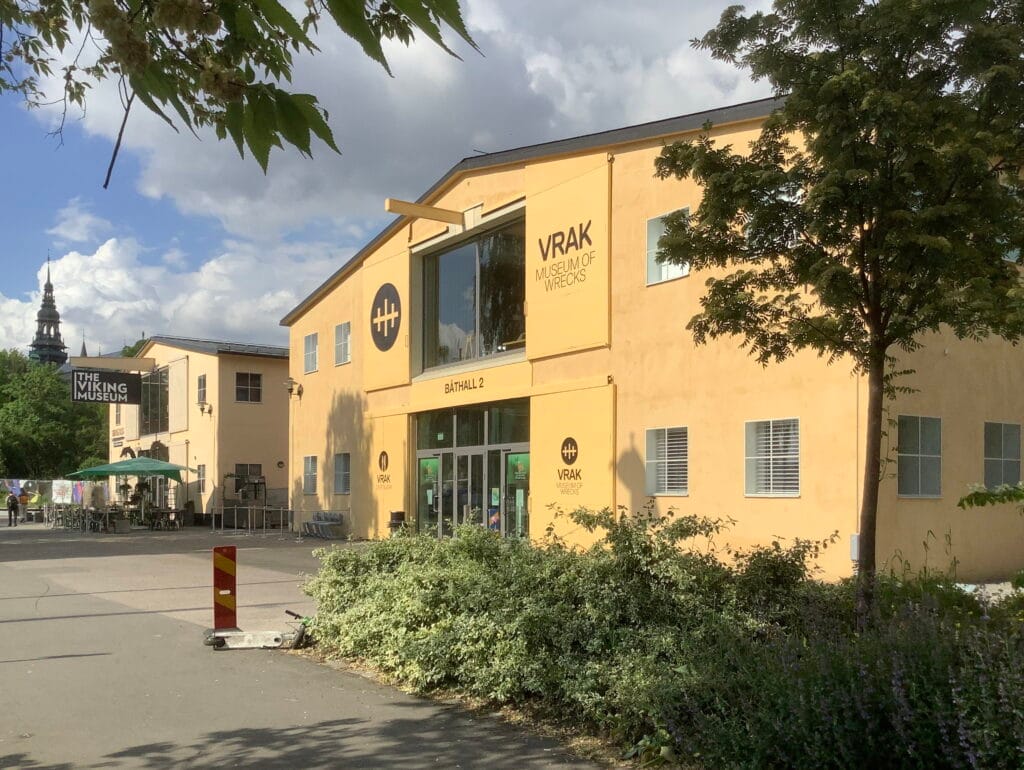
The museum’s physical environment and public presentation emphasize the sense of the underwater world and the wreck itself. Visitors approaching Vrak will encounter a modern museum building situated in the northern part of Stockholm, close to the water. The exterior architecture engages with maritime themes without resorting to clichéd design motifs. Large windows and open spaces allow daylight to fill the interior, creating a connection between the museum’s contents and their aquatic context.
Upon entry, the space is designed to orient visitors towards the submerged stories the museum seeks to tell. Visual and textual materials introduce the Baltic Sea’s unique environment and its significance in preserving wrecks. There is an immediate focus on the intersection of archaeology and natural science, preparing visitors for the technical and historical information to come. The museum identity is clear—this is a specialized institution with a defined narrative combining research, conservation, and public education around shipwrecks and underwater cultural heritage.
Highlights and Key Exhibitions
Vrak’s principal strength lies in its collection and interpretation of wrecks from the Baltic Sea, often spanning from the Viking Age through early modern periods and into modern naval history. Due to preservation conditions in these waters, shipwrecks here can retain organic materials, such as wood and textiles, that rarely survive in other marine environments. This distinctive quality informs the museum’s narrative and the artifacts on display.
One of the exhibition’s core elements is the presentation of underwater archaeological finds. Objects recovered from wreck sites include not only ship parts but also cargo, personal belongings of sailors, weaponry, and items related to everyday life on board. Such artifacts construct a detailed picture of historical maritime activity, technological advances, and cultural exchange.
An important aspect of the museum is its explanation of the archaeological and conservation processes. Visitors are introduced to the methods used in locating, excavating, and preserving wrecks, stressing the interdisciplinary nature of maritime archaeology. These explanations deepen the understanding of why wrecks are more than just sunken ships—they are complex repositories of information requiring careful scientific interpretation.
The museum also devotes space to specific historically significant wrecks from the Baltic Sea. Examples are well-preserved vessels dating back to the 16th and 17th centuries, illustrating changes in shipbuilding techniques and naval history. Swedish naval engagements and commercial routes influence many of the exhibited wrecks, providing a regional context while also touching on broader European maritime history.
Another feature is the coverage of modern challenges in underwater cultural heritage, such as environmental threats to wreck sites and issues related to underwater heritage protection. This contemporary focus adds relevancy for a global audience concerned with conservation.
While the exhibitions are primarily permanent, they are curated with an emphasis on clarity and engagement, avoiding dense technical jargon without oversimplifying. High-quality multimedia presentations, digital reconstructions, and physical models complement the artifacts, helping visitors visualize the wrecks as complete vessels rather than isolated fragments.
Visitor Experience
The museum’s layout and interpretive strategy cater to a range of audiences—from those with a casual interest in maritime history to specialized visitors with archaeological or scientific backgrounds. The displays are generally well paced, encouraging a measured engagement rather than a hurried walkthrough. For those unfamiliar with maritime archaeology, the introductory sections and thematic zones help scaffold understanding, gradually introducing technical details alongside human stories.
Interpretation blends textual panels, images, and digital media, which collectively illustrate both the wrecks themselves and the broader context. However, given the museum’s subject matter, the experience could be more rewarding for visitors willing to invest attention in nuanced information and archaeological processes. Casual visitors seeking entertainment or visually spectacular exhibits might find some sections dense or specialized.
The museum’s focus on the Baltic Sea region means that its appeal may be strongest for visitors interested in Scandinavian history, naval warfare, or maritime archaeology specifically. While the collection is regionally centered, the preservation and research approaches offer insight into broader trends in underwater heritage management that are applicable internationally.
Wayfinding within the museum is generally straightforward, supporting clear visitor flow across thematic sections. The balance between physical artifacts and digital interpretation helps prevent sensory overload while maintaining engagement. The museum’s design pushes visitors to consider not just the vessels but the historical, technical, and environmental contexts of underwater discovery.
One limitation for some visitors may be the smaller scale of the institution compared to larger maritime or national museums. Though the depth of information is strong, the physical scope is relatively contained. As a specialized museum, Vrak lacks some of the broader historical and cultural narratives typical of general history museums, focusing instead on the archaeology and heritage of shipwrecks. This focus is not a drawback per se but informs its audience fit and visit expectations.
Tickets, Access, and Planning
Details regarding admission fees, opening hours, accessibility features, guided tours, and other visitor services should be verified through Vrak’s official website ahead of any visit. Such practical information can vary seasonally and by special arrangements, so potential visitors should consult authoritative sources rather than assuming details from secondary mentions.
While the museum is situated in Stockholm, a city with comprehensive public transport, prospective visitors might want to check current travel and access conditions. Information on wheelchair accessibility, family-friendly facilities, and visitor amenities is best sourced directly from the museum’s communications to ensure an up-to-date understanding.
Because Vrak is a specialized institution with a primary focus on maritime archaeology and conservation, it is advisable to plan visits with an understanding of the museum’s thematic emphasis. Those particularly interested in shipwrecks, marine archaeology, historical maritime trade, or naval history will find the visit more satisfying.
Final Verdict
Vrak – Museum of Wrecks occupies a distinct niche in Stockholm’s cultural landscape by bringing underwater archaeology and maritime heritage to public attention through a focused, research-driven approach. It succeeds in presenting the unique archaeological legacy of the Baltic Sea’s shipwrecks with a combination of well-chosen artifacts, multimedia interpretation, and scientific context.
The museum is a strong option for visitors with interests in maritime history, archaeology, and heritage preservation, especially those intrigued by how environmental conditions shape artifact survival. Its emphasis on the interdisciplinary nature of maritime archaeology and the practical conservation challenges faced by wreck sites distinguishes it within the range of historical museums.
However, the specialized content and regional concentration mean it will appeal less to casual museum-goers looking for broad overviews of Swedish history, or visitors seeking more generalized narratives. The museum’s modest physical scale and focused exhibitions should be regarded as features of a targeted cultural institution rather than shortcomings, but those expecting more extensive or varied collections may find the scope somewhat limited.
Overall, Vrak offers a coherent, informative exploration of shipwrecks and maritime archaeology, framed through the lens of the Baltic Sea’s unique underwater environment. It functions well as an educational resource and a platform for public engagement with underwater cultural heritage, but visitors new to maritime archaeology should be prepared to engage with detailed scientific and historical information. For thorough and updated visitor information, including entry requirements and services, checking the museum’s official website is recommended before planning a trip.