Museo Automovilístico y de la Moda Review
Automobile Museums · Málaga, Spain. Located in Málaga, Spain, the Museo Automovilístico y de la Moda (Automobile and Fashion Museum) presents an unusual dual focus that reflects evolving attitudes towards cultural heritage and leisure in southern Spain. Opened in…
Automobile Museums · Málaga, Spain. Located in Málaga, Spain, the Museo Automovilístico y de la Moda (Automobile and Fashion Museum) presents an unusual dual focus that reflects evolving attitudes towards cultural heritage and leisure in southern Spain. Opened in…
Best forScience, technology, hands-on learning
Review focusVehicle collections, design history, and visitor planning
Historical Context
Located in Málaga, Spain, the Museo Automovilístico y de la Moda (Automobile and Fashion Museum) presents an unusual dual focus that reflects evolving attitudes towards cultural heritage and leisure in southern Spain. Opened in 2010, the museum was established by José Carlos Navarro Rodrigo, a private collector whose interests span vehicles and sartorial history, grouping these two seemingly unrelated areas under one institution. The choice of Málaga, a city with a growing tourist industry and rich artistic traditions, situates the museum in a broader regional strategy aimed at diversifying cultural offerings beyond conventional art galleries or historical sites.
The museum’s foundation coincided with a period in Spain when private collections were increasingly taking public form, allowing enthusiasts to share their passions on a larger scale. The collection assembled here exemplifies a museum model that blends elements of industrial design, cultural history, and lifestyle artifacts. It is not a state-run institution but a private enterprise, which influences both its size and scope. While the automobile exhibits focus on iconic and historically significant vehicles dating mostly from the early to mid-20th century, the fashion section highlights costume design from roughly the same period, covering haute couture and accessories. Together, these two areas present a perspective on the aesthetics and social context of the 20th century’s material culture.
What You See on Arrival
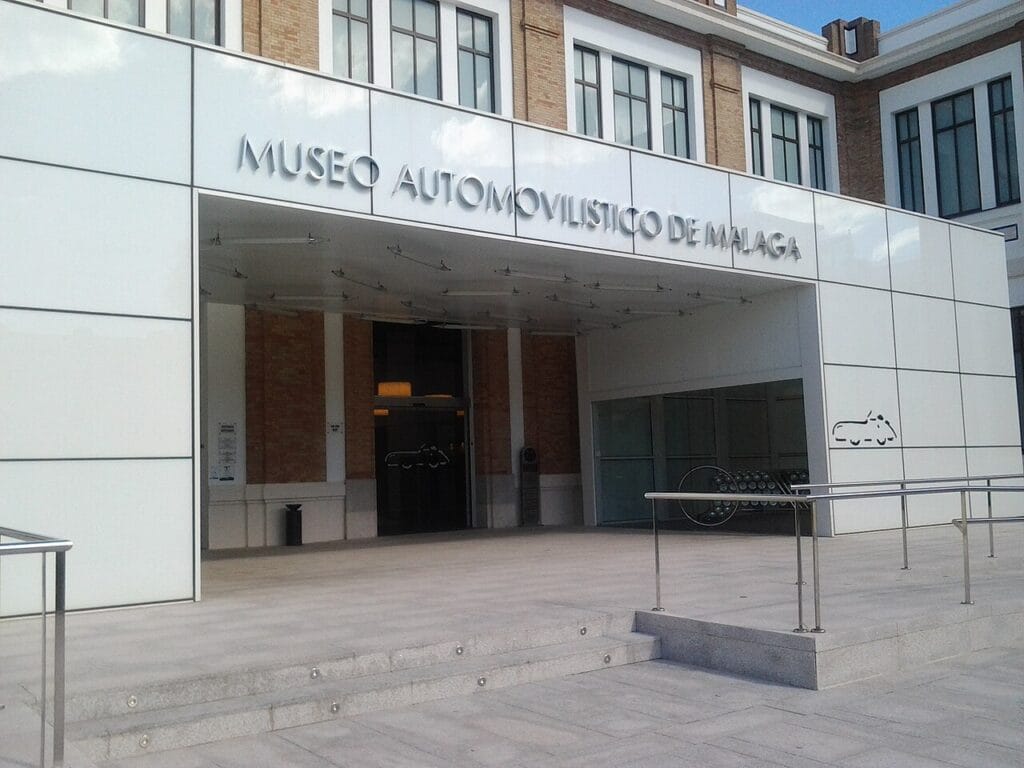
Visitors approaching the Museo Automovilístico y de la Moda find a building that signals both elegance and refinement, with an architectural style blending classical and contemporary elements. Its location is somewhat apart from Málaga’s city center, situated in an area that prioritizes visitor parking and vehicle access, which is fitting given the museum’s automotive focus. The initial impression is of a private collection presented with a collector’s attention to display, rather than a large, institutional museum with expansive public amenities.
From the outset, the visitor is made aware that the museum synthesizes two lifestyle realms: automobile and fashion cultures, which the entrance and lobby area subtly introduce. The reception area prepares guests for a museum experience that is less about overarching historical narrative and more about appreciation of objects as design and cultural symbols. Interpretive materials and wall graphics tend to orient visitors towards the personalities and stories behind the collections rather than strict chronological or technical detail.
The spatial layout, dividing the automobile section from the fashion part, helps visitors mentally shift focus as they move through the building. The lighting and display cases are designed to highlight craftsmanship—paint finishes on cars and textiles or embellishments on garments—which reinforces the ornamental and heritage qualities of the exhibits. Overall, the arrival experience frames the museum chiefly as a space for discovery and admiration of design and style, rather than for academic study or deep historical investigation.
Highlights and Key Exhibitions
The Museo Automovilístico y de la Moda’s core value lies in the breadth and quality of its collection, which, while not encyclopedic, offers a concentrated overview of select significant vehicles paired thoughtfully with fashion artifacts from roughly the same historical epochs.
The automobile collection is notable for its range of models that emphasize the early and mid-20th century, a period when cars progressed from luxury novelties to symbols of modernity and freedom. Included are examples from well-regarded European manufacturers, reflecting both prestige and design innovation. Some vehicles stand out due to their rarity, aesthetic condition, and the narratives connected to them, such as models with royal provenance or ties to cinematic history. The displays do not limit themselves solely to static exhibition; some vehicles maintain operational condition, adding an element of dynamic preservation.
The fashion segment complements this automotive collection by showcasing haute couture, accessories, and fashion pieces that evoke the social milieus associated with car ownership and travel in the 20th century. Visitors encounter evening gowns, daywear, menswear, hats, gloves, and shoes, many representing the changing silhouettes and materials that characterize European fashion through the decades. The clothing is accompanied by contextual information that connects style trends with broader cultural movements, although this connection is generally thematic and selective rather than comprehensive.
Particular attention is given to the relationship between automotive and fashion worlds—how car culture influenced clothing choices and vice versa. This curation offers an interesting, if somewhat specialized, lens on how material culture reflects social aspirations and technological optimism. One can appreciate the craftsmanship that links a well-tailored suit with the polished lines and fine details of a classic automobile.
While temporary exhibitions are not consistently on view and not broadly documented, the permanent holdings themselves manage to sustain interest through diversity and quality. The museum’s fidelity to preservation is clear, with many objects maintained in excellent condition that allows for detailed viewing. However, the focus remains relatively narrow, with the bulk of vehicles and clothing coming from a similar time frame and mostly European contexts. That focus may appeal more to visitors interested in design and lifestyle history than those seeking an exhaustive history of the automobile or fashion industries.
Visitor Experience
The visitor experience at the Museo Automovilístico y de la Moda tends toward an intimate, paced exploration rather than a bustling, high-traffic environment. The museum functions well for those who appreciate design detail, historical curiosities, and the relationship between lifestyle objects from the 20th century. The physical layout and interpretive approach generally suit small groups or individual visitors with an interest in craftsmanship rather than large family outings or educational groups with diverse age ranges.
Interpretation is provided through labels, panels, and occasional multimedia elements, although the depth of interpretative content is variable. The focus often rests more on the aesthetics and provenance of objects than on deep technical or contextual analysis. This decision creates an accessible experience that emphasizes the beauty and style of the collection while leaving those looking for detailed industrial history or socio-economic conditions somewhat underserved.
The museum’s combined theme can be challenging to convey to all visitors, especially those with a strong automotive interest but less enthusiasm for fashion history, or vice versa. Yet for visitors willing to engage with both, the juxtaposition can be rewarding and offer a new perspective on the cultural milieu of the early and mid-20th century. The relationships drawn between fashion and automobiles hint at social histories but do not provide exhaustive narrative coverage.
One practical aspect is that the collection’s focus on quality rather than quantity means the visit can be comfortably completed without fatigue, allowing viewers to absorb details and enjoy the spaces calmly. The museum’s somewhat specialized collection will appeal more to adults and older teens with refined taste or collector interests rather than young children or those seeking interactive, hands-on experiences.
Tickets, Access, and Planning
Given the museum’s private status and focused collection, potential visitors should verify current details directly from the museum’s official website or contact points before planning a visit. Information on opening hours, admission fees, tour availability, accessibility, and other visitor services may vary or change without broad public notice.
The museum’s location outside Málaga’s main historic areas suggests a visit by private transport or taxi may be more straightforward, though public transport options could be available nearby. Visitors should prepare for its layout and scope: it is more a gallery of objects than a participatory environment, and its dual themes mean some visitors may want to consider their specific interests before allocating time.
There is no widely confirmed information that the museum provides regular guided tours or audio guides; therefore, visitors interested in deeper contextual understanding should consider self-guided study or prior research. Likewise, facilities tailored to large groups, child-friendly features, or frequent special programming are not prominently noted in public information, suggesting the space caters primarily to niche audiences.
Final Verdict
The Museo Automovilístico y de la Moda offers a distinct approach by combining two lifestyle collections that reflect the tastes and material culture of 20th-century Europe. Its collection, while selective, contains well-maintained vehicles and fashion pieces that together narrate a shared history of design, luxury, and social aspiration during an era when car ownership and fashion were potent symbols of status.
This institution will satisfy visitors interested in craftsmanship, design details, and the cultural implications of style. Its quieter atmosphere, coupled with a more focused interpretive approach, suits visitors who prefer contemplation and object-based appreciation over comprehensive historical interpretation or interactive programming.
However, visitors should not expect the museum to serve as a broad historical survey of automotive or fashion history. The collection is concentrated in scope, and the dual thematic approach may not appeal equally to all audiences. Practical considerations—such as location, potential limitations in visitor services, and the specificity of the collection—warrant advance checking of the museum’s current public access arrangements.
In sum, the Museo Automovilístico y de la Moda stands as a specialized institution that offers a refined, visually engaging experience emphasizing mid-century design and lifestyle culture. Its value lies in quality and thematic coherence rather than in breadth or high volume, making it a rewarding visit for those with particular interests in classic automobiles and period fashion within a European cultural frame.