Saab Car Museum Review
Automobile Museums · Trollhättan, Sweden. The Saab Car Museum, located in Trollhättan, Sweden, provides a comprehensive narrative of one of Sweden’s most distinctive automotive manufacturers. Founded in 1937 as an aircraft company, Saab AB expanded into automobile production wit…
Automobile Museums · Trollhättan, Sweden. The Saab Car Museum, located in Trollhättan, Sweden, provides a comprehensive narrative of one of Sweden’s most distinctive automotive manufacturers. Founded in 1937 as an aircraft company, Saab AB expanded into automobile production wit…
Best forTransport history, engineering, families
Review focusVehicle collections, design history, and visitor planning
Historical Context
The Saab Car Museum, located in Trollhättan, Sweden, provides a comprehensive narrative of one of Sweden’s most distinctive automotive manufacturers. Founded in 1937 as an aircraft company, Saab AB expanded into automobile production with the launch of its first car, the Saab 92, in 1949. The company became known for its innovative engineering and design, integrating aerospace-inspired technology into its vehicles. Throughout the latter half of the twentieth century, Saab solidified a reputation for safety, durability, and a unique Scandinavian design ethos. However, the firm faced ongoing financial and market challenges, struggling to compete with larger automakers. In 2011, Saab Automobile filed for bankruptcy, marking the end of its original line of passenger cars.
The museum memorializes this history, charting the trajectory from Saab’s aerospace beginnings through its foray into cars, and eventually documenting the company’s decline. As a cultural archive, the museum preserves both the technical achievements and the social impact of a brand that cultivated a loyal following in Sweden and abroad. Through static displays and archival material, it attempts to present a balanced view that encompasses the innovation and the commercial realities behind Saab’s legacy.
What You See on Arrival
Upon approaching the Saab Car Museum, visitors note its straightforward and industrial exterior, reflecting the company’s engineering roots rather than any grandiose architectural statement. The museum is housed in a building formerly associated with Saab’s manufacturing heritage, which lends a sense of authenticity and historical continuity to the visit. Its setting in Trollhättan, a city deeply tied to Saab’s operational history, further anchors the museum within the local context.
The entrance area frames the visit as an exploration of automotive history rooted in Swedish design and technology. The signage and branding emphasize Saab’s identity as a purveyor of uniquely engineered vehicles rather than simply a car manufacturer. For those encountering the museum’s facade and lobby for the first time, the tone is more technical and historical than commercial or entertainment-focused. This aligns with the museum’s role as an educational and preservation institution, rather than a tourist attraction aimed at a mass audience.
The initial impression is one of clarity and professionalism, with little in the way of decoration or flashy presentation. This may signal that the museum prioritizes substance and archival depth over visitor spectacle.
Highlights and Key Exhibitions
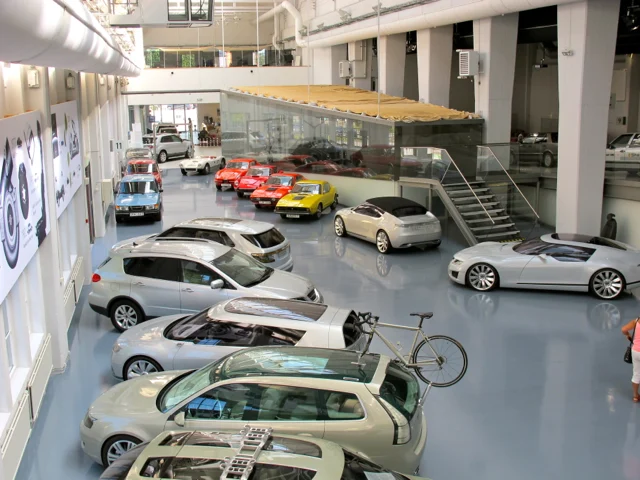
The collection itself is distinctive for its breadth, covering the entire span of Saab’s automotive innovation. The core of the museum is the display of several original Saab production models, including the Saab 92, 93, and 95, which not only exhibit the stylistic and technical evolution of the brand but offer insight into post-war automotive design trends in Scandinavia. These early models are noteworthy for their aerodynamic curves and compact proportions, features born out of Saab’s aerospace heritage. Later models, such as the Saab 99 and the turbocharged 900, showcase the company’s continued efforts to innovate, especially in areas like turbocharging and safety features.
Another key focus is the company’s pioneering work in automotive safety. Saab was among the early adopters of safety features that are now standard in the industry, such as side-impact protection and seatbelt pre-tensioners. These developments are often highlighted through educational panels and sometimes through auxiliary exhibitions involving crash test data and design blueprints.
The museum also houses a range of accessories, engineering documents, advertisements, and memorabilia that place the cars within their cultural and commercial milieu. This contextual material enriches the visitor’s understanding of how Saab positioned its vehicles in the market, emphasizing reliability and individuality.
One notable strength of the museum is its attention to the technical specifics of vehicle engineering—many exhibits include detailed descriptions of engine design, chassis development, and aerodynamics. This makes the museum particularly suitable for visitors with an interest in mechanics or automotive technology. Historic racing cars and prototypes occasionally feature in the collection, illustrating Saab’s involvement beyond passenger cars and highlighting experimental models.
Visitor Experience
The Saab Car Museum appears designed to offer a methodical and in-depth experience rather than a fast-paced, entertainment-driven visit. This approach suits enthusiasts of automotive history and engineering but could be less engaging for casual visitors or those seeking a broader cultural experience. Interpretation is generally clear, with technical explanations augmented by historical context, though at times the presentation can feel dense or heavily text-based.
The flow through the museum is likely linear, guiding visitors chronologically through Saab’s development phases. This arrangement supports a coherent historical narrative but may challenge visitors looking for thematic rather than chronological displays. The museum’s focus on the company’s engineering heritage and industrial context is consistent but may risk limiting interest for audiences more attracted to social history or aesthetic design aspects.
While the detail-oriented nature of the displays is an asset to serious enthusiasts, it may demand a degree of prior interest or knowledge to fully appreciate. The presence of varied vehicle models helps maintain visual interest, but the museum’s atmosphere is unlikely to be highly interactive or hands-on.
Tickets, Access, and Planning
Visitors interested in the Saab Car Museum should prepare for a visit that emphasizes information and reflection over entertainment. As with many specialized automotive museums, practical details such as opening hours, ticket prices, availability of guided tours, or audio guides can vary, and should be checked in advance on the official website. This is particularly pertinent given the museum’s location in a smaller city and potential fluctuations in seasonal opening times.
Information about accessibility or family-friendly facilities is not prominently noted in public sources, so prospective visitors with specific needs or young children might need to inquire directly. Transport options in Trollhättan include regional trains and buses, but it is advisable to verify current connections ahead of time, as the museum is not in a major metropolitan area.
Because the museum may attract a niche audience primarily composed of Saab enthusiasts, engineers, or historians, it is reasonable to anticipate quieter periods outside of any special events or group visits. This may be preferable for those seeking an unhurried examination of the exhibits, but it also means that amenities such as cafés or shops might be limited compared to larger museums.
Final Verdict
The Saab Car Museum offers a focused and detailed exploration of a uniquely Swedish automotive brand, emphasizing technological innovation and the company’s industrial heritage. Its collection of production models, safety advancements, and archival materials provides a valuable resource for understanding Saab’s place in automotive history. The museum benefits from its location in Trollhättan, a city intimately linked with Saab’s manufacturing legacy.
However, the museum’s appeal is tailored predominantly to those with a specific interest in cars, engineering, or Scandinavian industrial history. Its presentation style leans heavily on technical information and formal displays, which may not engage a general audience seeking broader cultural or interactive experiences. The lack of extensive visitor amenities or wide-ranging interpretive methods could also influence the visit depending on individual expectations.
For those willing to commit to an educational and somewhat specialized museum experience, the Saab Car Museum delivers a coherent and rich narrative of an automotive brand that balanced innovation with commercial challenges. Visitors should plan carefully and consult the official channels to confirm practical details before traveling, especially considering its location outside major tourist routes.
In summary, the Saab Car Museum stands as a solid archival and celebratory institution for Saab aficionados and automotive historians, while less suited for casual tourists seeking dynamic or highly interactive displays. Its strength lies in historical authenticity and detailed engineering context rather than broad public entertainment.