Leopold Museum Review
Art Museums · Vienna, Austria. Situated in Vienna's Museumsquartier, the Leopold Museum serves as a vital repository of modern Austrian art, right at the heart of one of Europe's most culturally dense cities. Established in the late 20th century,…
Art Museums · Vienna, Austria. Situated in Vienna's Museumsquartier, the Leopold Museum serves as a vital repository of modern Austrian art, right at the heart of one of Europe's most culturally dense cities. Established in the late 20th century,…
Best forMasterpieces, architecture, cultural history
Review focusCollection highlights, building, visitor flow
Historical Context
Situated in Vienna's Museumsquartier, the Leopold Museum serves as a vital repository of modern Austrian art, right at the heart of one of Europe's most culturally dense cities. Established in the late 20th century, it is rooted in the remarkable private collection of Rudolf Leopold, whose passion for early 20th-century Austrian art shaped the museum's core identity. This institution offers crucial insight into the Viennese Modernism movement, showcasing the artistic evolution during a time of profound political and social upheaval in Austria. Emphasizing works by key figures such as Egon Schiele and Gustav Klimt, the museum provides an essential bridge between classical Viennese traditions and avant-garde modernism. The Leopold Museum not only preserves but also interprets and contextualizes the complexities of this transformative era, making it indispensable for understanding the artistic and cultural dynamics of early 20th-century Austria.
What You See on Arrival
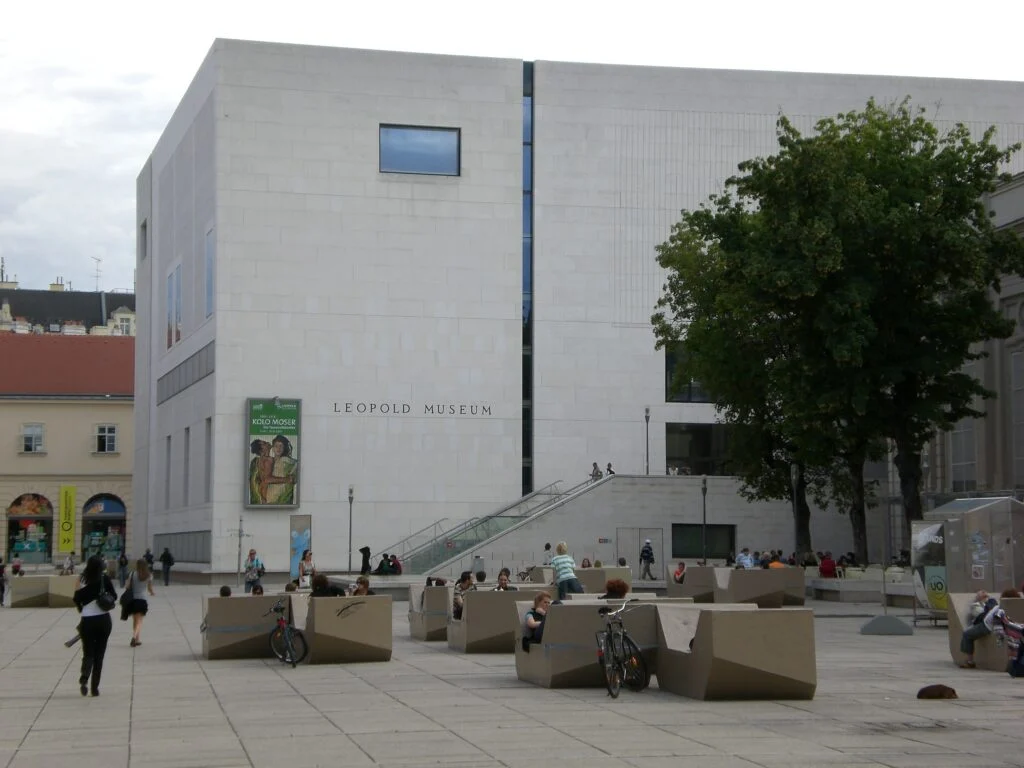
Approaching the Leopold Museum, visitors are immediately struck by its distinctive architectural presence amidst the eclectic Museumsquartier complex. The building’s modernist façade, with its clean lines and understated glass surfaces, signals a contemporary approach to housing a collection rich in historic significance. The entrance area leads directly into a spacious atrium that offers a welcoming and light-filled environment, combining the functions of ticketing, orientation, and public gathering. The museum is clearly signposted within the broader cultural district, making it straightforward to locate among the cluster of Vienna’s prominent museum institutions. Outside, the Museumsquartier itself provides an engaging blend of open spaces and urban art installations, setting a vibrant, creative tone even before stepping inside the museum. This transitional experience primes visitors for a journey through art that balances historical depth with modern accessibility.
Highlights and Key Exhibitions
At the heart of the Leopold Museum’s appeal lies its unparalleled collection of Austrian Expressionism and Modernism, with a particular focus on Egon Schiele. Schiele’s works, renowned for their emotional intensity and striking chiaroscuro, form a core component of the display. Visitors encounter iconic self-portraits and figurative studies that reveal the artist’s psychological depth and technical mastery. Alongside Schiele, the museum houses a substantial number of Gustav Klimt pieces, illustrating his pivotal role in Viennese Secession and the transition towards modern art. The collection extends beyond these two luminaries to include works by Oskar Kokoschka and Richard Gerstl, broadening the narrative of artistic innovation during the early 1900s.
The curatorial approach within the Leopold Museum is both chronological and thematic, ensuring that visitors can trace artistic developments while also engaging with specific motifs and styles. The permanent collection is complemented by carefully curated special exhibitions, which rotate regularly to highlight lesser-known artists or particular facets of the broader European modernist movement. The museum also displays decorative arts and design elements from the same period, contextualizing the fine art within wider cultural currents such as Viennese Jugendstil.
Visitor Experience
Navigating the Leopold Museum offers a considered balance of depth and accessibility. The layout is logical and intuitive, preventing any sense of overwhelm despite the density of the collection. Labels and explanatory texts are thorough without being overly academic, making the museum suitable for both art aficionados and those new to early 20th-century Austrian art. Audio guides and digital resources enhance engagement, providing additional layers of interpretation around key pieces and artists.
The atmosphere within the galleries is contemplative, supported by controlled lighting and neutral wall tones designed to foreground the artworks themselves. Seating areas throughout the museum allow visitors to rest and reflect, contributing to a relaxed and unhurried experience. The museum’s café and bookshop further encourage visitors to linger, offering a selection of art-related books and souvenirs that extend the museum visit beyond the gallery spaces.
Tickets, Access, and Planning
Planning a visit to the Leopold Museum requires some attention to timing, as there are peak periods during weekends and holidays when the museum can be quite busy. Ticketing options provide flexibility, with single-entry tickets as well as combination passes available for those wishing to explore multiple museums in the Museumsquartier. Advance online booking is recommended to avoid queues, particularly during high season.
Accessibility is well addressed; the museum is fully wheelchair accessible, with lifts and ramps facilitating smooth movement throughout the venue. For international visitors, information desks offer multilingual support, and key materials are available in several languages. The museum’s proximity to public transportation in Vienna’s efficient network makes it easily reachable without a car. Parking options nearby are limited, reinforcing the suggestion to utilize the city’s public transit system.
Final Verdict
The Leopold Museum stands out as a cornerstone institution for the understanding and appreciation of Viennese modern art. Its focused yet comprehensive collection, highlighting figures such as Schiele and Klimt, offers a deeply enriching experience that reflects Austrian cultural identity through the early 20th century. The museum’s thoughtful presentation, coupled with an environment conducive to reflection and learning, makes it a compelling destination for a broad spectrum of visitors. While the museum can attract crowded periods, its efficient layout and range of visitor services mitigate this potential drawback.
In sum, the Leopold Museum is essential for anyone seeking insight into Austria’s artistic heritage within the context of modernism. It balances scholarly depth with accessibility, making it a rewarding experience whether approached through a dedicated academic lens or as a culturally curious traveler. Nestled within Vienna’s dynamic Museumsquartier, the museum not only preserves but actively celebrates one of the most vibrant and influential periods in Austrian art history.