National Museum of Anthropology Mexico City Review
Archaeology Museums · Mexico City, Mexico. The National Museum of Anthropology in Mexico City stands as a towering emblem of Mexico’s rich and diverse cultural heritage. Established in 1964, the museum was conceived during a period marked by an intensified…
Archaeology Museums · Mexico City, Mexico. The National Museum of Anthropology in Mexico City stands as a towering emblem of Mexico’s rich and diverse cultural heritage. Established in 1964, the museum was conceived during a period marked by an intensified…
Best forMasterpieces, architecture, cultural history
Review focusCollection highlights, building, visitor flow
Historical Context
The National Museum of Anthropology in Mexico City stands as a towering emblem of Mexico’s rich and diverse cultural heritage. Established in 1964, the museum was conceived during a period marked by an intensified effort to define and celebrate the nation’s pre-Hispanic past as a foundational element of Mexican identity. It was designed not only to house significant archaeological and anthropological artifacts but also to present an integrated narrative of the indigenous civilizations that thrived across Mesoamerica before Spanish colonization. The museum’s location in Chapultepec Park, a sprawling urban green space, further underscores its cultural significance and accessibility. The architecture itself, notable for its modernist design, merges aesthetic expression with functional exhibition space, reflecting the post-revolutionary Mexican ambition to foster a modern nation grounded in ancient roots. Over the decades, the National Museum of Anthropology has acquired a reputation for being one of the most important institutions of its kind in the world, housing treasures ranging from Aztec and Maya artifacts to pieces representing the country’s diverse indigenous groups today.
What You See on Arrival
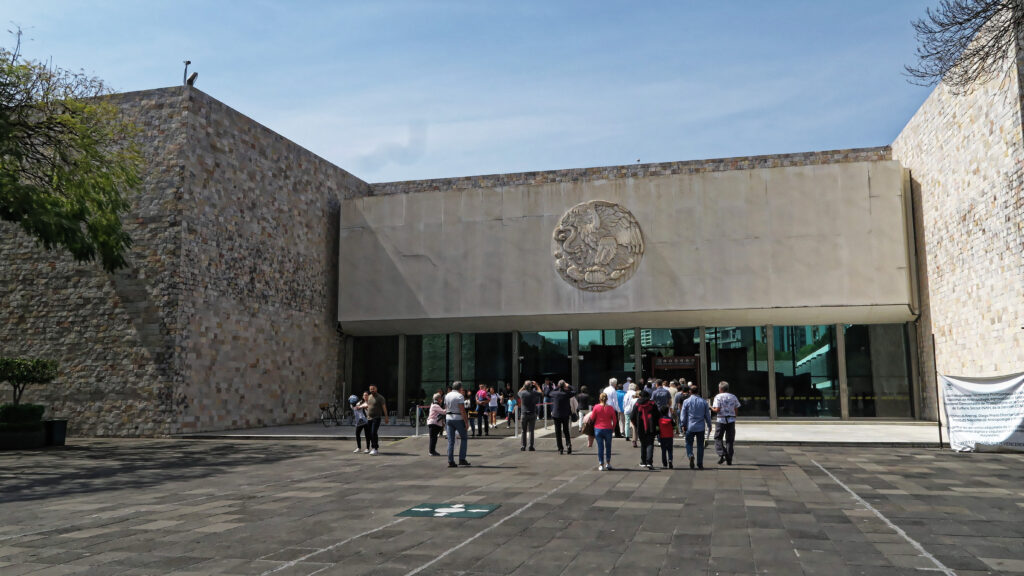
Approaching the National Museum of Anthropology, visitors are immediately struck by the museum’s iconic central courtyard, dominated by an impressive umbrella-shaped concrete structure supported by a solitary pillar, famously known as the “El Paraguas” (The Umbrella). This architectural feat creates a shaded public plaza that invites a moment of pause before entering the museum’s galleries. The building itself stretches horizontally to accommodate a vast array of exhibition halls, each dedicated to different regions and cultures. Outside, the welcoming atmosphere is enriched by beautifully maintained gardens and large open spaces that blend into the surrounding Chapultepec Park. The expansive forecourt includes a striking stone sculpture shaped like a serpent, inspired by indigenous mythologies, setting the tone for the explorations that await within. Clear signage and a spacious entrance hall prepare visitors for an immersive educational experience focused on Mexico’s anthropological legacy.
Highlights and Key Exhibitions
The museum boasts a collection of extraordinary depth and breadth, with highlights that include some of the most iconic artifacts of pre-Columbian America. Among the most celebrated objects is the Aztec Sun Stone, or Calendar Stone, an intricate and symbolically rich basalt monolith weighing over 20 tons. This artifact not only commands attention through its sheer scale but also offers deep insight into Aztec cosmology and mythology. Adjacent galleries feature stunning pieces from the Maya civilization, including intricately carved stelae and ceramics that narrate stories of ancient rulers and deities. The Oaxaca and West Mexico rooms showcase artifacts from lesser-known cultures such as the Zapotec and Mixtec, featuring finely crafted jewelry, pottery, and funerary urns. The museum also dedicates substantial space to ethnographic collections that reflect contemporary indigenous cultures, demonstrating their continuity and adaptation over centuries. Interactive multimedia elements, detailed maps, and bilingual descriptions enhance understanding, making complex histories accessible without oversimplification.
Visitor Experience
The visitor journey through the museum is carefully curated, facilitating both chronological and thematic exploration of Mexico's anthropological narrative. The spacious galleries are well-lit and thoughtfully arranged to avoid congestion often found in institutions of similar size. Although the museum’s sheer scale might initially feel overwhelming, the well-marked pathways and available audio guides help provide structure. The educational staff is known for their expertise and willingness to assist without imposing. The museum also offers various workshops and lectures that deepen engagement, although these are best planned in advance. Visitor amenities include a café serving traditional Mexican cuisine, a well-stocked gift shop with unique artisanal products and publications, and quiet rest areas for reflection amid the cultural immersion. However, some have noted that the signage, while bilingual, could benefit from more inclusive language options to accommodate the diverse international audience.
Tickets, Access, and Planning
The National Museum of Anthropology is centrally located within Chapultepec Park, a significant advantage for visitors combining cultural exploration with leisure in the surrounding green spaces. Public transportation connections are abundant, with nearby metro stations and bus routes facilitating ease of access. The museum is wheelchair accessible, with ramps and elevators connecting all main areas, though certain sections featuring fragile artifacts may have limited physical access. Tickets are reasonably priced, reflecting the museum’s commitment to broad accessibility, with discounted rates available for students, seniors, and children. Additionally, entry is free on certain days of the month, which can lead to larger crowds, advising the keen visitor to plan accordingly. It is recommended to allocate at least three to four hours to explore the collection meaningfully, with options for guided tours that offer more in-depth interpretive experiences. Photography is permitted in many sections but strictly prohibited in certain rooms to protect sensitive exhibits.
Final Verdict
The National Museum of Anthropology in Mexico City remains an essential hub for those seeking to delve deeply into the cultural richness and ancient history of Mexico and Mesoamerica. Its combination of carefully preserved artifacts, modern exhibition techniques, and scholarly rigor offers a balanced and enriching experience. While its scale and breadth demand a visitor’s time and attention, the payoff is a profound understanding of the country’s indigenous legacies and their influence on contemporary society. Though some areas might benefit from greater multilingual support and slightly more visitor-friendly labeling, these minor issues do not detract from the overall quality and significance of the museum. For anyone with an interest in archaeology, anthropology, or Latin American history, this museum serves as both a scholarly resource and a captivating cultural journey situated in one of the hemisphere’s most vibrant cities. The National Museum of Anthropology is an exemplary institution that connects past and present while fostering respect and appreciation for Mexico’s multifaceted heritage.