Museo Chileno de Arte Precolombino
Museo Chileno de Arte Precolombino is one of Latin America’s most respected museums devoted to the art and cultures of the Americas before European.

Best forAncient history, archaeology, cultural heritage
Setting / nearbySouth America
Overview
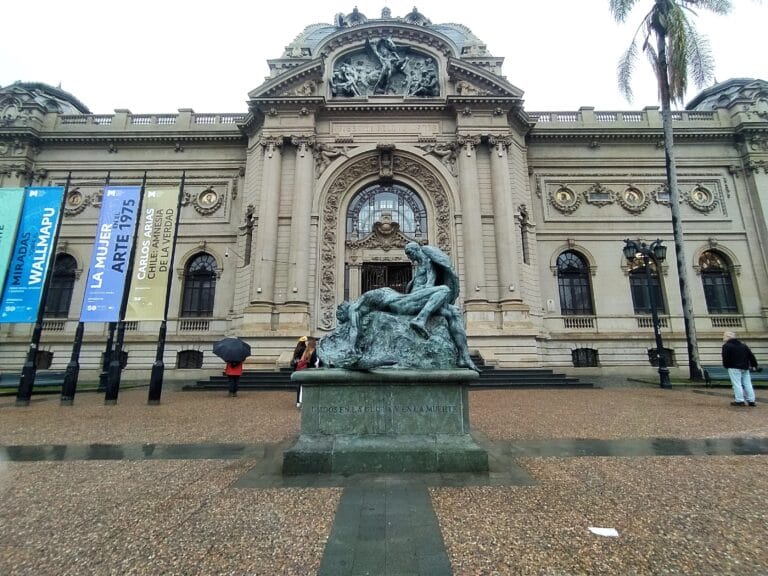
Museo Chileno de Arte Precolombino is one of the most distinctive museums in Santiago and one of the most rewarding places in Latin America to understand the artistic and symbolic richness of the pre-Columbian world. What makes it especially compelling is that it does not try to be a giant encyclopedic museum of everything. Instead, it is focused, carefully staged, and intellectually clear. Housed in a historic colonial-era building in central Santiago, the museum presents the art of the Indigenous cultures of the Americas not as archaeological residue or background to later colonial history, but as sophisticated artistic achievement in its own right. That shift in emphasis is one of the museum’s greatest strengths.
The museum is especially valuable because it treats pre-Columbian material culture as art, thought, and worldview rather than as a collection of anonymous objects. Textiles, ceramics, ritual objects, wood carvings, metalwork, masks, and stone pieces are displayed with enough care that visitors can see design, symbolism, technical skill, and regional difference. This matters. In weaker institutions, objects from ancient American cultures can become flattened into a single generalized “pre-Columbian” category. Here, the museum works hard against that. It shows that the Americas before European conquest were not one cultural block, but a vast field of distinct societies with different materials, visual systems, beliefs, and ways of living.
Another major strength of the museum is that it helps visitors understand Chile within a wider continental context. The institution is rooted in Chile, but it does not confine itself to the territory of the modern nation-state. Instead, it places Chilean and Andean material alongside works from Mesoamerica, the Central Andes, Amazonian regions, and other cultural zones of the Americas. This wider perspective gives the museum unusual depth. It becomes not only a museum of Indigenous pasts within Chile, but also a museum of the broader American civilizational world of which Chile formed one part.
For many visitors, the museum is also memorable because of its scale and atmosphere. It is not overwhelming in the way the world’s largest museums are. Instead, it rewards attention, stillness, and slower looking. This makes it particularly effective for visitors who prefer museums where every room feels considered. Rather than racing from one famous object to another, you move through a sequence of galleries in which materials, textures, beliefs, and visual languages gradually become clearer. That controlled pace is one of the reasons the museum has such lasting power.
Collection Highlights
The museum’s greatest strength lies in the breadth and quality of its pre-Columbian collections across different regions of the Americas. Ceramics are among the most immediate highlights, and for good reason. These works often combine technical control with strong visual invention. Forms, painted surfaces, modeled figures, ritual vessels, and utilitarian objects all reveal how deeply aesthetics and function were intertwined in ancient American societies. What is especially rewarding is that the museum allows visitors to see difference rather than sameness. Vessels from one region do not simply repeat those from another. Shape, color, symbolism, and use all shift depending on geography and culture.
Textiles are another major highlight and among the most powerful objects in the museum. In many pre-Columbian traditions, textiles were not minor decorative arts but central carriers of status, identity, labor, and cosmology. The museum’s treatment of textile material is especially valuable because it helps visitors understand how pattern, weaving, color, and material could communicate meaning at the highest cultural level. For many visitors, these works become some of the most memorable because they combine fragility with astonishing complexity. They also demonstrate that artistic mastery in the ancient Americas was not confined to stone or metal, but extended deeply into fiber and cloth.
Masks, carved objects, and ritual works add another crucial dimension. These pieces often help the museum feel more spiritually and symbolically charged. They show that many of the objects on display were not purely decorative or utilitarian. They were tied to ceremony, transformation, belief, and relationships between the human and nonhuman world. This is one of the museum’s great achievements: it suggests the worlds of meaning behind the objects without reducing them to simple explanatory labels. A mask or a carved figure here often feels like evidence of a whole system of thought rather than an isolated work.
Metalwork is also important, especially for understanding the technical sophistication of ancient American cultures. Gold, copper, alloys, and crafted ornaments reveal high levels of skill and symbolic value. The museum is strong when it presents these not merely as precious materials, but as objects embedded in social and ritual life. This prevents the displays from becoming treasure rooms in the narrow sense and helps sustain the museum’s broader seriousness.
One of the most memorable parts of the museum is often the way it juxtaposes regional cultures while preserving their differences. Mesoamerican works, Andean works, and objects tied to the southern cone do not blur together. Instead, the museum creates a sense of continental richness. Visitors begin to see the Americas before colonization as a world of immense diversity in material, belief, and artistic practice.
Building and Setting
The museum’s setting in a colonial-era building is one of its quiet strengths. This creates an important tension. Inside a structure associated with the later colonial city, visitors encounter artistic traditions that predate colonial power and in many cases survived despite it. The effect is subtle but significant. The museum is not housed in a purpose-built neutral box. Its architecture reminds you that the pre-Columbian past is being encountered within the layered historical reality of modern Latin America.
The building’s scale suits the collection well. This is not a monumental national museum with endless galleries and exhausting distances. Instead, it feels intimate and carefully proportioned. That intimacy improves the visit because many of the museum’s most powerful objects work through detail, surface, and close attention. A more bombastic setting might weaken them. Here, the architecture supports looking rather than distracting from it.
Its central Santiago location also matters. The museum stands within the historic urban core, which means it can be experienced as part of a wider encounter with the city’s political, colonial, and cultural history. This gives the visit more resonance. You are not only learning about the ancient Americas in isolation. You are doing so within a city shaped by the long consequences of conquest, state formation, and modern urban life.
Practical Information
The museum is best visited slowly. It is not huge, but it is dense, and rushing through it weakens much of what makes it distinctive. A good approach is to move room by room and allow time for materials to register: ceramics, textiles, wood, stone, and metal all carry different kinds of visual and cultural information. This is one of those museums where slower looking genuinely changes the experience.
A useful strategy is to begin with the broader regional galleries and then spend extra time in whichever medium or cultural zone speaks to you most strongly. Some visitors will be drawn to ceramics, others to textiles, others to ritual material. The museum supports that kind of selective deepening very well.
Because the museum is so carefully staged, brief pauses also help. It is a reflective institution more than a spectacle-driven one. The best visits usually come when you let the rooms accumulate rather than trying to consume them too quickly.
Why Visit
Museo Chileno de Arte Precolombino is best for visitors interested in Indigenous cultures of the Americas, archaeology approached through art, and museums that reward concentration rather than speed. Its greatest strength is the way it restores complexity and dignity to the pre-Columbian world. It presents ancient American cultures not as a prologue to colonial history, but as creators of fully developed visual and symbolic traditions.
What makes it worth prioritising is that it offers both beauty and correction. It is beautiful because the objects are extraordinary. It is corrective because it challenges simplified views of the pre-Columbian Americas by showing their diversity, refinement, and intellectual richness. Very few museums do this with such clarity and elegance.
For many visitors, it becomes one of the essential cultural experiences in Santiago because it enlarges the city itself. After visiting, Chile feels connected to a far deeper and broader American past. That is a major achievement for any museum, and it is why Museo Chileno de Arte Precolombino remains one of the most rewarding institutions in the region.