Queensland Museum Kurilpa
An editorial guide to Queensland Museum Kurilpa in South Brisbane, where natural history, science, and state-level storytelling combine in a major public museum.
Best forScience, technology, hands-on learning
Setting / nearbyOceania
Overview
Queensland Museum Kurilpa is one of Brisbane’s most important public museums and one of the most accessible places in Australia to understand Queensland through natural history, science, social history, and cultural storytelling in a single institution. What makes it especially interesting is that it does not behave like a narrowly specialized museum. Instead, it works as a broad civic museum with several roles at once. It is a place for families, school groups, tourists, and serious museum visitors, but it also serves as a cultural introduction to Queensland itself. That combination gives the museum much of its strength.
Located in South Brisbane within the wider cultural precinct, the museum feels connected to the city rather than set apart from it. This matters because Queensland Museum Kurilpa is not trying to create a remote atmosphere of ceremony or exclusivity. It is designed as a public institution that welcomes many kinds of visitors and many levels of prior knowledge. That openness shapes the visit. You do not need specialist expertise to get something meaningful from the museum, yet the collection and interpretation are strong enough that it still rewards careful attention.
One of the museum’s greatest strengths is the way it combines natural and human stories. In some institutions, natural history and social history feel like two different museums accidentally placed under one roof. Here, the overlap often makes sense. Queensland’s environment, biodiversity, marine life, geology, Indigenous history, colonial experience, and everyday social life all help explain one another. This gives the museum a wider depth than a purely object-based or purely scientific institution might offer. Visitors come away not only with information about specimens or events, but with a stronger sense of place.
The museum is also especially useful because Queensland itself can be difficult to summarize quickly. It is a state of coastlines, tropical systems, big distances, reef and river environments, mining and migration histories, Indigenous cultures, urban development, and strong regional identities. A museum like this matters because it gives those different layers a public form. That is one reason Queensland Museum Kurilpa works so well for first-time visitors to Brisbane. It does not just entertain. It helps orient people to the wider cultural and environmental context of the region.
Collection Highlights
One of the museum’s strongest areas is natural history. This is where many visitors will first feel the institution’s power, especially through displays connected to Queensland’s wildlife, prehistoric life, marine environments, and ecological diversity. These galleries matter because Queensland is one of the most environmentally distinctive parts of Australia, and the museum does a good job of making that distinctiveness visible. Specimens, skeletons, taxidermy, geological material, and environmental interpretation help visitors understand how varied the state really is, from coastal zones to tropical systems and inland landscapes.
The prehistoric and paleontological material is particularly appealing, especially for families and younger visitors, but it also has broader value. Queensland’s deep natural history gives the museum a timescale beyond immediate human memory, and that enlarges the visit. A museum becomes richer when it can move from millions of years of environmental change to recent social life without losing coherence. Queensland Museum Kurilpa often succeeds at that transition better than one might expect.
Science and discovery-oriented sections add another major strength. These parts of the museum help give the institution a more active educational role rather than making it only a place of static display. Interactive elements, explanatory frameworks, and hands-on learning help broaden the audience and keep the museum from feeling too formal. In the best cases, these areas work not simply as entertainment, but as a bridge between collections and public understanding. They are especially useful in a museum that wants to speak to children, families, and school groups while still maintaining credibility as a serious institution.
The museum’s cultural history sections are equally important. These galleries help visitors move from the natural world into the human story of Queensland, including settlement, migration, industry, domestic life, transport, work, and changing public culture. This material is often especially rewarding because it turns abstract regional identity into lived experience. Objects of daily use, photographs, clothing, machinery, public ephemera, and social-history displays can sometimes say more about a place than grander official narratives do. These sections help the museum feel grounded.
Another significant dimension is the museum’s role in presenting aspects of Indigenous history and cultural context. In a Queensland museum, this is essential. The state’s history cannot be understood honestly without reference to Aboriginal and Torres Strait Islander presence, knowledge, and experience. The museum is strongest when it helps make that continuity visible and when it places Queensland’s story within a much longer human history than colonial frameworks alone would suggest.
Building and Setting
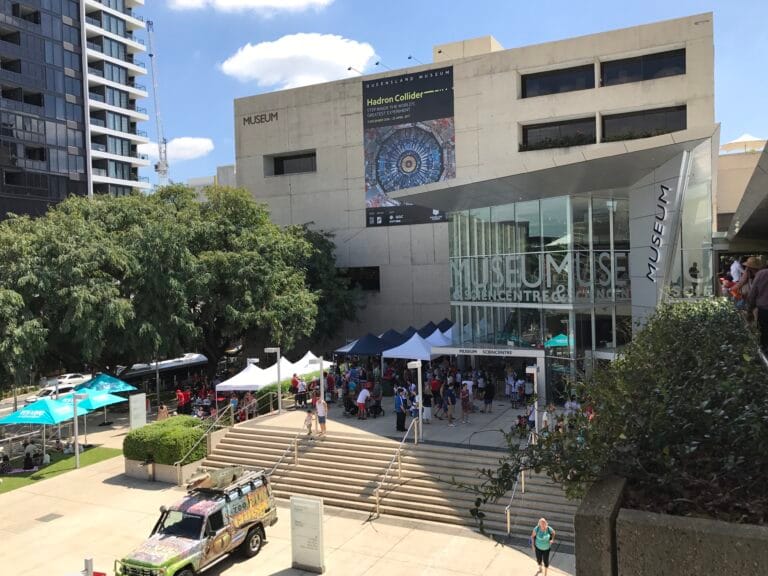
Queensland Museum Kurilpa benefits from being part of South Brisbane’s wider cultural precinct. This setting helps position it as a major public institution rather than an isolated specialty museum. It sits within a larger environment of learning, performance, and urban leisure, and that makes it easier for the museum to function as part of a broader day in the city. This is one of its practical advantages as well as a cultural one.
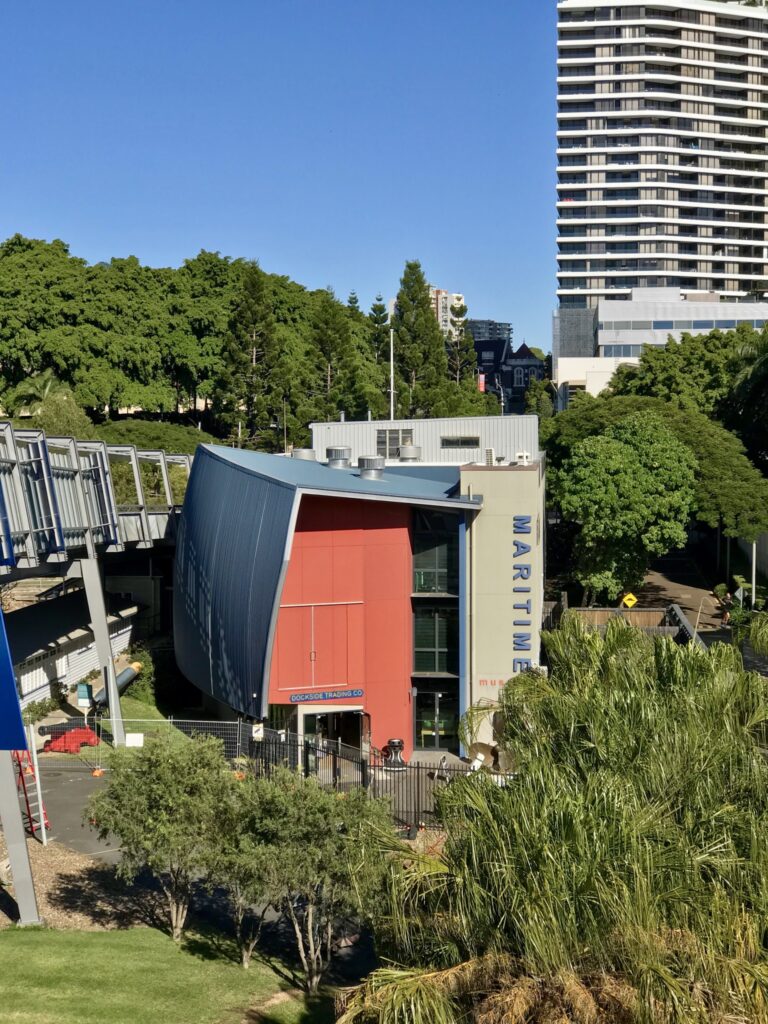
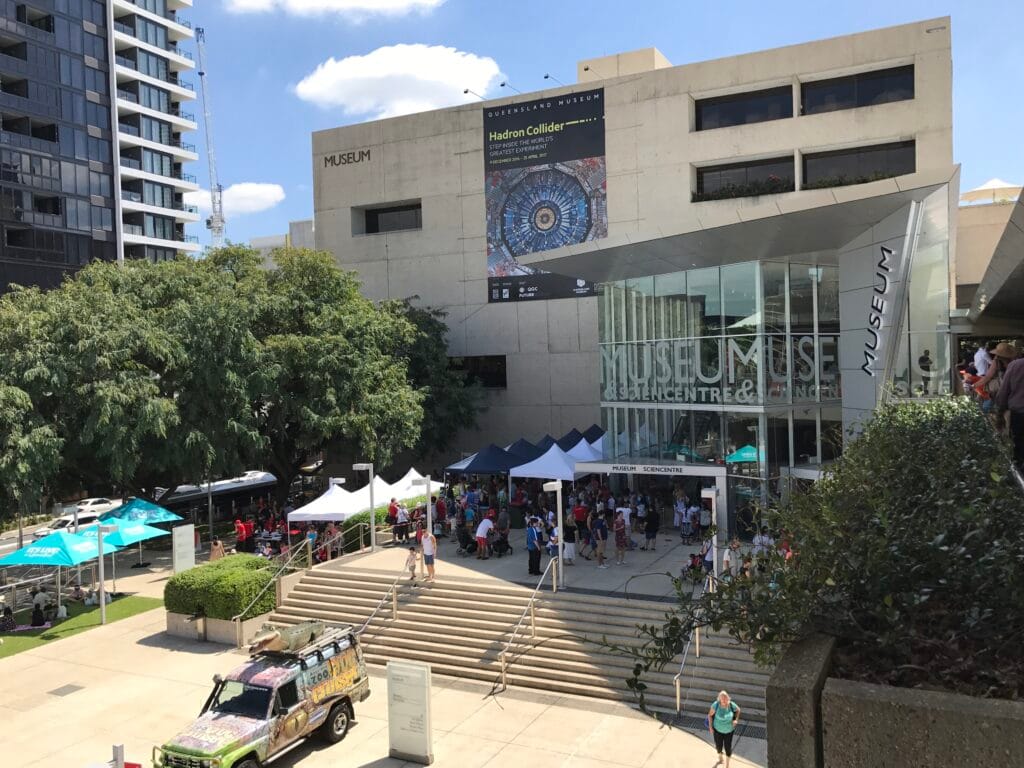
0Architecturally, the museum does not depend on one dramatic iconic gesture in the way some flagship art museums do. Instead, it works through openness, accessibility, and public usefulness. That suits the museum’s mission well. This is not a place that should feel intimidating or over-designed. It should feel like a civic institution built to welcome many kinds of visitors and to support different types of display. In that sense, the building serves the museum properly by staying flexible rather than trying to overpower the collection.
Inside, the museum generally works through broad circulation, varied gallery types, and a pace that suits mixed audiences. This matters because the institution has to support natural history, science interpretation, family learning, and historical displays all at once. A less effective building would make those shifts feel fragmented. Here, the transitions are usually manageable enough that the museum remains readable even when the subject matter is broad.
Its location in South Brisbane also strengthens the visitor experience because it places the museum in an active urban setting rather than somewhere detached from daily city life. That helps the institution feel contemporary and public, which suits its wider role as a museum for Queenslanders as much as for tourists.
Practical Information
Queensland Museum Kurilpa is best visited with variety in mind. A good route is to mix the natural history sections with the cultural history displays rather than trying to do all of one kind first. This keeps the visit lively and helps the museum’s broader idea of Queensland become clearer. Moving from dinosaurs or wildlife into social history, and then back toward science or environmental material, usually creates a more satisfying rhythm than staying too long in one mode.
The museum works particularly well for families, but that should not obscure its value for adult visitors. Those with more time should allow themselves to slow down in the quieter historical sections, where the museum often becomes more nuanced and specific. It is easy to focus only on the most visually immediate displays, but the institution is richer when the social and regional material is given equal attention.
Because the museum is broad and welcoming, it can be visited successfully in different ways. A family visit may be shaped around interactive sections and natural history highlights. A more reflective visit may focus on Queensland identity, environment, and cultural history. Both approaches work, which is one of the museum’s major practical strengths.
Why Visit
Queensland Museum Kurilpa is best for visitors who want an introduction to Queensland, families looking for a strong public museum in Brisbane, and anyone interested in a museum that combines natural history, science, and regional cultural history in one place. Its greatest strength is that it gives the state a shape. It helps visitors understand Queensland not as a vague destination name, but as a place formed by environment, migration, Indigenous presence, scientific curiosity, and public memory.
What makes it worth prioritising is that it does not narrow the experience too much. Some museums are memorable because they do one thing brilliantly. Queensland Museum Kurilpa is memorable because it does several things well and holds them together within a clear public purpose. It teaches, entertains, and orients without becoming shallow.
For visitors to Brisbane, it is one of the most useful cultural stops in the city because it offers both immediate appeal and broader context. As a museum, it may feel more civic than iconic, but that is exactly why it works so well. It is a major public institution that remains open, varied, and genuinely informative, and that makes it one of the strongest museum visits in Queensland.