Auckland War Memorial Museum
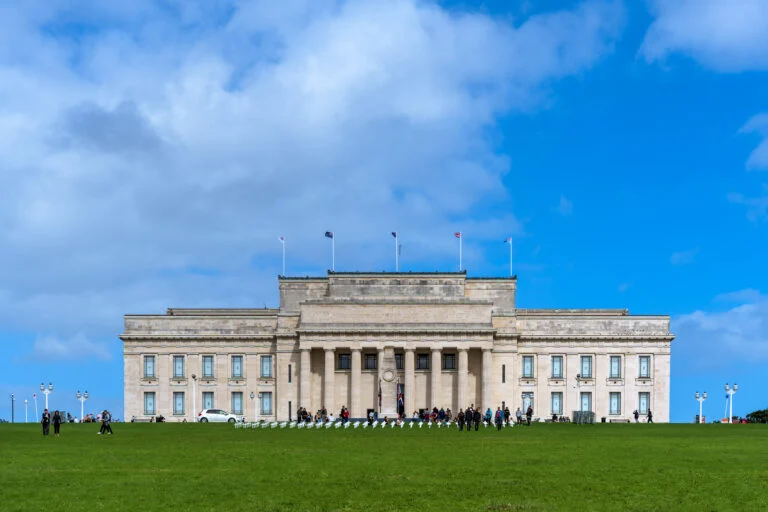
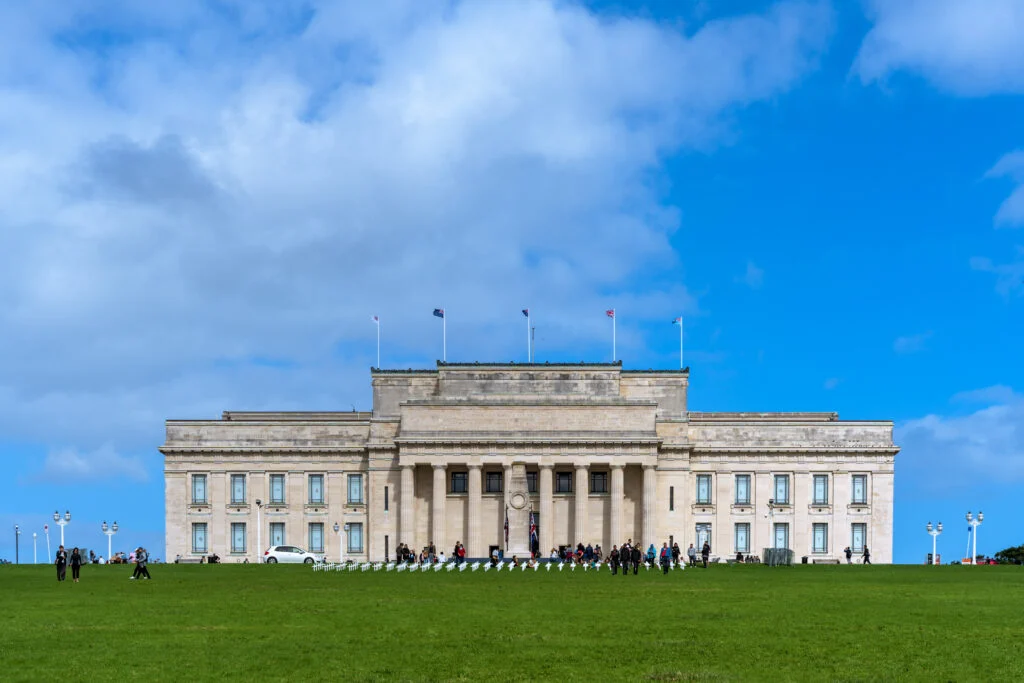
Auckland War Memorial Museum stands on a prominent hill in the Auckland Domain and functions as both a major cultural institution and a site of.
Best forNatural history, fossils, family learning
Setting / nearbyOceania
Overview
Auckland War Memorial Museum is one of New Zealand’s most important museums and one of the strongest places in the country to understand how remembrance, cultural identity, and public history can exist within a single institution. Standing on a prominent hill in the Auckland Domain, the museum functions both as a major museum and as a site of memorial significance. This double role is central to the experience. Visitors do not enter only a building full of objects. They enter a place shaped by memory, ceremony, and the wider civic life of Auckland.
What makes the museum especially rewarding is that it does not focus only on one type of collection. Instead, it brings together Māori and Pacific taonga, natural history, social history, and military history in a way that reflects New Zealand’s layered identity. This breadth could easily feel scattered in a weaker institution, but here it generally works because the museum is held together by a larger idea: that New Zealand can best be understood through the relationships between land, people, ancestry, conflict, and remembrance. That gives the visit more depth than a narrower military museum or a more conventional natural history museum might offer on its own.
The museum is also important because it presents New Zealand not simply as a modern nation-state, but as a place with much longer human and environmental histories. Māori culture and Pacific connections are essential to the museum’s identity, and they prevent the institution from collapsing into a purely colonial or military narrative. At the same time, the war memorial dimension gives the museum a distinct emotional gravity. This is not only a place of learning. It is also a place where sacrifice, national service, and public mourning remain visible in the building’s meaning.
For visitors to Auckland, the museum often becomes one of the most useful and memorable cultural stops in the city because it provides both orientation and atmosphere. It helps explain New Zealand through objects and stories, but it also gives a strong sense of civic presence through its architecture and hilltop setting. That combination of collection, symbolism, and location is one of its greatest strengths.
Collection Highlights
The Māori and Pacific collections are among the museum’s most important strengths and, for many visitors, among the most memorable parts of the visit. These galleries are essential because they place Māori culture and the wider Pacific world at the centre of understanding Aotearoa rather than at its margins. Carved meeting-house elements, taonga, waka-related material, textiles, ceremonial objects, and displays connected to ancestry and cultural practice give the museum a depth that goes well beyond standard ethnographic presentation. These are not simply historical curiosities. They are part of living traditions and wider systems of meaning.
The Pacific collections are equally important because they widen New Zealand’s story beyond the national frame and locate it within oceanic relationships of migration, navigation, kinship, and exchange. This is one of the museum’s most valuable qualities. It reminds visitors that Aotearoa belongs to a larger Pacific world, and that understanding New Zealand properly means understanding those wider connections. These galleries often feel especially rich because they combine beauty, craft, and deep cultural significance.
Natural history is another major strength. Geological material, birds, wildlife displays, and environmental interpretation help explain the land itself and the unusual ecological character of New Zealand. This matters because New Zealand’s identity cannot be separated from its environment. The museum becomes stronger when visitors do not treat these galleries as secondary to the cultural sections. They help explain isolation, biodiversity, extinction, and the material conditions that shaped life in the islands.
The military and remembrance galleries are another defining part of the institution. Because this is a war memorial museum, these sections carry particular weight. They often work best when understood not as stand-alone displays of uniforms and equipment, but as part of the museum’s larger civic purpose. These galleries help visitors see how war affected New Zealand society, memory, and public ritual. They are important not only for military history lovers, but for understanding how remembrance became embedded in national life.
Social history displays add yet another layer. These sections help bridge the gap between formal history and everyday life, showing how communities lived, changed, migrated, worked, and imagined themselves over time. This broadens the museum and gives it a fuller public character.
Building and Setting
The building is one of the museum’s defining strengths. Its neoclassical form gives it the authority and solemnity expected of a memorial institution, while its position on a hill in the Auckland Domain strengthens that effect. The museum does not feel incidental to the city. It feels placed with intention. This matters because the building itself participates in the act of remembrance. It is not just a shell for the collection, but part of the museum’s public meaning.
The setting in the Domain adds another important dimension. Approaching the museum through parkland and then arriving at a commanding elevated site gives the visit a ceremonial tone that suits both the memorial and cultural sides of the institution. The museum feels connected to nature, city, and civic ritual all at once. This is one reason it often stays in the memory so strongly. The visit is shaped by approach and setting as much as by interior display.
Inside, the building’s formal structure gives the museum a sense of weight and continuity. That is especially useful in a collection this broad, because the architecture helps unify diverse materials under a larger civic framework. The museum may contain taonga, fossils, social history, and military remembrance, but the building helps these things feel like parts of one larger institution rather than unrelated departments.
Practical Information
Auckland War Memorial Museum is best visited with some balance in mind. A strong route often begins with the Māori and Pacific collections, since these provide much of the cultural foundation for understanding New Zealand. From there, moving into natural history or social history can broaden the picture before ending with the military and memorial sections, which carry a different emotional tone. This kind of progression works well because it allows the visit to expand and then deepen.
The museum rewards slower looking. It is easy to underestimate it because it does not always appear as huge as some capital-city museums, but the content is rich and varied enough that rushing usually weakens the experience. Visitors should allow time not only for the galleries, but also for the building and its position in the Domain. The site is part of the meaning.
Because the museum carries both cultural and memorial functions, it is also worth adjusting pace and tone as you move through it. Some sections invite curiosity and exploration; others call for greater quiet and reflection. That shift is part of what makes the institution distinctive.
Why Visit
Auckland War Memorial Museum is best for visitors who want a serious introduction to New Zealand, travelers interested in Māori and Pacific culture, and anyone who values museums where remembrance and public history are inseparable from the collection. Its greatest strength is the way it brings together cultural heritage, natural history, and memorial purpose without reducing any one of them.
What makes it worth prioritising is that it offers more than information. It gives visitors a way to feel how New Zealand understands itself through ancestry, land, service, and public memory. That is rare. Many museums explain a country; fewer embody its civic and emotional life as strongly as this one does.
For many visitors, it becomes one of the essential museum experiences in Auckland because it combines strong collections with a building and setting that deepen everything inside. It is not only one of New Zealand’s most important museums, but one of its most meaningful public institutions.