Auckland War Memorial Museum Review
Tickets & Tours
Compare ticket options and guided tours from trusted booking partners.
We may earn a commission if you book through these links.
Historical Context
The Auckland War Memorial Museum stands as one of New Zealand’s most significant cultural institutions, combining the functions of a war memorial, a natural history museum, and a repository of Māori and Pacific heritage. Opened in its current form in 1929, the building was conceived as a tribute to those who served in World War I, and later expanded to commemorate subsequent conflicts.
However, the museum’s origins go back even further. The Auckland Museum Institute was established in 1852, reflecting a broader colonial effort to collect, document, and interpret the natural and cultural history of New Zealand. Over time, its focus expanded to include ethnographic collections, particularly those relating to Māori culture and the wider Pacific region.
The museum occupies a prominent position in the Auckland Domain, a large park set on an extinct volcanic cone. This location adds symbolic weight, connecting the institution to both the natural landscape and the historical layers of the region.
Today, the Auckland War Memorial Museum presents a comprehensive narrative that spans geological history, indigenous culture, colonial encounters, and modern national identity. Its dual role as both memorial and museum shapes its tone, balancing education with remembrance.
What You See on Arrival
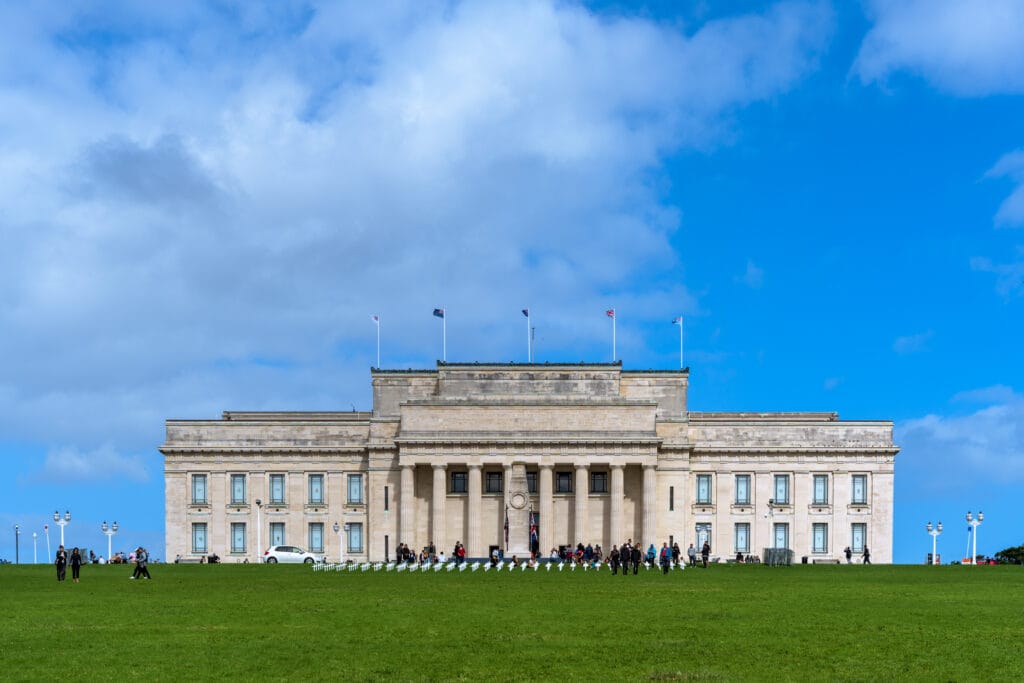
Approaching the Auckland War Memorial Museum, the building immediately conveys a sense of importance and permanence. Its neoclassical design, with columns and symmetrical proportions, reflects traditional ideas of monumentality and commemoration.
The elevated position within the Auckland Domain enhances this impression. Visitors often approach via wide paths that gradually reveal the structure, creating a sense of anticipation before entering.
Inside, the museum opens into spacious galleries arranged across multiple levels. The layout is organized thematically, with different floors dedicated to natural history, Māori and Pacific cultures, and war history. This clear structure helps visitors navigate the extensive collection.
The first impression is one of scale and variety. Unlike more specialized museums, this institution covers a wide range of topics, each presented with a combination of traditional displays and modern exhibition techniques.
Lighting and design vary between sections. Some areas are bright and open, while others are more subdued, particularly in the war memorial galleries. This variation helps create distinct atmospheres that reflect the content of each space.
Highlights and Key Exhibitions
One of the museum’s most significant highlights is its Māori and Pacific collection. These galleries showcase carvings, textiles, tools, and ceremonial objects that reflect the rich cultural traditions of the region. The presentation emphasizes both historical context and contemporary relevance, offering insight into living cultures rather than static artifacts.
The natural history section is equally compelling, featuring displays on New Zealand’s unique biodiversity and geological formation. Exhibits on native species, volcanic activity, and environmental change provide a broader understanding of the country’s natural environment.
The war memorial galleries form a central part of the museum’s identity. These spaces are designed to honor those who served, with exhibits that explore the experiences of soldiers and the impact of war on New Zealand society. The tone here is more reflective, encouraging visitors to consider the human cost of conflict.
Interactive exhibits and multimedia installations enhance the experience across all sections. These elements provide additional context and engage visitors in different ways, from hands-on activities to immersive storytelling.
Temporary exhibitions further expand the museum’s scope, often focusing on contemporary issues or specific aspects of history and culture.
Visitor Experience
The visitor experience at the Auckland War Memorial Museum is diverse and engaging, reflecting the wide range of topics covered. The multi-level layout allows visitors to explore different themes at their own pace, though it can require some planning to ensure that key areas are not missed.
Pacing varies depending on the section. The natural history galleries are often more dynamic and visually engaging, while the cultural and memorial sections encourage slower, more reflective engagement. This contrast helps maintain interest over the course of a longer visit.
Signage is clear and informative, providing context without overwhelming the visitor. The museum’s use of bilingual interpretation, including Māori language elements, adds depth and authenticity to the experience.
Crowds can be significant, particularly during peak tourist seasons, but the size of the building helps distribute visitors across different areas. Quiet spaces are still available, especially in the memorial galleries.
Overall, the atmosphere balances education and reflection. The museum succeeds in presenting a wide range of material while maintaining a coherent narrative about New Zealand’s identity.
Tickets, Access, and Planning
The Auckland War Memorial Museum is located within the Auckland Domain, making it easily accessible by public transport, car, or on foot from the city center. Its central location makes it a key stop for visitors exploring Auckland.
Given the size and scope of the museum, visitors should allow at least three to four hours to explore the main exhibitions. Those with a deeper interest in specific areas may wish to spend even longer.
Ticketing policies can vary, particularly for international visitors, so it is advisable to check current details before arrival. Entry to certain areas or special exhibitions may require additional tickets.
Facilities are comprehensive, including cafés, shops, and rest areas. These amenities support extended visits and provide opportunities to pause between sections.
Planning ahead can enhance the experience. Reviewing the museum map and identifying key areas of interest can help visitors make the most of their time.
Final Verdict
The Auckland War Memorial Museum offers a rich and multifaceted exploration of New Zealand’s history, culture, and environment. Its combination of natural history, cultural heritage, and memorial spaces creates a unique and comprehensive experience.
Who should visit? This museum is ideal for visitors interested in history, culture, and the natural world. It is particularly valuable for those seeking an in-depth understanding of New Zealand’s identity.
Why visit? Because it brings together multiple perspectives into a single, cohesive narrative. The Auckland War Memorial Museum is not just a place to see artifacts—it is a place to understand the stories that shape a nation.