Shenzhen Nanshan District Museum Review
Local History Museums · Shenzhen, China. The Shenzhen Nanshan District Museum stands as an institutional reflection of one of the most dynamic urban and economic zones in contemporary China. Nanshan District, part of the Shenzhen metropolis in Guangdong Province, has…
Local History Museums · Shenzhen, China. The Shenzhen Nanshan District Museum stands as an institutional reflection of one of the most dynamic urban and economic zones in contemporary China. Nanshan District, part of the Shenzhen metropolis in Guangdong Province, has…
Best forMuseum lovers, culture travelers, first-time visitors
Review focusCollections, visitor experience, and practical planning
Historical Context
The Shenzhen Nanshan District Museum stands as an institutional reflection of one of the most dynamic urban and economic zones in contemporary China. Nanshan District, part of the Shenzhen metropolis in Guangdong Province, has undergone rapid transformation from a relatively quiet fishing area into a major center of technology and innovation since Shenzhen was designated a Special Economic Zone in 1980. This museum occupies a unique position in documenting and interpreting that tumultuous recent history alongside deeper, more traditional cultural and historical narratives of the region.
Established to serve both the local community and visiting audiences interested in Shenzhen’s evolution, the Nanshan District Museum emphasizes the area's shifting landscapes—geographical, social, and economic. Unlike some larger national museums focused largely on ancient Chinese history, this museum takes a more localized approach, charting Nanshan’s heritage from its rural and maritime origins through industrialization and urban growth. It also contextualizes Shenzhen’s global significance as a hub for technological development and international business. The museum’s mandate aligns with urban museums striving to balance historical preservation with present-day relevance in fast-changing metropolises.
Serving as a cultural anchor for a district known for its innovation rather than traditional landmarks, the museum highlights the identity and spirit of Nanshan with a focus on modern historical narratives, local arts, and community memory. This helps fill a somewhat underrepresented niche in Shenzhen’s broader museum landscape, which tends to highlight either China’s classical legacy or futuristic design themes.
What You See on Arrival
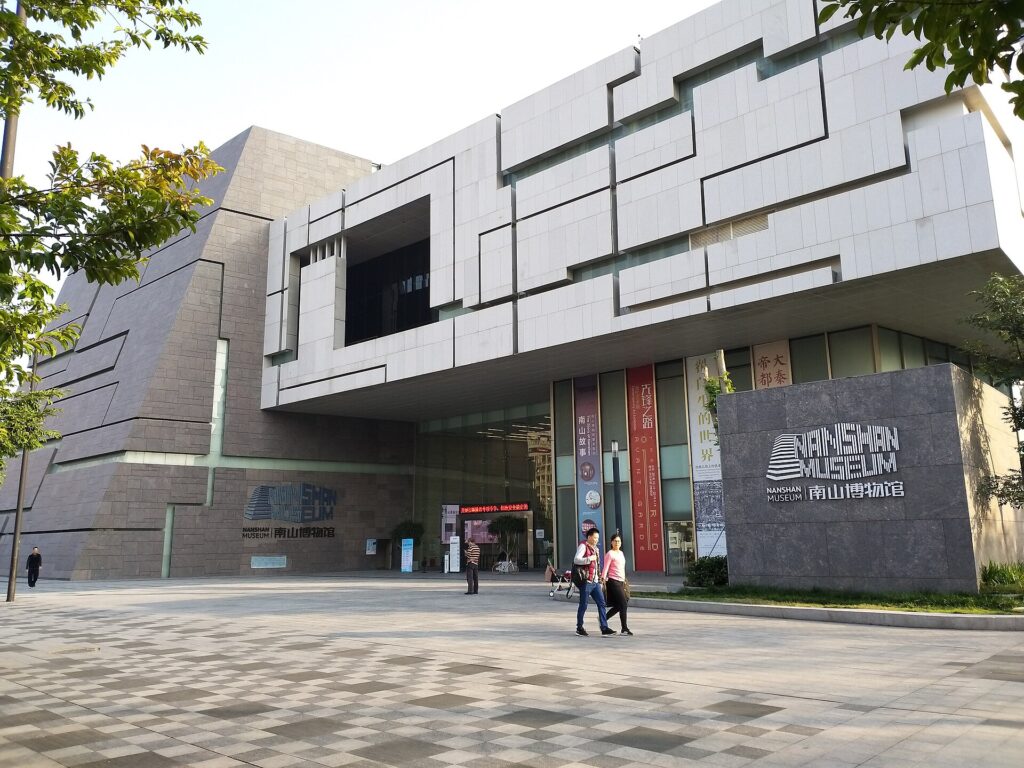
The Shenzhen Nanshan District Museum’s initial impression is largely shaped by its architectural design and the way the institution presents itself within the urban fabric. Approaching the museum, one encounters a relatively modern building that steers clear of ornate historicism in favor of clean, functional lines and materials suited to a contemporary public facility. The structure is designed to integrate with the surrounding cityscape without overwhelming it, indicating a modest but confident civic presence.
The museum’s entrance area is likely arranged to orient visitors with clear signage and a sense of openness, emphasizing accessibility and welcome. Given its municipal nature, the museum presumably offers practical visitor information upfront, alongside introductory panels that outline Nanshan’s historical trajectory and the museum’s role in documenting this story. The aesthetic is one of straightforward clarity rather than overt theatricality, reflecting the institution’s focus on education and community engagement.
In terms of identity, the museum projects itself as a custodian of local heritage and a platform for exploring the district’s cultural development. This framing consciously positions the museum between a neighborhood resource and an attraction for those seeking to understand how Shenzhen emerged as a pivotal city. The building and entry space together set expectations for a grounded yet informative visit rather than an entertainment-driven experience.
Highlights and Key Exhibitions
The core strength of the Shenzhen Nanshan District Museum lies in its collections and exhibitions that document the district’s historical evolution and cultural character. Visitors can expect a substantive presentation of Nanshan’s development, addressing multiple facets such as local geography, early settlement patterns, maritime traditions, and the dramatic urbanization shaping the area today.
One central exhibition thread traces Nanshan’s origins as a fishing and farming community, with displays featuring artifacts typical of daily life before Shenzhen’s rise. Tools, household items, and models or photographs reconstruct village life and coastal economic activities. These provide important context to understand the rapid social changes that the district experienced.
The museum then moves forward in time to the era of Shenzhen’s designation as a Special Economic Zone, explaining how Nanshan transitioned into a technology and innovation hub. Exhibits include documentation of infrastructure projects, early factories, and key figures who influenced the district’s growth. This section often blends archival photographs and multimedia elements to visualize Shenzhen’s breakneck development.
An emphasis is placed on science and technology industries that now define Nanshan, including narratives about Shenzhen as a center for telecommunications, electronics manufacturing, and creative industry clusters. This focus aligns with the city’s self-image as a pioneer within China’s reform and opening-up policies.
Beyond economic history, the museum presents cultural exhibitions highlighting local arts, craftsmanship, and traditions. This includes displays of regional folk art and developments in contemporary cultural production. The inclusion of community archaeological finds and natural history elements related to the Nanshan landscape rounds out the viewing experience.
The museum’s use of interpretive panels and curated objects carefully balances historical breadth and local specificity—it does not attempt to cover all facets of Shenzhen’s past or every aspect of contemporary life, but it gives visitors a reasonable understanding of Nanshan’s place within larger urban and economic transformations.
Highlights typically include detailed cartographic displays mapping the district’s physical changes over time, and often the presence of interactive or digital media elements designed to engage wider audiences. These technological features suit the district’s reputation but are implemented with restraint, supporting rather than overshadowing the core artifacts and archival materials.
While permanent exhibitions form the backbone, the museum’s programmatic flexibility allows for periodic updates and new additions, though visitors should consult the museum’s official site for current offerings and any special events or exhibits.
Visitor Experience
The Shenzhen Nanshan District Museum caters predominantly to a local and regional audience interested in the district’s historical roots and development, but it also has sufficient appeal for visitors from elsewhere with an interest in urban transformation in China. Given its focused remit, the museum is well suited to those with a moderate level of curiosity about Shenzhen beyond its image as a high-tech powerhouse.
The pace of the visit is likely comfortable for people who appreciate slow, deliberate engagement with historical materials rather than a rapid walkthrough of large, overcrowded galleries. The museum is structured to allow visitors to follow a generally chronological narrative, which is supported by clearly marked sections and thematic groupings. This helps guide visitors through Nanshan’s story without confusion.
Interpretation is clear and predominantly text-based, supplemented by photographs, maps, and selected objects. Multilingual interpretation beyond Chinese may be more limited, something international visitors should verify beforehand if language is a concern. The museum does not heavily rely on digital or immersive technologies, meaning the experience favors tangible objects and straightforward storytelling.
Accessibility features and visitor amenities are not widely documented, so those with mobility challenges or other special requirements should check directly with the institution prior to planning their visit.
The museum avoids the challenge some regional museums face of trying to cater both to school groups and adults simultaneously. It strikes a balance by offering educational content accessible to younger visitors while maintaining enough depth for more seasoned museum-goers. Families, students, and local residents are likely among the regular audience, while international travelers invested in urban Chinese history may find it a relevant stop.
One limitation is the museum’s specialized focus, which may not satisfy visitors seeking a broad overview of Chinese history or contemporary art. It does not position itself as a museum of national significance or as a large-scale cultural center but rather as an informative civic institution grounded in Nanshan’s unique experience.
Crowd levels tend to be moderate, especially given the museum’s location outside Shenzhen’s main tourist hubs. This can mean a quieter, more reflective visit but also implies fewer on-site resources like guided tours or interpretive staff frequently available.
Tickets, Access, and Planning
As with many museums in urban China, the Shenzhen Nanshan District Museum is likely publicly funded and accommodates a broad range of visitors, including local residents and scholars. Detailed, confirmed information about ticketing policies is not readily available through centralized sources. Prospective visitors should consult the museum’s official website or contact the institution directly for the most current details regarding admission fees, any required reservations, concessions, or group arrangements.
Similarly, official opening hours and accessibility accommodations may vary seasonally or for public holidays. Visitors are encouraged to verify hours of operation and possible periods of closure before visiting.
The museum is situated in Nanshan District, which is well served by public transportation given Shenzhen’s extensive metro, bus networks, and efficient urban infrastructure. This should make access straightforward for most visitors familiar with urban mobility in Shenzhen. Details about parking or vehicular access are less documented and may require additional planning for those traveling by car.
While the museum does not appear to offer extensive visitor amenities such as cafés or gift shops as a primary draw, such facilities could exist on site or nearby. Checking current provisions via official channels is advisable for those planning longer visits.
Overall, visitors planning a trip to Shenzhen who are interested in the city’s local history, urban development, or Nanshan’s community fabric will find the museum a well-positioned resource. However, careful advance preparation remains important due to limited publicly available information regarding logistics.
Final Verdict
The Shenzhen Nanshan District Museum occupies a well-defined role in articulating the story of one of Shenzhen’s most rapidly evolving districts. Its focus on local history, economic transformation, and cultural identity makes it a valuable complement to the city’s broader array of museums. The institution’s restrained presentation avoids grandiosity in favor of a methodical, accessible account of Nanshan’s trajectory from rural hinterland to an urban innovation center.
For visitors with an interest in urban studies, contemporary Chinese history, or community heritage, the museum offers a meaningful, grounded experience. Its exhibitions are thoughtfully curated to cover significant historical themes without overextending into areas beyond its mission. The museum also plays an important local function, providing residents a place to engage with their district’s past and cultural development.
On the other hand, the museum’s specialization and relatively modest scale limit its appeal for those looking for sweeping narratives of Chinese history or expansive art collections. International visitors should prepare for limited multilingual interpretation and verify practical details in advance.
In sum, the Shenzhen Nanshan District Museum is a focused cultural institution that complements Shenzhen’s larger museum ecosystem by emphasizing a key district’s historical and cultural identity. It represents an earnest effort to trace local memory through the lens of rapid urban change and social transformation. For those able to incorporate it thoughtfully within a broader itinerary in Shenzhen, it can provide insight into the complexities of China’s urban growth in the late 20th and early 21st centuries.