San Telmo Museoa Review
Archaeology Museums · San Sebastián, Spain. San Telmo Museoa, located in the coastal city of San Sebastián, Spain, is a museum dedicated to Basque society and culture with a focus that spans the historical, ethnographic, and artistic dimensions of the…
Archaeology Museums · San Sebastián, Spain. San Telmo Museoa, located in the coastal city of San Sebastián, Spain, is a museum dedicated to Basque society and culture with a focus that spans the historical, ethnographic, and artistic dimensions of the…
Best forMuseum lovers, culture travelers, first-time visitors
Review focusCollections, visitor experience, and practical planning
Historical Context
San Telmo Museoa, located in the coastal city of San Sebastián, Spain, is a museum dedicated to Basque society and culture with a focus that spans the historical, ethnographic, and artistic dimensions of the region. Its origins date back to the early 20th century, constructed on the site of a 16th-century Dominican convent—San Telmo—reflecting a layered history that the institution itself embodies. Over the decades, the institution has evolved from a more narrowly defined historical museum into a multidisciplinary cultural center, reflecting changes in museology and regional cultural policy.
The museum’s emphasis on Basque identity is embedded in its collections and exhibitions, positioning it as a key cultural repository for the Basque Country. Its development has mirrored the socio-political transformations in the region, including shifts in cultural nationalism and efforts to preserve and promote Basque heritage in the context of broader Spanish and European influences. The combination of a historic building and a modern facility, resulting from a major renovation and expansion completed in the early 2010s, illustrates the museum’s effort to bridge past and present both physically and conceptually.
In terms of significance, San Telmo Museoa contributes to regional cultural education and often acts as a deliberate counterpoint to national narratives by focusing on local realities. As such, its role is not only archival or artistic but also social, providing a venue where regional identity and history can be explored from multiple perspectives.
What You See on Arrival
The external approach to San Telmo Museoa sets a tone of historical continuity complicated by contemporary intervention. The original convent, with its characteristic stone façade and cloister, grounds the museum in a deep architectural heritage. This historic structure sits beside a modern glass and steel extension, which signals the institution’s adaptation to current museological and cultural needs.
Upon arrival, visitors are likely to first encounter the museum’s public square or entrance area, which creates a space for arrival that respects the original building’s prominence while welcoming the presence of the new structure. The museum identity is anchored in this physical dialogue between old and new, emphasizing a connection to Basque traditions alongside openness to contemporary culture and thought.
The signage and wayfinding are designed to orient visitors toward the entrance as well as toward key spaces inside. Information about the museum’s mission, typically found near the entrance, outlines the dedication to Basque culture, history, and art without overwhelming the visitor with excessive text. Thus, the initial visual impression is one of thoughtful stewardship of cultural heritage, rather than a commercialized or purely tourist-focused institution.
Highlights and Key Exhibitions
San Telmo Museoa’s collection is thematically organized around the cultural, historical, and social fabric of the Basque Country. It covers archaeology, ethnography, history, and fine arts, making the museum a comprehensive resource for understanding the region through multiple angles.
One of the core strengths is the ethnographic collection, which offers in-depth representation of traditional Basque life. Visitors can expect to see everyday objects, tools, clothing, and domestic interiors that demonstrate rural and maritime traditions, reflecting the historical economic patterns of the region. The museum carefully contextualizes these items, providing a window into past lifestyles while situating them in broader historical narratives.
In addition to this, archaeological artifacts from the surrounding area offer insight into the long human occupation of the Basque country. These items trace local history from prehistoric times through Roman presence and the Middle Ages, making the museum a valuable site for anyone interested in deep historical timeframes of northern Spain.
San Telmo Museoa also presents art collections ranging from Renaissance religious art linked to the original convent to modern and contemporary Basque artists. This spectrum illustrates both the continuity and change of artistic expression in the region. The museum supports critical reflection on Basque identity as visually constructed and interpreted over time.
Within these genres, the museum pays special attention to the influences of landscape, language, and social practice on the region’s cultural output. This thematic coherence helps visitors follow complex interrelations between nature, culture, and history in the Basque context.
It is worth noting that while the museum focuses on the Basque region, it also touches on interconnections beyond its borders, highlighting trade routes, external cultural influences, and political relationships that have shaped the area. This contextual breadth prevents the collection from feeling insular.
Visitor Experience
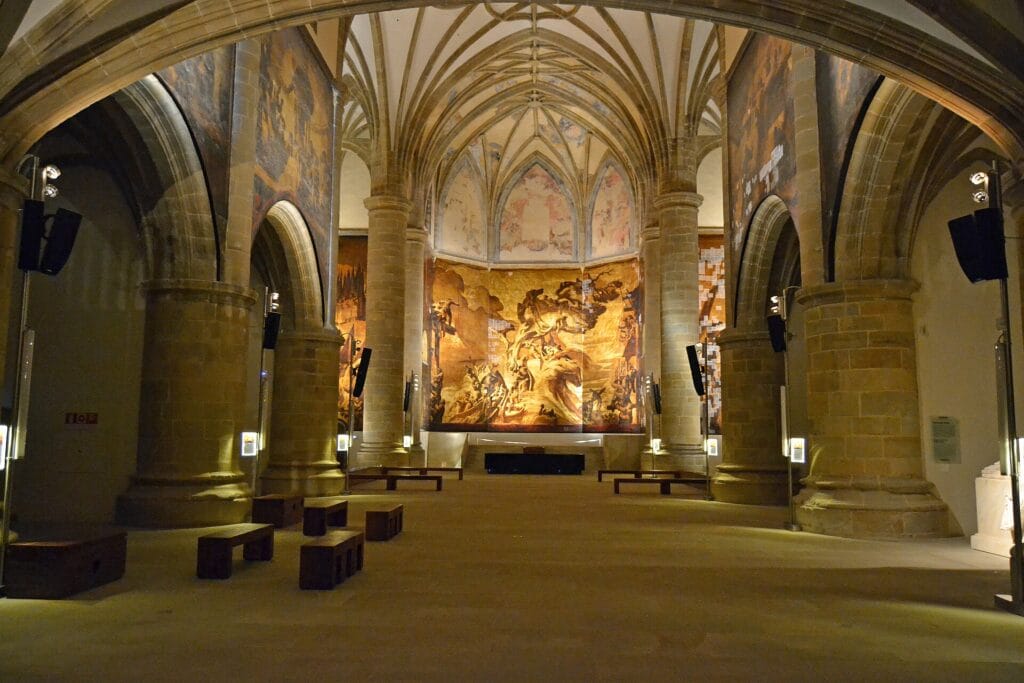
The visitor experience at San Telmo Museoa is likely to involve navigating a combination of preserved historic spaces and modern gallery environments. This contrast can enhance engagement by offering diverse atmospheres, yet it requires clear circulation paths to avoid any sense of disorientation. The gradual transition from the cloister and convent areas to the contemporary gallery spaces is a deliberate spatial narrative choice that reflects the museum’s thematic layering of past and present.
Interpretation is grounded in clear, accessible panels and labels, mostly bilingual in Spanish and Basque, sometimes with English translations. This linguistic aspect reinforces the museum’s cultural particularity while making core information available to international visitors. The presentation style tends to favor directness and clarity over overly academic or abstract language, which contributes to accessibility.
The museum aims to balance appeal to multiple audiences: locals interested in regional heritage, scholars and students of Basque culture, and tourists wanting a well-rounded introduction. The ethnographic sections especially have strong interpretive frameworks that encourage reflection on how traditional practices survived or transformed in the modern era.
For visitors less familiar with the complex historical and political context of the Basque Country, some exhibitions may assume a degree of prior knowledge. Though not impenetrable, this could prompt visitors to seek additional background before or after their visit for fuller understanding.
The museum’s design supports an unhurried visit, allowing time for close examination of objects and details. However, the extensive collection and the spatial layout may require some planning to avoid museum fatigue, especially for those with limited time.
Tickets, Access, and Planning
Specific details about admission fees, scheduling, available tours, and visitor amenities should be confirmed directly through the museum’s official website or contact points before planning a visit, as these can vary seasonally or due to institutional policy changes.
San Sebastián’s city center location means the museum is generally accessible by a range of public transport options, though visitors should verify the latest transit information in advance. The museum’s physical configuration, combining a historic building with new construction, might involve some architectural constraints common to buildings of such vintage, so accessibility for visitors with mobility challenges should be checked specifically with the museum.
Additionally, while the museum’s bilingual approach usually includes descriptive written materials, auditory or interactive aids may be limited or subject to availability, depending on current resource allocations and institutional priorities.
Final Verdict
San Telmo Museoa stands as a noteworthy institution for those interested in the cultural and historical dimension of the Basque Country. It is particularly strong as a repository of ethnographic and archaeological artifacts, providing a detailed material record of regional life from prehistoric times to the present. Its blend of an historic convent and contemporary building underlines its commitment to dialogue between the past and the present.
The museum’s focus remains resolutely on Basque identity and cultural narrative, offering visitors a chance to engage with a subject less commonly covered in broader Spanish museum offerings. In this sense, it transcends a purely local museum role by addressing questions of heritage, language, and identity that resonate in wider discussions about minority cultures in Europe.
However, visitors should be prepared for some degree of contextual complexity requiring attention to interpretative information. Those without previous knowledge of Basque history or culture might encounter moments where supplementary reading would enhance appreciation. Its scope is wide but centered, which means it is less suitable for visitors seeking a general Iberian or Spanish history experience.
Overall, San Telmo Museoa serves its cultural mission with thoughtful curation and has positioned itself as an important institution within the regional and national museum landscape. Its particular strengths lie in the depth of its collections and the conscious architectural and narrative design that reflects the duality of preservation and innovation. Visitors planning a trip should consult official sources for the latest information on visiting conditions to make the most of their experience.