National Museum of Women in the Arts Review
Art Museums · Washington, D.C., United States. The National Museum of Women in the Arts (NMWA) occupies a distinct niche within the American and international museum landscape. Founded in 1987 by Wilhelmina Cole Holladay, a philanthropist and art collector who was…
Art Museums · Washington, D.C., United States. The National Museum of Women in the Arts (NMWA) occupies a distinct niche within the American and international museum landscape. Founded in 1987 by Wilhelmina Cole Holladay, a philanthropist and art collector who was…
Best forArt lovers, visual culture, architecture
Review focusCollections, curatorial focus, and visitor planning
Historical Context
The National Museum of Women in the Arts (NMWA) occupies a distinct niche within the American and international museum landscape. Founded in 1987 by Wilhelmina Cole Holladay, a philanthropist and art collector who was driven by the scarcity of recognition for female artists in traditional institutions, the museum is the first in the world solely dedicated to celebrating women’s contributions to the visual arts. Situated in a former Masonic Temple in Washington, D.C., it was structurally re-purposed to serve this mission, opening to the public in 1987 with a focused mandate to bring visibility to women artists who had long been overlooked.
The historical backdrop of the museum’s formation reflects broader movements in feminist history and cultural inclusivity beginning in the late 20th century. The NMWA arrived at a moment when many art institutions were beginning to reconsider gender representation amid critiques of art historical canons dominated by male artists. By concentrating exclusively on artists who identify as women, the museum serves both as a corrective to longstanding inequalities and as a platform for evolving conversations about gender and creativity. Over the decades, its collection and exhibitions have grown to include a wide chronological range—from Renaissance works to contemporary pieces—highlighting the diversity of women’s art practices within a variety of media.
Located in the nation's capital, the NMWA also engages with a public that is diverse, international, and politically oriented, which influences both the institution’s positioning and the way audiences approach its programs. However, the museum does not limit itself to American artists alone, incorporating global perspectives to avoid a purely national narrative, though the balance often leans heavily towards Western art. This contextual positioning informs the museum’s ongoing search for greater inclusivity and breadth, even as it strives to maintain a focused identity.
What You See on Arrival
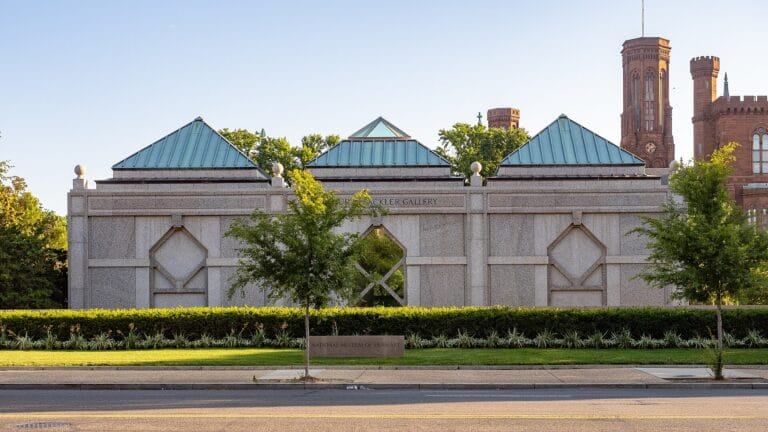
The National Museum of Women in the Arts is housed in a dignified early 20th-century red brick building that originally served as a Masonic Temple. This architectural choice gives the museum a stately and somewhat formal exterior, which contrasts with its focused mission to challenge traditional art world norms. Visitors approaching the museum will find it situated on a prominent street in downtown Washington, D.C., close to other cultural and political landmarks, placing it within the city’s dense arts corridor.
The museum’s signage and exterior presentation emphasize its singular dedication to women artists, immediately framing it as a different kind of art institution. Unlike larger encyclopedic museums nearby, the NMWA’s identity is clearly articulated in its title and public materials, setting expectations for a curated experience centered on gender and artistic achievement. The building’s relatively compact size compared to major national museums suggests a more intimate encounter with art rather than an overwhelming visual or spatial field.
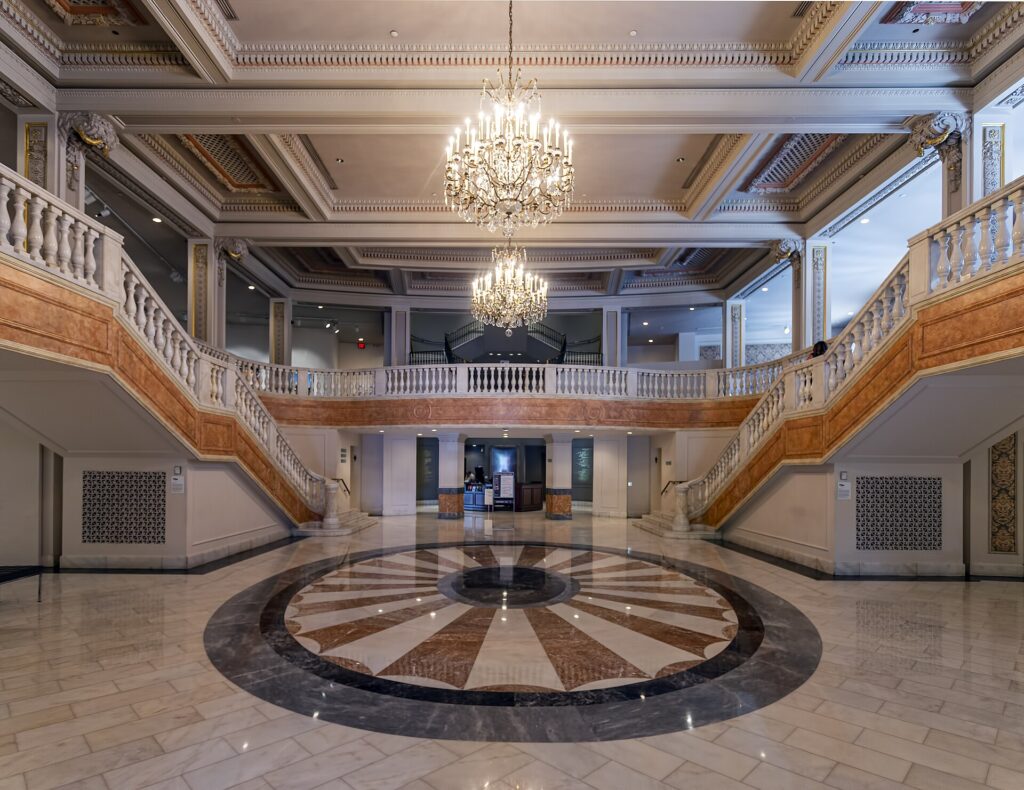
Inside, the entrance typically leads to a reception area that provides orientation for visitors, although the layout is designed to draw the visitor into the galleries without excess architectural distraction. The museum does not attempt to overwhelm visitors with scale or high-tech visuals but rather relies on its specialized collection and clear curatorial voice. The initial impression is of an institution that takes its mission seriously and provides a focused but accessible introduction to women’s art history.
Highlights and Key Exhibitions
At the core of the National Museum of Women in the Arts is a collection that spans over five centuries, with works dating from the Renaissance period through the present day. Its holdings include painting, sculpture, works on paper, photography, and decorative arts, all created by women artists. Important to note is that the museum deliberately collects a broad temporal range but with a measured approach to avoid becoming encyclopedic in a diffuse way.
Among the Renaissance and Baroque collections, the museum holds significant works from artists such as Lavinia Fontana and Sofonisba Anguissola, early examples of women who navigated restrictive social contexts to produce art of technical skill and originality. While the pieces from this era are relatively few, their presence underscores the museum’s commitment to correcting historical neglect and situating women artists in their proper historical frameworks.
The 19th and early 20th centuries receive substantial attention, particularly through American Impressionists and modernists like Mary Cassatt and Georgia O’Keeffe. Cassatt’s contribution is notable for her role in bridging American and French Impressionism as well as for her focus on domestic scenes that challenge gendered notions of interiority. O’Keeffe’s abstracted floral works highlight female subjectivity and the aesthetic innovations of early modernist art. Both artists are crucial for understanding how women contributed to and transformed major art movements.
In the contemporary section, the museum features works that engage with feminist themes, identity politics, and diverse media. Artists such as Judy Chicago, known for her pioneering installations addressing women’s history and experience, and Faith Ringgold, whose narrative quilts explore race and gender intersectionality, exemplify this commitment. Photography also occupies a strong position, with artists like Carrie Mae Weems whose work interrogates representation and power structures.
Sculpture and decorative arts are not sidelined. The NMWA's collection includes significant pieces by artists working in ceramics, metalwork, and textiles, areas where women’s creativity has historically been undervalued or categorized as craft rather than fine art. The museum’s efforts to treat these media with equal care is an important corrective to art historical biases.
Thematic arrangements within the museum encourage connections across time and medium, rather than siloed presentations. However, at times the narrative can feel uneven, with periods of the 20th century more densely represented than earlier centuries and geographic diversity tending towards Western artists. This is partly a reflection of acquisition history and available scholarship but also a limitation for visitors seeking a truly global view of women’s art.
Visitor Experience
The National Museum of Women in the Arts offers a pace and experience suited to visitors who appreciate focused, intimate gallery settings rather than expansive museum campuses. The size of the institution means that visitors can engage with the exhibits without feeling the fatigue that larger museums can induce, although it also means that those looking for broad survey experiences might find the scope somewhat limited.
Interpretive materials tend to be clear and written for a general audience, providing vital context about artists who have been historically overlooked or misunderstood. Labels tend to emphasize biography, artistic practice, and the social context of the work, which helps situate unfamiliar names and styles. This makes the museum accessible to visitors who are not specialists in art history but are interested in expanding their understanding of gender in art. However, some might find that the commentary occasionally leans on well-established feminist art narratives, which could benefit from more nuanced, intersectional perspectives as the field evolves.
The layout supports a roughly chronological progression but also thematic groupings, which allows for meaningful encounters across different periods and media. Visitor flow is generally manageable due to the museum’s moderate size; however, during high traffic times, certain galleries may feel cramped. The quieter, less crowded spaces invite closer contemplation of individual works.
The museum’s audience is likely to include a mix of tourists, D.C. locals involved in cultural sectors, educators, and students, as well as those with a particular interest in gender studies or feminist art. The focused nature of the collection and programming means it appeals strongly to those interested in social justice and the revision of historical narratives, although it is less suited to visitors seeking a comprehensive or global history of art beyond the gender lens.
Tickets, Access, and Planning
Anyone considering a visit to the National Museum of Women in the Arts should consult the museum’s official website for the most current information on opening hours, admission fees, and any special requirements such as timed entry or membership benefits. The museum is located in a central part of Washington, D.C., which is well served by public transportation networks, but details about street parking or access for visitors with mobility impairments should be verified in advance.
While the museum’s size supports relatively flexible visit planning, it is advisable to allocate at least one to two hours to appreciate the permanent collection thoroughly. The institution’s smaller scale does not accommodate very large crowds comfortably, so potential visitors might find weekday or off-peak times more rewarding.
As the museum presents occasional temporary exhibitions and programming, checking the current schedule beforehand can help visitors tailor their visit to specific interests. Any availability of guided tours, audio guides, or educational materials should likewise be confirmed through official channels.
Final Verdict
The National Museum of Women in the Arts fills a valuable role in both the national and international art scene by championing artists who have historically been underrepresented in museums, academia, and the marketplace. Its founding mission remains highly relevant as institutions globally continue to grapple with questions of inclusion and representation. As a specialist museum, it offers focused and well-curated access to a broad sweep of female artistic achievement, from historical figures to contemporary practitioners.
The museum’s collection is a strength, particularly in its presentation of American artists from the 19th and 20th centuries and contemporary feminist art, alongside respectful inclusion of earlier European women painters and artists working in traditionally marginalized media. Nevertheless, the institution’s somewhat modest size and selective acquisition focus mean it does not provide an encyclopedic survey of women’s art worldwide. Geographic and cultural diversity is an area with potential for growth, as is further engagement with intersectional perspectives beyond established feminist art narratives.
Practical considerations such as its downtown Washington, D.C. location make it a convenient destination for visitors already engaged with the city’s cultural circuits. Its manageable scale allows for a contemplative visit, though those seeking large-scale exhibition spectacles or extensive institutional programming might need to temper their expectations.
In conclusion, the National Museum of Women in the Arts stands as an important institution dedicated to correcting historic gender imbalances in art representation. It is a place for visitors to discover, reflect on, and appreciate the varied contributions of women artists across centuries, contexts, and mediums. While it is not without its limitations, it serves a distinct and necessary role within the broader ecosystem of museums and cultural institutions. For those interested in feminist art history, gender studies, or expanding their understanding of creative voices beyond traditional canons, it remains an essential stop in the heart of the United States capital.