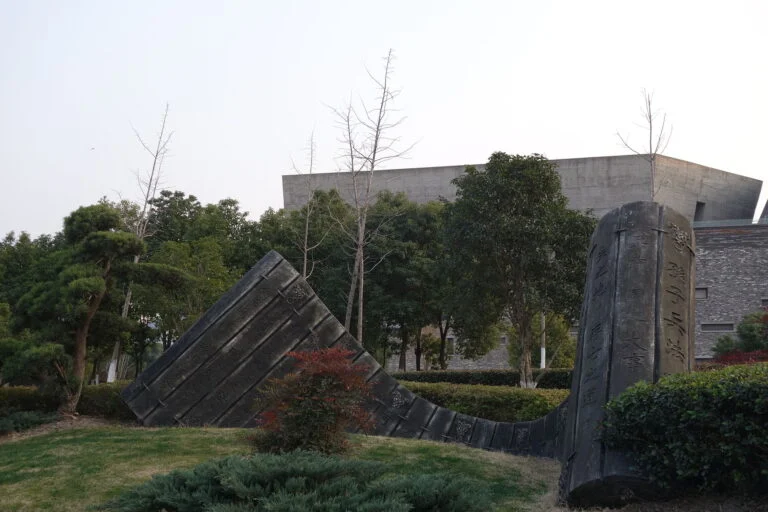
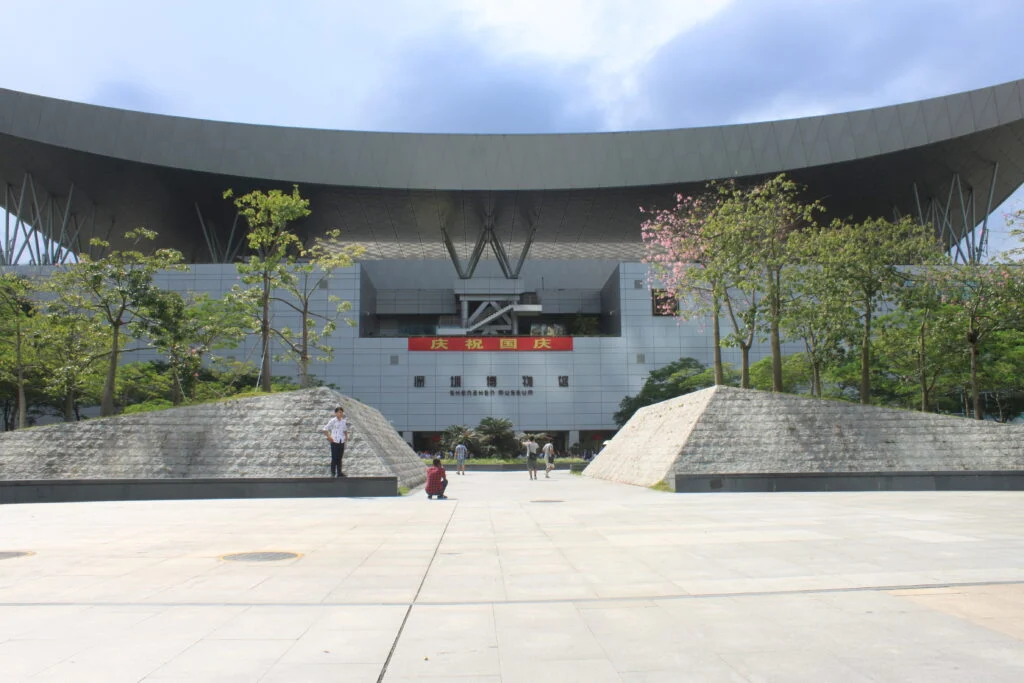
Shenzhen Museum
Shenzhen Museum occupies an important place in a city better known for innovation, finance, and rapid urban growth than for ancient.
Best forMaritime history, ships, harbour heritage
Setting / nearbyAsia
Overview
Shenzhen Museum is one of the most useful museums in southern China for visitors who want to understand the city beyond its modern skyline and reputation for rapid growth. Shenzhen is often discussed as a place of speed, technology, finance, and urban transformation, but a museum visit helps reveal that the city’s story is more layered than the usual image of a newly built metropolis. What makes Shenzhen Museum worthwhile is that it places the city within a wider historical and cultural framework, linking local heritage, regional identity, reform-era development, and broader Chinese history in a way that makes Shenzhen feel less like an exception and more like a place shaped by multiple historical forces.
The museum is best approached as a city-and-region museum rather than as a narrowly defined art museum or a single-theme institution. Its value lies in interpretation and context. Visitors come here less for one world-famous object than for a clearer understanding of how Shenzhen developed, what existed here before the modern city emerged, and how the area fits within the wider history of Guangdong and southern China. This makes the museum particularly rewarding for first-time visitors to the city who want more than the usual urban impressions of malls, towers, and transport infrastructure.
One of the museum’s strengths is that it often helps bridge a gap in perception. Shenzhen can feel very present-focused, even future-focused, and that can make it harder for visitors to sense historical continuity. A museum of this kind matters because it restores that continuity. It reminds visitors that the region has older cultural traditions, local settlements, maritime connections, and social histories that predate the modern Special Economic Zone. It also helps explain how rapid urban transformation happened in practice rather than only in slogan form.
The museum also tends to work well because it is accessible. Even when the subject matter is broad, the visit usually feels more manageable than in giant national museums. That makes it a good museum for orientation. It gives visitors a framework for the city and region without requiring a full day of specialist concentration. At the same time, the museum can reward deeper attention, especially for those interested in urban history, reform-era China, local culture, or the relationship between regional identity and national change.
Collection Highlights
The strongest parts of Shenzhen Museum are usually the sections devoted to local history, urban development, and the transformation of Shenzhen from a much smaller settlement zone into one of China’s defining modern cities. These galleries are especially important because they provide what most visitors to Shenzhen otherwise lack: historical scale. The city’s present can feel so dominant that it becomes difficult to imagine what came before it. The museum helps solve that problem by showing how geography, settlement, trade, migration, and policy all shaped the area over time.
Exhibitions connected to reform and opening-up are often among the most valuable parts of the museum. Even when they are not built around a single famous artefact, they can be intellectually strong because they explain the meaning of Shenzhen in modern Chinese history. For many visitors, these sections are the real core of the museum. They help place the city within national transformation and give concrete form to what might otherwise remain abstract political or economic language. In that sense, the museum is not just about Shenzhen as a place, but about Shenzhen as a symbol of a larger era.
Local cultural and archaeological material can also be rewarding, especially when it broadens the visit beyond urban modernisation. These sections are important because they prevent the museum from collapsing into a simple story of economic growth. Historical objects, regional cultural displays, and material linked to the older life of the area help make clear that Shenzhen did not begin from nothing. This matters, because one of the museum’s most useful roles is precisely to challenge the assumption that the city has no deeper historical texture.
Depending on the layout and current displays, temporary exhibitions may also add another dimension. In a museum like this, changing shows can be valuable because they sharpen focus around a particular period, theme, or local topic. They may not always be the main reason to visit, but they can make the experience feel fresher and more varied, especially for repeat visitors or those already familiar with the museum’s general narrative.
What Shenzhen Museum may lack in universally famous objects, it often makes up for in explanatory power. This is important to understand in advance. The museum is strongest not when treated like a treasure house, but when treated as a place that makes a city readable.
Building and Setting
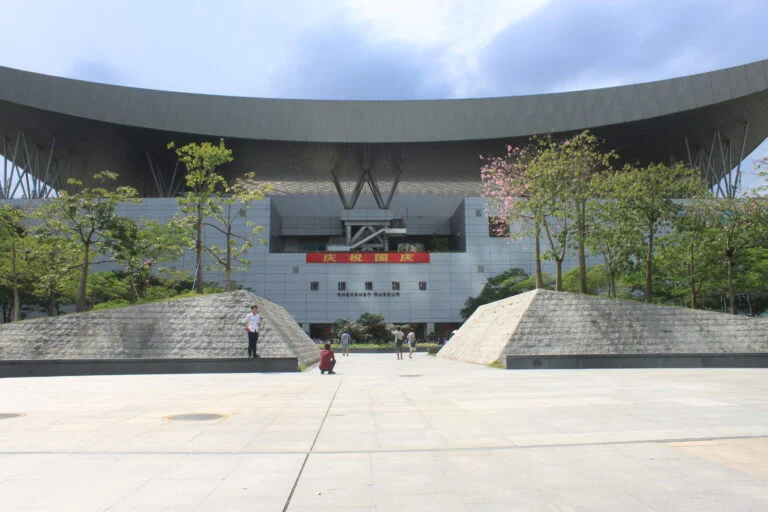
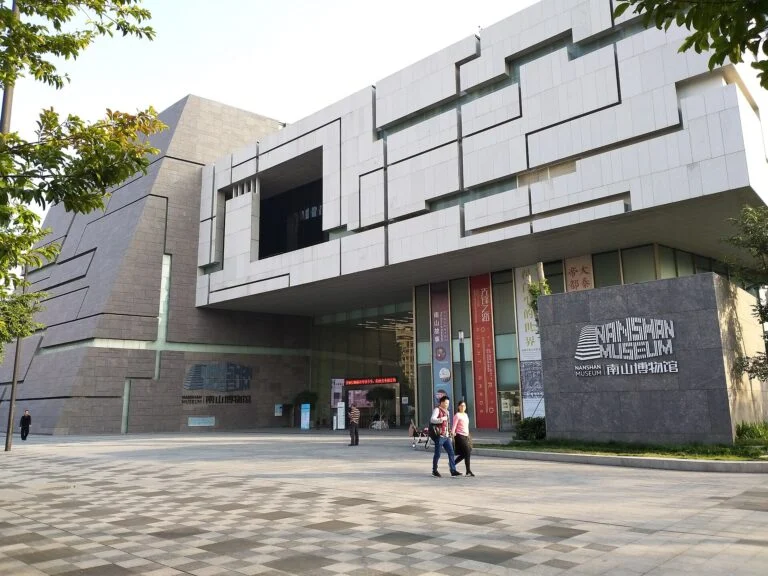
The building and setting contribute to the museum’s role as a civic institution. In a city as visually defined by modern development as Shenzhen, a museum building has to function within a very different urban atmosphere from older capital-city museums. It is not surrounded by centuries of monumental urban symbolism in the same way as institutions in Beijing or older European capitals. Instead, it exists within a city whose character is shaped by newness, expansion, and civic reinvention. That context gives the museum a distinctive role. It becomes one of the places where historical continuity is actively constructed and made visible.
Architecturally, the museum generally works best as a practical and public institution rather than a piece of overwhelming spectacle. That suits its mission. Shenzhen does not need another statement of futuristic visual ambition. It benefits more from a museum that provides clarity, structure, and interpretive stability. The museum’s spaces usually support that by keeping the visitor focused on narrative and content rather than on architectural drama alone.
Its urban setting can also be part of the value of the visit. Seeing the museum within Shenzhen’s modern environment sharpens the contrast between the city’s present-day image and the historical material inside. That contrast is productive. It makes the museum feel more necessary. In another city, a local history museum might be one stop among many. In Shenzhen, it can feel more like a corrective to the city’s surface image and therefore more significant than visitors first expect.
Practical Information
Shenzhen Museum is best visited with the expectation that it is an interpretive museum rather than a “masterpiece museum.” A good approach is to move first through the city-history and reform-era sections, since these are often the areas that most directly explain why the museum matters. Once that larger framework is in place, the local cultural and historical displays become more meaningful.
The museum works well for a moderate-length visit. It is usually manageable enough for visitors who want a useful cultural stop without committing to a full-day museum marathon. At the same time, those with a deeper interest in Chinese urban change or regional history may want to move more slowly and spend longer with the explanatory sections. Reading is often important here. This is not a museum where the most rewarding experience comes only from visual highlights.
Because Shenzhen is often approached through shopping districts, business areas, and modern architecture, the museum can serve as a particularly useful counterbalance within an itinerary. It works best when treated not as an optional extra, but as a place that helps make the rest of the city more intelligible.
Why Visit
Shenzhen Museum is best for first-time visitors to Shenzhen, travelers interested in urban history, and anyone who wants to understand how the city became one of the defining symbols of modern Chinese development. Its greatest strength is that it gives historical and cultural context to a city that is often seen only through its present. That alone makes it valuable.
What makes the museum worth prioritising is not the promise of one unforgettable object, but the way it makes Shenzhen readable. It explains the city as a lived place with a past, a region, and a wider role in national change. For visitors who arrive in Shenzhen curious about more than the skyline, that is a real service.
The museum is therefore most rewarding for people willing to look for understanding rather than spectacle. In that role, it succeeds well. It may not be the most glamorous museum in China, but it can be one of the most useful. For anyone trying to see Shenzhen as more than a symbol of speed and modernity, Shenzhen Museum is one of the clearest places to begin.