Museum of London Docklands
London, United Kingdom. The Museum of London Docklands presents the layered history of London’s river, docks, and port-related activities. Located in the heart of one of London’s most historically significant dock areas, this local history museum explores…

Best forMuseum lovers, culture travelers, first-time visitors
Setting / nearbyLondon, United Kingdom
Overview
The Museum of London Docklands presents the layered history of London’s river, docks, and port-related activities. Located in the heart of one of London’s most historically significant dock areas, this local history museum explores how the Thames served as both a gateway and a lifeline for the city’s growth over several centuries. It highlights the evolution of London’s docks from their medieval origins through their industrial peak and eventual decline in the late 20th century. The museum focuses on the maritime history and the social history connected to the River Thames and Docklands area, including the lives of those who worked there and the building of the modern city. Visitors gain insight into how the docks shaped London’s economy, culture, and identity, reflecting broader patterns of trade, migration, and industrial development.
The museum’s approach takes a thematic and narrative form rather than a chronological display alone. Through carefully arranged exhibits, it manages to tell stories not only about commercial shipping but also about the complex social fabric of dockworkers, merchants, migrants, and residents. The museum also holds particular relevance given its location in the West India Docks, an area associated with the transatlantic trade, including the difficult history related to the slave trade, as well as the role the docks played during London’s transformation into a major global port.
Collection Highlights
The core collection centers on objects, documents, and models relating to London’s docklands and maritime commerce. For example, visitors can see tools, machinery, and shipping paraphernalia that illustrate the daily operations of the docks. Large dock cranes and ship models help visualize the scale and technology of maritime trade over time. The museum also possesses detailed maps and plans of the docks, showing their expansion and engineering innovation during the Industrial Revolution and into the modern era.
One of the most engaging aspects of the collection is the focus on people—individual dockworkers, traders, and immigrants who lived and worked on the waterfront. Photographs, oral histories, letters, and personal artifacts shed light on their lives and working conditions. The museum unpacks the socioeconomic challenges faced by dock workers, including labor strikes and the impact of mechanization. The stories of diverse communities, including those of Caribbean and other immigrant populations who settled in the area in the 20th century, receive attention, underscoring the mix of cultures that the docks fostered.
In addition to maritime trade items, the museum holds exhibits on London’s role in the transatlantic slave trade, presented with appropriate context and sensitivity. This section provides a sometimes difficult but necessary exploration of London’s involvement in global commerce and its human consequences. Visitors will find educational displays addressing these complex histories with care to present multiple perspectives.
In terms of display style, the museum balances traditional object presentation with multimedia elements, including digital interactives and reconstructed docks scenes. This combination helps to clarify how the docklands operated and how they changed, making the history accessible for a wide range of visitors, from families to researchers. However, while visuals and interactive exhibits are present, those expecting a heavily technology-driven experience may find certain installations somewhat dated compared to the latest museum technologies.
Building and Setting
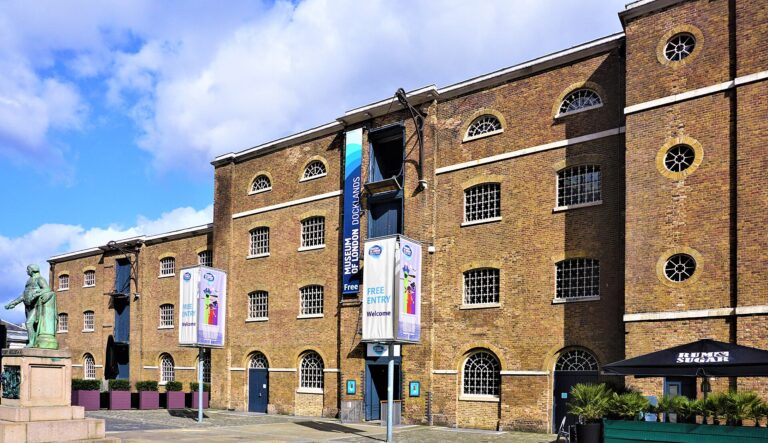
The Museum of London Docklands is housed in a converted 19th-century warehouse, one of the few remaining intact structures from the original West India Docks. The building itself is a substantial, brick industrial structure that retains much of its original character, including large loading bays and robust cast-iron pillars. This historical fabric enhances the museum’s thematic focus, allowing visitors to experience a tangible connection to the working docklands environment rather than an unfamiliar, modern exhibition space.
The docks area around the museum has undergone significant redevelopment in recent decades, transforming from industrial use to a mix of residential and commercial spaces. While this regeneration has brought economic change to the district, it has also altered the historical landscape. The museum serves as a valuable focal point for understanding the layers of activity that preceded the current waterfront modernity.
Situated near Canary Wharf and accessible by river or public transport, the museum’s location offers a stepping-off point for exploring related historical sites nearby. It is not an isolated cultural venue but part of a changing riverside district that continues to evolve. Visitors might want to consider complementary walks along the Thames or visits to nearby historical points connected to London’s maritime heritage.
Practical Information
As with all museums, it is sensible to consult the official website of the Museum of London Docklands before planning a visit. The website will have the most up-to-date details on opening hours, admission conditions, guided tours, events, and accessibility services. This is particularly useful since museums can adjust their schedules or visitor conditions in response to public health guidelines or seasonal factors.
Admission policies, including ticket prices and eligibility for concessions, should be confirmed through the official channel. Potential visitors should also verify information about audio guides or any temporary exhibitions that may be running during their visit. Group visits or those requiring special arrangements may need to consult the museum in advance for appropriate planning.
The museum layout is designed to accommodate family visits and those with limited mobility, though the historic building might pose occasional challenges due to its original industrial architecture. Checking accessibility provisions in advance is advisable. Although there is a shop and café, details about these amenities and their opening hours should also be checked directly.
Why Visit
The Museum of London Docklands offers a focused exploration of London’s waterfront and maritime heritage that complements broader examinations of London’s history found elsewhere. It will appeal particularly to visitors with interests in industrial history, maritime affairs, urban development, and social history. The museum helps contextualize the physical and human dimensions of the docks, a once vital area for the city yet often overlooked in favor of London’s political or cultural landmarks.
It also provides an honest examination of difficult topics, including the role of the docks in the transatlantic slave trade and the realities experienced by dockworkers. The museum’s use of personal stories and community histories lends an immediacy and humanity to these subjects that can deepen visitors’ understanding beyond raw facts.
The location in a genuine former warehouse adds atmosphere, allowing visitors to move through the spaces where cargo once moved and dockworkers labored. This setting grounds the museum's narratives in a built environment, enriching the educational experience compared to a neutral gallery.
While not intended as a broad maritime museum on an international scale, it effectively covers the Docklands with thoroughness and care. Visitors hoping for an exhaustive look at every aspect of maritime navigation or shipping technology might find some areas simplified, but this fits the museum’s primary aim of illustrating local history from various social and economic perspectives.
In sum, the Museum of London Docklands serves as a thoughtful resource for those wishing to understand one of London's most distinctive and historically complex quarters. Its combination of tangible artifacts, evocative setting, and narrative depth makes it a meaningful destination on any itinerary concerned with London’s development and the intertwined stories of its people and port.