Museum of Liverpool
The Museum of Liverpool in Liverpool, United Kingdom, is a city museum that succeeds by treating urban history as something lived, contested.

Best forMaritime history, ships, harbour heritage
Setting / nearbyEurope
Overview
The Museum of Liverpool is one of the most important city museums in the United Kingdom and one of the clearest introductions to Liverpool as a place shaped by trade, migration, music, industry, politics, and public identity. Unlike museums built around a single art form or historical period, it presents the city through many overlapping stories. That broad approach gives it real strength. Liverpool is not reduced to one familiar image, whether that is the docks, The Beatles, football, or maritime history. Instead, the museum shows how all of these elements belong to a much larger and more complicated urban story.
What makes the museum especially compelling is that it feels rooted in the city rather than imposed on it. Liverpool is a place with a very strong public identity, and any museum about the city has to deal with memory, pride, hardship, reinvention, and global connection at the same time. The Museum of Liverpool succeeds because it does not flatten those tensions. It allows visitors to see Liverpool as a city of movement and exchange, but also as a city shaped by social struggle, working life, migration, and strong local culture.
For visitors, this makes the museum valuable whether they already know Liverpool well or are arriving for the first time. It works as an introduction to the city, but also as a place where people can deepen their understanding of the waterfront, the streets, the music scene, and the communities that made Liverpool what it is. That range is one of the museum’s great advantages. It is not only informative. It also helps explain why Liverpool feels different from many other British cities.
The museum is especially effective because it focuses on the lived city. Instead of telling only a top-down story of major dates and institutions, it gives space to everyday life, housing, work, transport, family histories, and local identity. That human scale makes the museum more memorable and gives the broader history much more force.
Collection Highlights
One of the museum’s main strengths is the way it brings together different aspects of Liverpool’s history without making them feel disconnected. Displays linked to the docks, trade, migration, transport, and urban growth are especially important because they help explain how Liverpool became such a major port city and why its influence extended far beyond the region. In a museum like this, objects often matter most when they help reveal networks of trade, movement, and human experience, and that is where the Museum of Liverpool is particularly strong.
The museum is also well known for galleries and material connected to popular culture and everyday city life. This is important because Liverpool’s identity has never been shaped only by commerce and shipping. Music, fashion, sport, and local speech all form part of the city’s public image, and a strong city museum has to take those things seriously. The Museum of Liverpool works because it understands that cultural life is not a minor addition to history. It is part of how cities remember themselves and present themselves to others.
Another major strength lies in the treatment of social history. Liverpool’s story includes prosperity and hardship, immigration and departure, civic pride and urban struggle. A museum about the city becomes richer when it gives attention to these contrasts rather than trying to present a single triumphant narrative. The Museum of Liverpool is most rewarding when it shows how different communities experienced the city differently, and how urban identity was formed through work, home, neighborhood, and change across generations.
The displays connected to transport and public life are also often especially memorable. City museums become more vivid when they include the material culture of daily movement and shared urban experience, and Liverpool’s development cannot be understood apart from its transport, waterfront, and built environment. These themes help give the museum both physical and emotional grounding.
Building and Setting
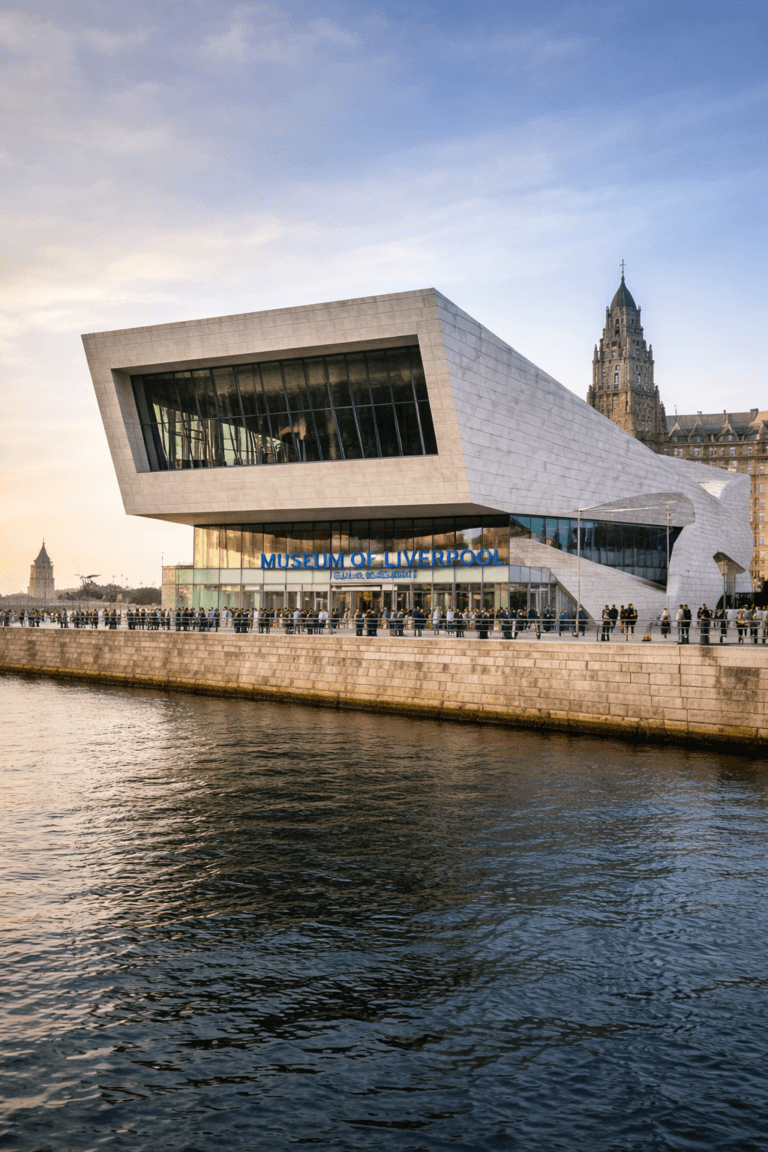
The museum’s setting on Liverpool’s waterfront is one of its greatest advantages. A museum about the city could hardly ask for a more meaningful location. The waterfront is central to Liverpool’s identity, and placing the museum there gives the visit immediate context. Visitors are not learning about the port city in abstraction. They are standing within one of the spaces that shaped its historical role and public image.
This location also gives the museum a strong civic presence. It feels like a public institution made for the city rather than a museum tucked away from urban life. That matters because a museum about Liverpool should feel connected to the energy and openness of the place. The building supports that idea by standing visibly within one of the city’s best-known cultural and historic areas.
Architecturally, the museum works well when it provides enough openness for broad city narratives while still allowing the displays to hold attention. A museum of urban history needs room for different kinds of material, from smaller social-history objects to larger elements connected to transport, music, or public life. The Museum of Liverpool benefits from having a setting that suits these varied stories without making the experience feel fragmented.
The surrounding area also strengthens the visit. Because the museum is part of a wider waterfront and heritage landscape, it naturally connects to other parts of Liverpool’s story. Visitors can move between museum interpretation and the city itself very easily, and that relationship between inside and outside is one of the institution’s most valuable qualities.
Practical Information
The Museum of Liverpool is best visited with enough time to move through more than one major theme properly. Although it is very accessible, it is not a museum that should be rushed if possible. The city’s story is broad, and the museum is most rewarding when visitors allow time for both the larger historical narratives and the more personal displays connected to everyday life and identity.
It works well for a wide range of visitors. Families can enjoy the variety of subjects and the clear presentation, while adult visitors often find the strongest value in the museum’s social and historical depth. It is especially useful for travelers early in a Liverpool stay, because it helps make the rest of the city more understandable.
Because exhibitions and visitor arrangements can change, checking current official information before visiting is always sensible. But in general terms, the museum is strong enough to justify real time in an itinerary rather than being treated as a quick extra stop.
Why Visit
The Museum of Liverpool is worth visiting because it offers one of the best ways to understand the city as a whole. It brings together trade, migration, music, sport, daily life, and public identity in a way that feels broad but still human. That combination makes it much more than a background museum for tourists.
It is also worth visiting because Liverpool is a city with an unusually strong sense of itself, and this museum helps explain where that comes from. The displays show how the city’s local distinctiveness was shaped by global movement, working life, cultural creativity, and shared memory.
If you want one museum in Liverpool that gives you the clearest sense of the city’s character, history, and public identity, the Museum of Liverpool is one of the strongest choices. It is engaging, grounded, and one of the most useful cultural stops in the city.