Manchester Museum
Manchester Museum combines archaeology, natural history, and global cultural collections in a major university museum that balances Victorian character with a fresh public-facing identity.

Best forScience, technology, hands-on learning
Setting / nearbyEurope
Overview
Manchester Museum is one of the United Kingdom’s most distinctive university museums and one of the strongest museum visits in Manchester for anyone interested in archaeology, anthropology, and natural history in one place. Part of the University of Manchester, it has the unusual advantage of feeling both academic and public at the same time. That gives the museum a character different from many city museums or purely family-oriented natural history institutions. It is serious without being closed off, and broad without becoming shapeless. For visitors, this means a museum that can work equally well as a general introduction to major themes in human culture and the natural world, or as a more focused stop for those with particular interests in ancient civilisations, fossils, animals, or anthropological collections.
The museum’s appeal begins with its range. Rather than centring on one narrow subject or one iconic object, Manchester Museum offers a broad institutional mix that reflects the traditions of a university museum. Ancient Egypt, archaeology, natural history, living collections, and world cultures all play visible roles. This creates a visit that feels varied and intellectually open. It is not simply a museum of display, but a museum of inquiry. That university context matters. Visitors often sense that the collections are part of a larger world of research, teaching, and interpretation rather than just being arranged for passive viewing.
What makes the museum especially rewarding is that it generally avoids feeling like a dry academic storehouse. Even though the collections are serious and diverse, the museum often remains approachable. Families can enjoy the more immediate and visual sections, such as the natural history displays and living environments, while visitors with deeper interests can spend more time in the archaeological and anthropological galleries. This layered accessibility is one of its best qualities. The museum does not require specialist knowledge to appreciate, but it offers enough depth that more engaged visitors are also well served.
Manchester Museum is also one of those institutions that benefits from being seen in relation to its city. It sits on Oxford Road, within a part of Manchester closely associated with education, research, and public institutions. That setting suits it. The museum feels connected to the intellectual and cultural life of the city rather than isolated from it. For visitors, it can therefore function not only as a museum stop, but as part of a broader understanding of Manchester as a place shaped by science, industry, learning, and global connections.
Collection Highlights
Among the museum’s strongest highlights are its Egyptology collections, which are often among the first sections visitors remember. Ancient Egyptian material has a particular ability to anchor a museum visit because it combines strong visual recognition with a broad historical appeal, and Manchester Museum handles this area well. Mummies, coffins, carved objects, and related archaeological material provide one of the clearest points of entry into the museum. These galleries often work for both first-time visitors and more experienced museum-goers because the subject is so rich and because the objects retain real presence in person.
The natural history collections are another major strength. These displays provide much of the museum’s broad public appeal and often give the visit a strong visual rhythm. Animal specimens, skeletal material, and environmental interpretation help make the museum accessible to visitors who may not initially come for archaeology or anthropology. At the same time, these sections are more than crowd-pleasers. They contribute to the museum’s identity as a place where the natural world and human history are presented in relation to one another rather than in isolation.
Archaeology more broadly is also one of the museum’s core strengths. Manchester Museum works well when it shows how objects from different times and places can help build larger historical understanding. Some of the archaeological displays may not have the immediate fame of the Egyptian sections, but they help widen the visit and give the museum intellectual substance. These galleries remind visitors that this is not a museum built around one star attraction, but around the cumulative value of collections.
The anthropology and world cultures collections are another important part of the experience. In many museums, such sections can feel secondary or under-explained, but here they are an essential part of what makes the institution distinctive. They broaden the visit beyond natural history and ancient civilisations and show how a university museum can bring together different ways of understanding human life. These galleries may not always be the most visually dramatic, but they often contain some of the museum’s most thoughtful material.
Depending on current programming, the museum’s living or more interactive sections can also be memorable. These elements often help connect the institution to contemporary audiences, especially younger visitors, and prevent the museum from feeling purely historical or static. This mixture of old collections and more current modes of engagement is one reason Manchester Museum remains so strong as a public institution.
Building and Setting
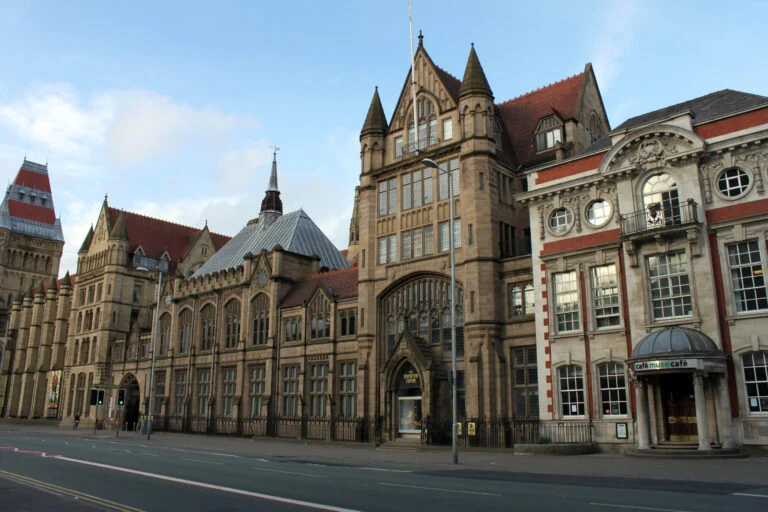
The building contributes quietly but effectively to the museum’s character. It does not overwhelm the collections through spectacular contemporary architecture, but it has the seriousness and institutional presence that suits a university museum. Visitors often feel they are entering a place of established public learning rather than a purely entertainment-driven venue, and this tone helps frame the collections well.
Inside, the museum’s layout reflects its broad collecting history. Different sections can have different rhythms and atmospheres, and that variety helps keep the visit interesting. Some galleries feel denser and more object-led, while others are more open or more interpretive in style. This slight unevenness is not really a flaw. In a museum of this type, it often adds to the sense of layered institutional development. The building feels like a place that has grown with its collections and purposes over time.
Its position on Oxford Road also adds to the experience. This is one of the city’s major academic and cultural corridors, and the museum feels naturally at home there. The setting reinforces the institution’s identity as both a university resource and a public museum. It also makes the museum easy to include within a broader day in Manchester, especially for visitors interested in the city’s educational and civic atmosphere rather than only its more commercial centre.
The surroundings do not create the sort of monumental museum setting found in some capital cities, but that is part of the museum’s charm. Manchester Museum feels embedded in everyday urban and academic life. This can make the visit feel more grounded and more local, even when the collections themselves are international in scope.
Practical Information
Manchester Museum works well for a wide range of visit lengths. A shorter visit can still be satisfying if focused on the strongest areas, especially the Egyptian and natural history collections, but the museum rewards a slower pace if time allows. Because the collections are broad rather than concentrated into one dominant route, visitors often benefit from deciding in advance which sections matter most to them.
A good approach is to begin with the galleries that offer the strongest immediate visual impact, such as the Egyptology or natural history sections, and then move into archaeology and anthropology afterwards. This creates a clear rhythm and helps anchor the broader experience. Families may find this especially helpful, as it combines immediate appeal with more reflective sections later in the visit.
The museum is generally approachable and adaptable to different kinds of visitor, but its range means that focus is useful. It is not overwhelming on the scale of the world’s largest museums, yet it is rich enough that trying to absorb every section equally can still become tiring. It is often better to have a selective and attentive visit than to rush through every room.
Why Visit
Manchester Museum is best for visitors who want a broad museum experience that combines natural history, archaeology, anthropology, and university-level seriousness without becoming inaccessible. It is an excellent choice for families, curious first-time visitors to Manchester, and anyone who appreciates museums that feel intellectually grounded but still welcoming.
What makes it worth prioritising is the balance it achieves. It is wide-ranging without feeling empty, academic without feeling closed, and public without losing seriousness. Few museums combine these qualities as well. Rather than relying on a single famous object or a highly theatrical presentation, Manchester Museum builds its strength through the quality and range of its collections and through the sense that it remains connected to a larger culture of research and learning.
For visitors to Manchester, it is one of the city’s most rewarding museum stops because it offers both substance and variety. It may not have the global celebrity of some larger institutions, but it has something more durable: a strong museum identity, a broad and intelligent collection, and an atmosphere that makes learning feel natural rather than forced. For that reason, Manchester Museum stands out as one of the most worthwhile cultural visits in the city.