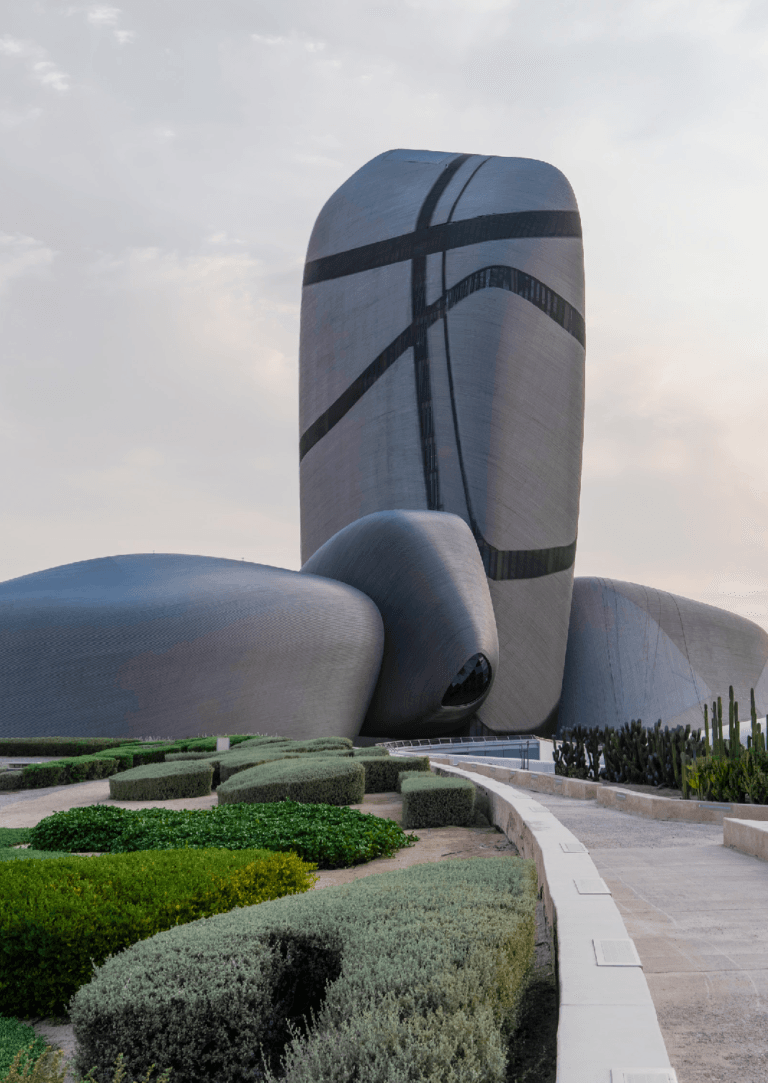
King Abdulaziz Center for World Culture (Ithra)
King Abdulaziz Center for World Culture (Ithra) is one of the Middle East’s most significant modern museums—built not only to display objects, but to set.

Best forScience, technology, hands-on learning
Setting / nearbyMiddle East
Overview
The King Abdulaziz Center for World Culture, widely known as Ithra, is one of the most ambitious cultural institutions in Saudi Arabia. Located in Dhahran, it is more than a single museum building. It is a large cultural complex that brings together exhibitions, learning spaces, performances, and public programs under one striking architectural identity. Within that larger setting, the museum element plays an important role by presenting art, heritage, and cultural history in a way that feels both contemporary and deeply connected to the region.
What makes Ithra especially interesting is that it does not fit the model of a traditional museum focused on one narrow subject. Instead, it works as a broad cultural destination. Visitors come not only to see objects in display cases, but also to engage with ideas about Saudi culture, Islamic heritage, creativity, design, science, and storytelling. That wider mission gives the place a different atmosphere from older museums. It feels active, civic, and forward-looking, while still drawing on history and tradition.
For travelers, Ithra is often one of the clearest examples of how Saudi Arabia has invested in major public cultural spaces in recent years. For local audiences, it functions as a center for education, exhibitions, and events. For museum visitors specifically, it offers a chance to experience a collection and exhibition program inside one of the most visually distinctive cultural buildings in the country. Even before entering the galleries, the institution gives the impression that this is meant to be a landmark rather than an ordinary day out.
That sense of ambition shapes the whole visit. Ithra is a place where architecture, curatorship, and public access all work together. It aims to be impressive, but it also tries to be useful: a place where visitors can spend time, explore different parts of culture, and return more than once. This combination of scale, purpose, and design is what makes it stand out.
Collection Highlights
The museum at Ithra is known for presenting a varied view of culture rather than limiting itself to one simple story. Its galleries are associated with themes that include contemporary Middle Eastern art, Saudi culture, Islamic art, and the natural history of the Arabian Peninsula. This gives the museum a broader intellectual range than many visitors may expect at first glance. Instead of moving through a single chronological narrative, you are more likely to encounter different ways of understanding the region and its place in the wider world.
One of the strongest aspects of the museum is this sense of contrast. A visitor may move from displays that explore Saudi identity and heritage to works that connect the Arabian Peninsula to wider artistic and historical traditions. Islamic art adds another layer, bringing craftsmanship, visual culture, and historical depth into the experience. The result is a museum that feels less like a storehouse of isolated treasures and more like a conversation between different fields of culture.
The contemporary dimension is also important. Ithra is not only concerned with preserving the past. It is equally interested in how art and culture continue to develop in the present. This makes the museum feel alive rather than static. Depending on the exhibitions on view, visitors may encounter works that reflect modern regional concerns, new artistic voices, and changing approaches to display. That flexibility is one reason the institution can reward repeat visits.
Another strength is the way the museum sits within the wider Ithra complex. A visit to the galleries can easily become part of a much broader cultural experience that includes public exhibitions, talks, performances, or time spent in other parts of the center. This helps the museum feel connected to everyday cultural life rather than sealed off from it. For many visitors, that larger ecosystem is part of the appeal.
Building and Setting
The architecture of Ithra is one of its biggest attractions. The center was designed by Snøhetta, and the building has become famous for its sculptural form. Rather than following the familiar lines of a classical museum, Ithra rises as a cluster of large, rounded volumes that appear almost like massive stones shaped by time and landscape. This gives the complex a dramatic presence and makes it instantly recognizable.
The design works particularly well because it feels monumental without seeming decorative for its own sake. The building has a strong visual identity, but it also reflects the institution’s cultural purpose. It looks like a place meant for discovery, gathering, and public experience. The unusual exterior creates curiosity, while the interior spaces guide visitors through galleries, shared areas, and viewpoints in a way that supports the wider program of the center.
Inside, the atmosphere is generally spacious and controlled. Good cultural architecture does not only impress from the outside; it also helps shape how people move, pause, and pay attention. Ithra succeeds because it balances drama with function. Visitors are aware that they are in a major landmark, but the spaces are still designed to host exhibitions and public use rather than just admiration of the building itself.
Its location in Dhahran also matters. Ithra stands in a region long associated with Saudi Arabia’s oil history, and the center carries symbolic weight because it represents a broader investment in culture, knowledge, and human potential. That context gives the site an added meaning. It is not simply a museum in isolation; it is also part of a larger national story about education, creativity, and cultural development.
Practical Information
Ithra is best approached as a place to spend real time rather than as a quick stop. Because the center includes multiple attractions and regularly hosts exhibitions and programs, visitors benefit from arriving with enough time to explore at a slower pace. Even those mainly interested in the museum galleries may find that the wider setting encourages a longer visit.
It is also wise to check the latest official visitor information before going. As with many major cultural institutions, opening arrangements, exhibitions, and visitor access can change. Looking at the current official schedule before the visit helps avoid disappointment and makes it easier to plan around any temporary exhibitions or special events that may be taking place.
The site works well for different audiences. Travelers interested in architecture will find plenty to appreciate even before reaching the museum spaces. Visitors focused on Saudi culture and regional history will likely value the thematic breadth of the galleries. Families, students, and general cultural visitors may also find Ithra appealing because it offers more than one type of experience in the same location.
Because of its scale and profile, Ithra is often best treated as a destination in its own right. Rather than squeezing it into the edge of a day’s schedule, it makes more sense to give it enough room in an itinerary. That way, visitors can appreciate both the museum and the broader atmosphere that has made Ithra one of the most recognized cultural landmarks in Saudi Arabia.
Why Visit
Ithra is worth visiting because it combines several strengths that are not often found together in one place. It has landmark architecture, a museum with thematic depth, and a broader cultural mission that makes the whole institution feel active and relevant. Some museums are memorable mainly for their collections, while others are remembered mostly for their buildings. Ithra stands out because both elements matter.
It is also an important stop for anyone wanting to understand the direction of cultural development in Saudi Arabia. The center presents heritage and contemporary creativity side by side, showing that cultural institutions in the kingdom are not only about preservation but also about participation, education, and new forms of public life. That gives the visit a significance beyond the individual galleries.
For architecture lovers, it is one of the most visually distinctive cultural buildings in the region. For museum visitors, it offers a broader and more layered experience than the word “museum” alone might suggest. For travelers in the Eastern Province, it is one of the clearest major cultural destinations to include in an itinerary.
If you want a place that combines art, culture, architecture, and a strong sense of public ambition, Ithra is one of the most rewarding visits in Saudi Arabia. It is not simply somewhere to look at objects. It is somewhere to experience how a modern cultural institution can shape the identity of a place.