Doge’s Palace
Venice, Italy. The Doge’s Palace in Venice, Italy, is a historic palace museum that offers insight into the political and artistic heritage of one of Europe’s most influential maritime republics. Serving for centuries as the seat…
Best forMuseum lovers, culture travelers, first-time visitors
Setting / nearbyVenice, Italy
Overview
The Doge’s Palace in Venice, Italy, is a historic palace museum that offers insight into the political and artistic heritage of one of Europe’s most influential maritime republics. Serving for centuries as the seat of government and residence for the Doge, the chief magistrate of Venice, the palace is a fundamentally important symbol of Venetian history and governance. Its function extended beyond a private palace to house the government offices, courts, and prisons, making it an institutional center rather than just a noble residence. Today, it functions as a museum where visitors can explore its richly decorated rooms, architectural features, and collections that reveal the complexities of Venice’s political and cultural past.
Collection Highlights
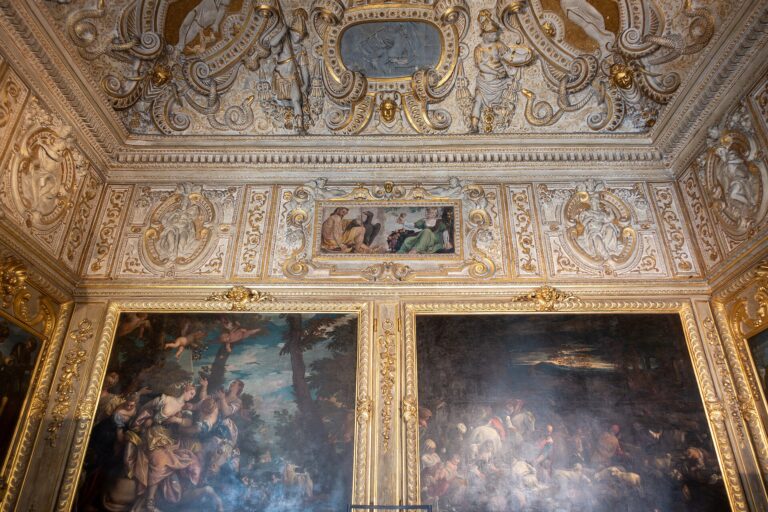
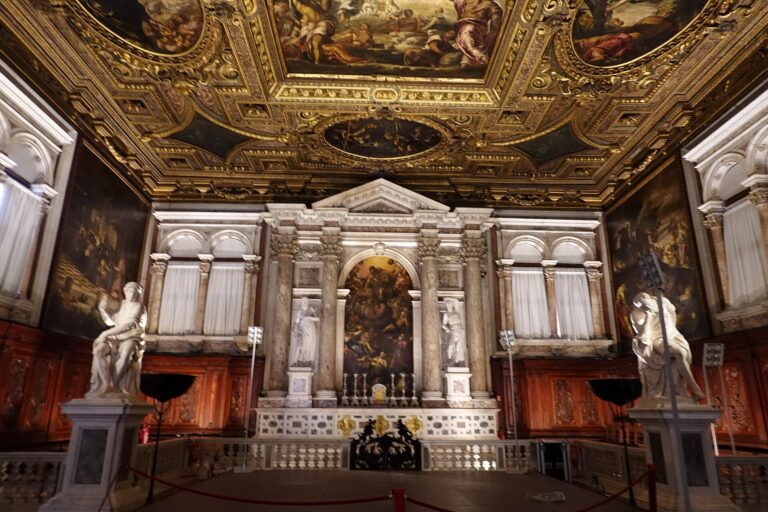
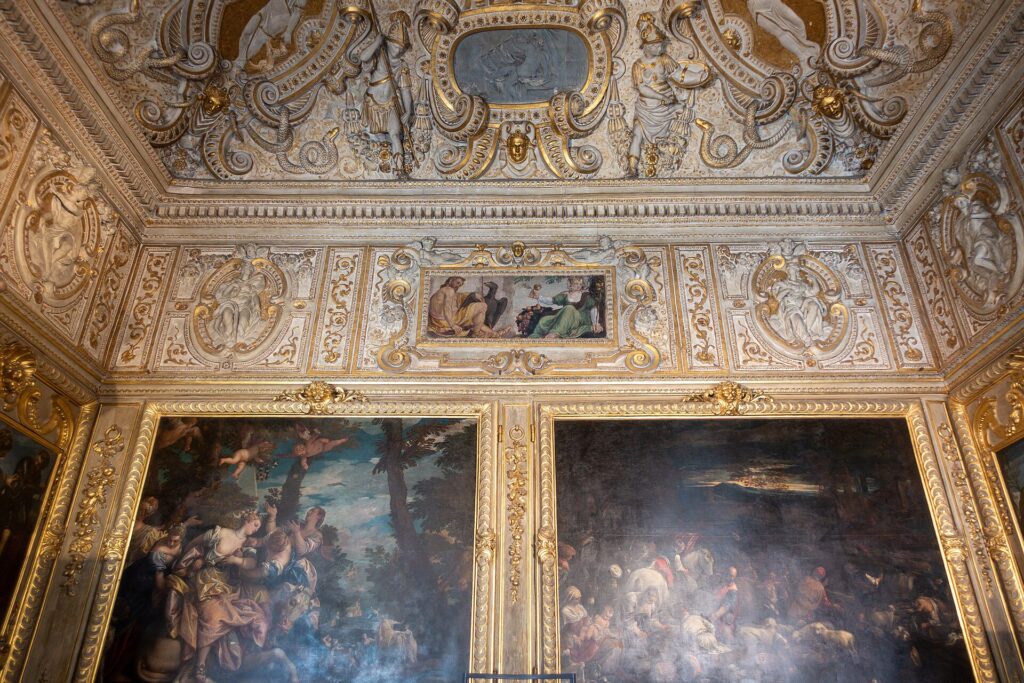
The Doge’s Palace displays an extensive collection that encompasses architecture, paintings, sculpture, and historic artifacts related to Venetian politics and art. Visitors will find themselves within spaces that once hosted government meetings, ceremonial events, and judicial proceedings, all decorated with artwork by some of Venice’s most celebrated Renaissance artists.
Noteworthy are the ceilings and walls covered with paintings by Tintoretto and Veronese, among others. These artists worked specifically to illustrate the power and divine sanction of the Venetian Republic through allegory and myth. The Sala del Maggior Consiglio (Hall of the Great Council) includes a monumental canvas by Tintoretto, which occupies an entire wall and portrays historical and legendary scenes tied to Venice’s origins and values.
The palace also contains numerous sculptures and works in stone that represent Venice’s judicial and governmental authority, emphasizing the city’s role as a center of law and diplomacy. Period furniture and decorative arts are occasionally on display, giving visitors a sense of the day-to-day environment of Venetian officials. The prison chambers and the famous Bridge of Sighs nearby—linking the palace to the prison—offer a glimpse into the darker side of Venice’s justice system.
Building and Setting
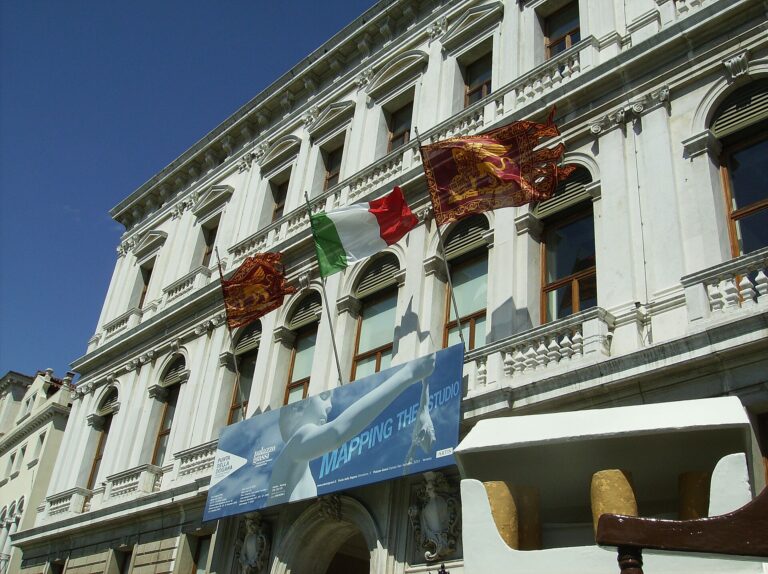
The Doge’s Palace is situated on the Piazzetta San Marco, adjacent to St. Mark’s Basilica and facing the lagoon. The building itself is an architectural landmark of Venetian Gothic style, with later Renaissance modifications. Its distinctive pink Verona marble and white Istrian stone exterior, punctuated by ornamental arches and tracery, make it an unmistakable presence when viewed from the waterfront.
The palace’s layout is complex, reflecting its multiple functions over time. It combines grand ceremonial halls such as the Chamber of the Great Council with more intimate rooms used for private governance activities. The structure also incorporates defensive elements and prison cells, which contrast with the lavish artistic decorations of the public areas.
Located in the historic heart of Venice, the setting provides a striking glimpse into the city’s medieval and Renaissance urban environment. The palace’s proximity to other significant landmarks of Venice allows visitors to appreciate the broader context of the city’s political and religious life during its heyday.
Practical Information
Since details about opening hours, guided tours, admission fees, accessibility, and services can change, it is advisable for prospective visitors to check the official website of the Doge’s Palace or contact the administration before planning a visit. This will ensure that they have the most current information regarding access and visiting conditions.
Visitors should be prepared for crowds during the high tourist season, as the palace is one of Venice’s more frequented cultural sites, which may affect the visitor experience especially in confined areas such as the prison section. The palace involves a fair amount of walking, including stairs and uneven surfaces typical of historic buildings, so comfortable footwear is recommended.
Entry may include multiple areas within the complex, but some specialized sections or temporary exhibitions may have separate access or additional charges, details of which are best confirmed in advance.
Why Visit
The Doge’s Palace appeals strongly to visitors with an interest in European history, Renaissance art, political history, and architecture. It is not a purely art-focused museum but a palace museum that tells a wider story about governance, law, and culture in Venice. For those who appreciate the atmospheric qualities of historical interiors combined with important works by renowned artists, this museum offers a layered experience that goes beyond simple art viewing.
While the palace represents Venice at its most powerful, it also presents the city’s complexities, including its practices of justice and imprisonment. The juxtaposition of grand government halls with prisoner cells adds a thought-provoking dimension for those exploring the realities behind the city’s historical image.
Visitors who appreciate architectural features will find the Venetian Gothic design and the palace’s position facing the lagoon a significant part of the visit. It helps communicate how Venice projected its identity to visitors arriving by sea, resonating with the city’s history as a seafaring republic.
In summary, the Doge’s Palace combines a broad historical narrative, fine art, and distinctive architecture. It serves those looking for more than a collection of objects, instead offering an experience of place that captures key aspects of Venice’s past society and governance. For anyone interested in how political power was manifested and represented physically, the Doge’s Palace remains an essential site in Venice.