Colombo National Museum
Colombo, Sri Lanka. The Colombo National Museum stands as Sri Lanka’s largest museum, serving as a central repository for the country’s cultural and historical artifacts. Established in 1877, it is among the oldest museums in South Asia,…
Best forMuseum lovers, culture travelers, first-time visitors
Setting / nearbyColombo, Sri Lanka
Overview
The Colombo National Museum stands as Sri Lanka’s largest museum, serving as a central repository for the country’s cultural and historical artifacts. Established in 1877, it is among the oldest museums in South Asia, founded during British colonial rule with an initial focus on archaeology and anthropology. Over time, it has expanded its scope to include a broad range of objects tied to Sri Lanka's history, art, and ethnography, reflecting the island’s complex past—from ancient kingdoms through colonial periods to the present day. The museum’s role is to collect, preserve, and present material that charts the various stages of Sri Lankan civilization.
Collection Highlights
The museum’s collections offer a detailed look at Sri Lanka’s historical legacy. Among its archaeological material are relics from ancient cities such as Anuradhapura and Polonnaruwa, including stone sculptures, inscriptions, and artifacts unearthed from excavation sites. These highlight the island’s early Buddhist culture and its classical kingdoms. Stone statues of Buddha in different artistic styles illustrate changing religious practices and regional influences, some dating back to the Anuradhapura period (4th century BCE to 11th century CE).
The ethnographic collection delves into the traditional life and customs of Sri Lanka’s various ethnic groups. Items such as traditional masks, textiles, tools, and household objects reflect craftsmanship and social practices that survive in rural communities. Particularly notable are the ceremonial masks used in dance rituals, which are regionally specific and tied to healing and exorcism traditions.
The museum also holds a significant number of colonial era artifacts, including furniture, weapons, and costumes from the Portuguese, Dutch, and British periods. These objects illustrate the cultural exchanges and conflicts that shaped modern Sri Lanka. Among the displays are weaponry from the Kandyan Kingdom and later colonial military equipment, which document the island’s prolonged encounters with European powers.
In addition to archaeological and ethnographic items, the museum preserves a collection of historical manuscripts, including palm-leaf documents inscribed in Sinhala and Tamil. These manuscripts provide insight into literary traditions and administrative systems before the widespread use of printed books.
Building and Setting
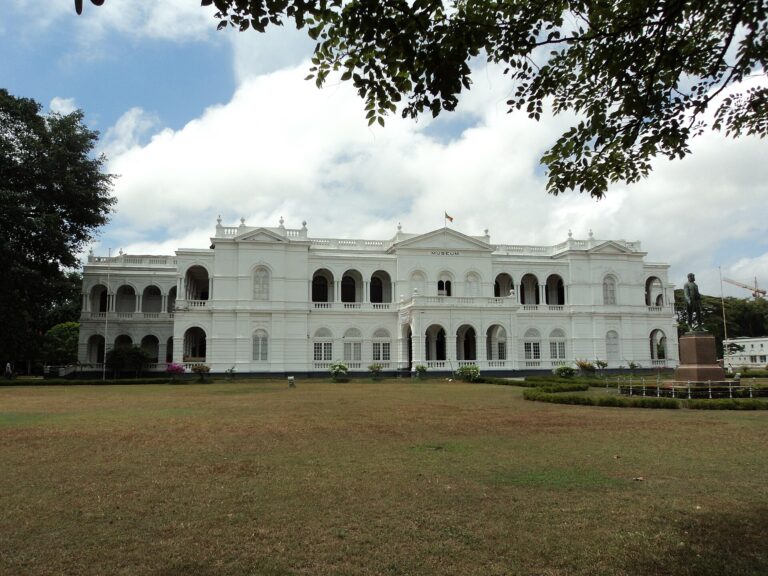
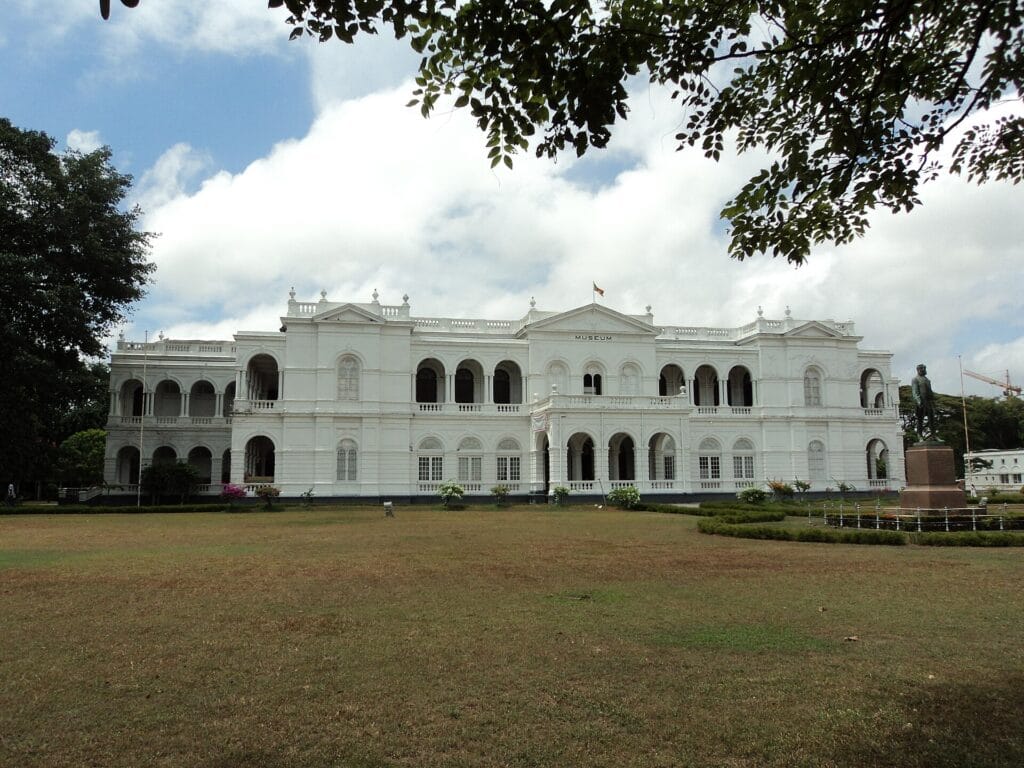
Housed in a grand red-brick building designed in the Italianate style, the museum’s structure dates back to the late 19th century. The building was planned as a provincial museum to showcase artifacts in the heart of Colombo, which at the time was emerging as a key colonial administrative center. Its architecture combines European design with local influences, evident in the covered verandas and ornamental detailing.
The museum is situated in Cinnamon Gardens, an area known for its colonial-era residences and botanical gardens. This location places it among several other cultural institutions and parks, though the museum itself sits back from the busy streets. The compound includes gardens and open spaces that contain some sculptures and monuments related to Sri Lankan heritage.
The interior is divided into multiple galleries, some dedicated to particular periods such as ancient history or the Kandyan era. The layout reflects chronological and thematic organization, though the presentation style reflects its historical roots as a colonial institution and has seen gradual modernization.
Practical Information
For current visiting hours, admission fees, accessibility provisions, and available tours or educational programs, prospective visitors should consult the official website or contact the museum directly. The museum does not always provide audio guides or multilingual labels, so guests may wish to prepare with a guidebook or reference material covering Sri Lankan history for fuller understanding.
The location in central Colombo makes it accessible by public transport and a short distance from major hotels and landmarks. Visitors planning a trip combining multiple cultural sites in the city might find the museum’s proximity to places like the Colombo Dutch Museum and Independence Memorial Hall convenient.
Why Visit
The Colombo National Museum appeals primarily to those interested in Sri Lanka’s archaeological and ethnographic record. It gathers a wide span of material documenting the island’s historical trajectory, making it an informative place to explore the roots of Sri Lankan culture and society in one location.
Its most valuable asset lies in the depth of artifacts from the ancient kingdoms, particularly from Anuradhapura and Polonnaruwa, which would interest anyone curious about early Buddhist civilization and South Asian art history. Likewise, the ethnographic artifacts provide a window into living traditions that have changed little over centuries, showing a dimension of Sri Lankan heritage that can be overlooked in more contemporary narratives.
Those expecting a state-of-the-art museum experience may find some exhibition spaces and labeling less contemporary than in newer institutions, but this does not diminish the factual content and historical range on view. Understanding the museum’s early establishment as part of colonial administration explains some of its organizational character.
Overall, the museum serves as a principal reference point for understanding Sri Lanka’s past through objects and documents. It provides a grounding in Sri Lanka’s diverse history for visitors who want more than a cursory overview, especially when supplemented by other local sites and historical resources.
Visitors should plan to spend a couple of hours here to move through its main galleries without rush. The museum suits those with an interest in South Asia’s archaeological and cultural landscapes, though its significance extends to anyone wanting deeper context about Colombo and Sri Lanka’s heritage.