Vatican Museums

Tickets & Tours
Compare ticket options and guided tours from trusted booking partners.
We may earn a commission if you book through these links.
Overview
The Vatican Museums represent one of the most vast and distinguished museum complexes worldwide. Unlike a conventional museum centered on a single theme or collection type, the Vatican Museums encompass a succession of diverse collections, historic rooms, and ceremonial spaces nestled within Vatican City. The institution’s immense scale and layered nature make it uniquely compelling yet demanding to navigate. Its defining feature is the intimate connection between the art and the papal history that commissioned and displayed it. Rather than a neutral presentation, the museums unfold as a testament to centuries of religious, political, and institutional power, where art serves as both cultural treasure and symbol of authority. Visitors do not simply observe artworks arranged under contemporary curatorial principles, but traverse spaces where artistic masterpieces coexist with the legacy of the Catholic Church’s patronage. For first-timers, this can feel overwhelming—crowds, continuous progression through numerous rooms, and the sheer abundance of visual richness often exceed typical museum experiences. Yet this intensity is integral to the Vatican Museums’ distinctive appeal. The best way to engage is with tempered expectations: prioritizing a selection of key highlights over attempting to absorb everything, appreciating the visit as a journey through an extraordinary accumulation of cultural wealth.
Collection Highlights
The range of collections is so extensive that it resists simple summarization, yet certain areas stand out as emblematic highlights. The Raphael Rooms remain among the most compelling, showcasing an exceptional synthesis of high Renaissance artistic achievement and purpose-built architectural setting. Raphael’s frescoes—most famously the School of Athens—are inseparable from the rooms themselves, where the art’s power emerges equally from its integration with spatial and ceremonial context. Another singular centerpiece is the Sistine Chapel, renowned for Michelangelo's ceiling fresco and Last Judgment. These works represent some of Western art’s most iconic images and are integral to the museums’ enduring allure. Visitors should be mindful, however, that the chapel experience often involves significant crowds, which can diminish the tranquility traditionally associated with such masterpieces. The classical sculpture galleries form another critical component of the Vatican Museums’ identity. Featuring masterpieces such as the Laocoön and Apollo Belvedere, these collections trace the Church’s role in preserving and reviving antiquity. They provide an important counterbalance to the painted and decorative richness dominating much of the complex, demonstrating the museums’ broader cultural scope beyond exclusively Christian art. Equally memorable are the Gallery of Maps and the Gallery of Tapestries, whose decorative opulence and theatrical ambiance exemplify the museums’ cumulative sense of abundance. Beyond these well-known highlights, numerous galleries devoted to decorative arts and papal apartments invite more deliberate exploration, rewarding visitors who venture beyond the most famous stops.
Building and Setting
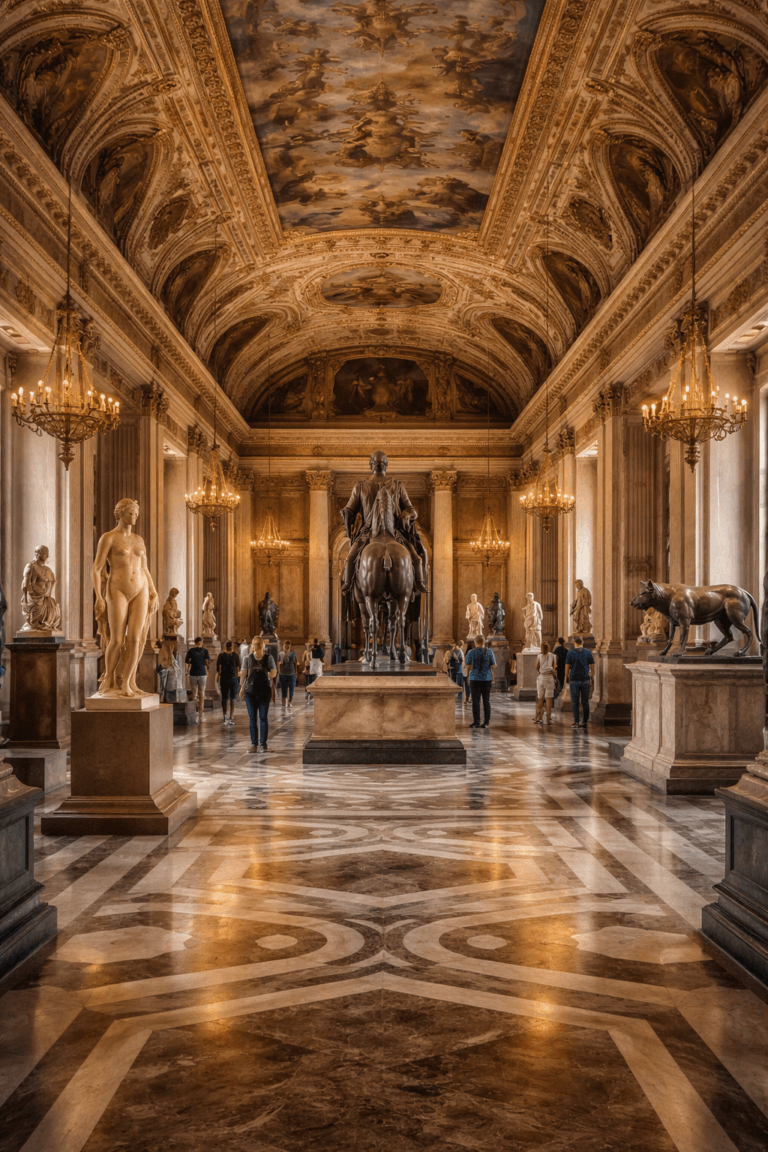
The architectural environment of the Vatican Museums significantly shapes the visitor experience. Unlike a purpose-built modern museum, the collections occupy historic Vatican buildings that embody the authority and sanctity of the institution itself. The museums feel more like an inhabited historical milieu gradually accessible to the public rather than a detached contemporary exhibition space. The route winds through a series of corridors, staircases, apartments, chapels, and ceremonial halls, each distinguished by varying scale, architectural style, and decorative approach. This constant shift in spatial rhythm sustains visitor engagement, providing visual and atmospheric relief even during crowded or tiring moments. Additionally, the museums’ position within Vatican City lends them profound symbolic resonance. For many, a visit to the museums is one part of a broader pilgrimage that may include St Peter’s Basilica and the Vatican’s surrounding historic precincts, reinforcing the museums’ significance as part of a deeply layered religious and cultural destination.
Practical Information
Successful visits require careful planning and realistic expectations regarding pace and crowd conditions. The Vatican Museums rarely offer leisurely, private viewing experiences; popular times often see large numbers of visitors flowing through designated routes akin to a controlled procession. Early entry is frequently advised to mitigate peak crowds. Approaching the visit strategically—focusing on a handful of major highlights such as the Raphael Rooms and Sistine Chapel—can enhance both enjoyment and understanding. Comfortable footwear and readiness for extensive walking are essential, as the visit involves significant physical effort coupled with intensive visual engagement. Patience and a mindset that allows mental pauses even when the itinerary does not permit extended stops will also enrich the experience. Visitors should be aware that the museums’ overwhelming sensory and spatial scale can feel more demanding than other European museums, but this intensity is part of their unique character and reward.
Why Visit
The Vatican Museums are most suited for visitors who seek one of the world’s most comprehensive artistic and historical collections and who appreciate an experience defined as much by its grand scale and thematic accumulation as by close contemplation. They hold particular appeal for those interested in Renaissance art, papal patronage, classical antiquity, and the interplay of art with institutional power. Rather than offering a handful of isolated masterpieces, the museums present an extended sequence of artistic and architectural environments assembled within a historically charged setting. While visits can be physically taxing and occasionally overwhelming, for those prepared with patience and selectivity, the Vatican Museums remain an indispensable cultural experience in Rome. Their reputation is justified not by ease, but by their unparalleled scope, depth, and sense of historical presence. Prospective visitors are advised to consult official sources for current details on tickets, opening hours, and temporary exhibitions prior to planning their visit.