National Museum of Pakistan Review
Karachi, Pakistan. Situated in Karachi, the National Museum of Pakistan is positioned as the country’s principal institution for the collection and exhibition of its archaeological, historical, and cultural heritage. Established in the early 1950s and reopened…
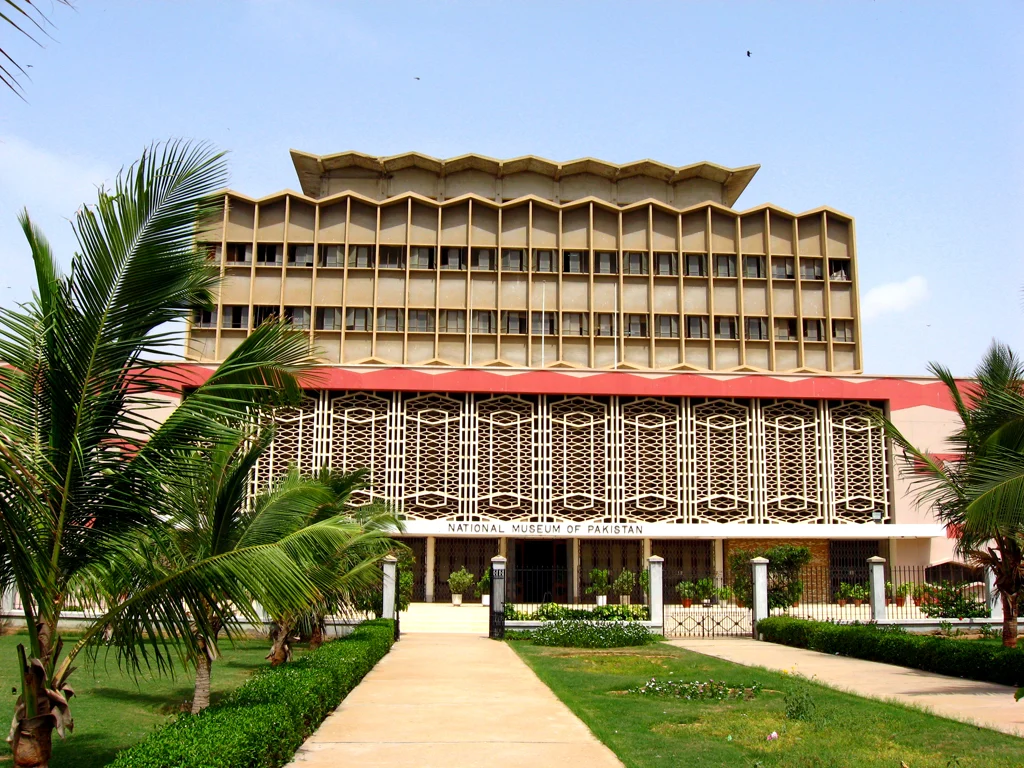
Karachi, Pakistan. Situated in Karachi, the National Museum of Pakistan is positioned as the country’s principal institution for the collection and exhibition of its archaeological, historical, and cultural heritage. Established in the early 1950s and reopened…
Best forMuseum lovers, culture travelers, first-time visitors
Review focusCollections, visitor experience, and practical planning
The Museum in Context
Situated in Karachi, the National Museum of Pakistan is positioned as the country’s principal institution for the collection and exhibition of its archaeological, historical, and cultural heritage. Established in the early 1950s and reopened in its current form in the 1970s after a shift from its original location, the museum serves as a national repository for artifacts spanning vast periods of South Asian history. Rather than presenting itself as a comprehensive history museum, it narrows its focus primarily to the archaeology and ancient civilizations of Pakistan, alongside illustrative materials on Islamic heritage and Pakistan’s historical development post-independence.
Karachi itself is a sprawling, commercially vibrant port city, often characterized by its economic dynamism rather than its cultural institutions. Within this metropolitan setting, the museum functions as a cultural anchor, uniquely preserving and showcasing heritage that could easily be overshadowed by the city’s sheer scale and modernization pressures. It sits within the Karachi Museum Complex, close to other museums like the Pakistan Maritime Museum, yet it is distinct in its emphasis on historical and archaeological narratives rather than maritime or military themes.
The museum’s presence is especially significant given Pakistan’s complex post-colonial formation and its diverse cultural regions. It attempts to bridge the country’s layered identities by holding collections that speak to Indus Valley civilizations, Gandharan Buddhist art, Islamic eras, and modern nationhood. Its institutional mission aligns with fostering awareness of these intertwined histories, though its execution reveals some of the challenges inherent in balancing national narratives with archaeological depth.
Collections Worth Understanding
Central to the museum’s appeal is its archaeological collection, which represents some of the earliest urban civilizations known in South Asia. Artifacts from the Indus Valley, particularly from sites like Mohenjo-daro and Harappa, hold a prominent place. These include inscribed seals, pottery, terracotta figurines, tools, and jewelry crafted thousands of years ago. The collection provides a tangible link to one of the world’s oldest urban cultures and offers material evidence of its sophisticated craft, trade, and symbolic systems.
Another considerable strength lies in its Gandharan collection, offering remnants from the region’s Greco-Buddhist period. The sculptures and reliefs reflect the syncretism of Hellenistic and South Asian artistic traditions, showing the blending of styles that occurred under Kushan rule in the early centuries CE. These pieces illustrate the spread of Buddhism through the region and Pakistan’s role as a historical crossroads.
Material relating to the Islamic period forms a significant, though somewhat less prominent, portion of the collection. Items include calligraphic manuscripts, coins, pottery, arms, and architectural fragments from various Islamic dynasties that ruled the area. This material reinforces the continuity of cultural exchanges while linking the museum’s narrative to the modern state’s religious identity.
The museum also preserves numismatic collections and ethnographic objects, although these are presented in a more limited scope. The modest display of contemporary Pakistani culture contrasts with the depth afforded to ancient periods. This unevenness signals a curatorial preference prioritizing archaeological antiquity over modern ethnology or art.
Presentation and Storytelling
The museum’s presentation style exhibits a traditional approach common to South Asian institutional frameworks, focusing on object display under glass with descriptive labels, often relying heavily on textual explanation rather than narrative interpretation or thematic cohesion. Galleries tend to emphasize chronological order, moving from ancient to modern periods with clear but matter-of-fact signage.
Interpretive aids are generally minimal; there is little in the way of interactive exhibits or digital engagement. This reflects both the museum’s limited resources and a curatorial philosophy grounded in conserving and displaying original artifacts rather than reconstructing context or encouraging visitor participation. The result is a mainly visual and factual experience, one demanding careful reading and prior knowledge to fully appreciate subtleties in the collection.
The story told here privileges archaeological chronology and the political-religious history of the region. Yet the narrative sometimes struggles to connect these different eras into a broader cohesive vision. For example, the leap from the ancient Indus civilization artifacts to later Islamic material is abrupt rather than smoothly contextualized, which can limit visitors’ grasp of the larger story of cultural continuity and change.
Typography, lighting, and object spacing vary in consistency throughout the galleries, with some areas feeling cramped and others less well curated. The museum’s environmental controls and exhibit maintenance have periodically been reported as less than ideal, a reminder of the challenges faced by museums operating outside the wealthier cultural hubs of the world. While this does not degrade the significance of the holdings, it means the visitor experience can be uneven.
The Experience on the Ground
Publicly available information and reports suggest that the museum’s layout is straightforward but lacks modern interpretative design commonly found in international institutions of similar scale. Gallery spaces feel functional rather than theatrical or dramatically engaging. This functionalism supports a focus on the permanence and authenticity of the artifacts rather than sensory or entertainment value.
Interpretation primarily targets students, scholars, and specialists interested in archaeology and history, rather than casual tourists. The language of the labels tends to be factual and academic without much narrative flourish or storytelling device. This creates a setting where visitors with background knowledge or strong curiosity can gain serious insight but may find less stimulation if unfamiliar with the archaeology or history on display.
Visitor services such as on-site amenities, orientation materials, or guided tours have not been widely documented, which suggests that the museum may lack some of the more developed visitor infrastructure that enhances experience elsewhere. If such services exist, they are not prominent.
The museum’s physical condition, based on known data, points to a long-established institution facing resource constraints typical of many South Asian national museums. Nonetheless, it fulfills a crucial role by storing, preserving, and exhibiting national heritage treasures otherwise vulnerable in a city undergoing rapid urban transformation.
Where the Museum Excels
Its greatest strength is clearly the assemblage of Indus Valley and Gandharan artifacts. Few institutions within Pakistan have access to such a concentrated array of these materials, making the museum a primary destination for those wanting to study or see tangible remnants of these ancient civilizations. The seals, statuary, and ceramics form the backbone of what distinguishes the collection from generic South Asian archaeology displays.
This focus on early archaeological heritage grounds the museum’s identity and contributes to broader historical conversations about the origins of urbanism, writing, and religious development in the region. Objects like the steatite seals with their yet undeciphered script remain subjects of scholarly fascination that the museum helps preserve and circulate.
The inclusion of Islamic art and historical artifacts, while narrower in scope, does provide useful points of historical transition, indicating the historical layering within geographic boundaries that eventually formed Pakistan. This selective approach allows the museum to manage a broad time span without overextending its resources or confusing its message.
Additionally, the museum’s location in Karachi provides accessible context for Pakistan’s largest city and economic capital, framing national history within one of its most significant urban centers. For Karachi residents and Pakistani scholars, this is an institution of cultural memory tied to national narratives of origin and identity.
What to Know Before Visiting
Up-to-date information regarding opening hours, admission fees, and visitor facilities should be checked directly through official sources before planning a visit. Accounts regarding interpreter availability, guided tours, or audio guides are unclear or unavailable, so relying on one’s own prior knowledge or research may improve the experience.
Visitors looking to deeply engage with Pakistani archaeology and ancient history will find the museum relevant. However, those expecting interactive displays or multimedia interpretive tools might encounter a more traditional exhibition environment than contemporary museum visitor settings elsewhere.
Because the museum functions more as a storage and research institution than a tourist attraction, expectations should be attuned accordingly. It is sensible to approach the museum as a resource delivering direct contact with important artifacts rather than as a narrative-driven or tech-enhanced venue.
Our View
The National Museum of Pakistan in Karachi stands as a steady custodian of the country’s archaeological heritage, particularly its Indus Valley and Gandharan collections. It excels in preserving and presenting significant ancient artifacts critical to understanding South Asia’s earliest civilizations and the cultural layers that followed. Yet this strength comes at the expense of visitor-oriented interpretive innovation or broader ethnographic representation.
Its traditional display methods and emphasis on factual information serve a specialized audience more than a general one, limiting its ability to engage casual or international visitors unfamiliar with the context. The museum’s approach may feel austere by contemporary museum standards, but it remains a key institution within Pakistan’s cultural infrastructure.
Those interested in early South Asian archaeology and the historical foundations of Pakistan will recognize its value, while other visitors may find their experience less dynamic. Ultimately, the museum provides access to crucial historical materials without significant embellishment or modern presentation techniques. This straightforwardness, while initially off-putting to some, preserves the artifacts’ gravity and invites deeper study for those prepared to engage on those terms.