Museo Nazionale del Cinema Review
Turin, Italy. The Museo Nazionale del Cinema, situated in Turin, Italy, is a distinctive institution dedicated to the history and art of cinema. It stands out both for its comprehensive collection and its unique setting within…
Turin, Italy. The Museo Nazionale del Cinema, situated in Turin, Italy, is a distinctive institution dedicated to the history and art of cinema. It stands out both for its comprehensive collection and its unique setting within…
Best forMuseum lovers, culture travelers, first-time visitors
Review focusCollections, visitor experience, and practical planning
Historical Context
The Museo Nazionale del Cinema, situated in Turin, Italy, is a distinctive institution dedicated to the history and art of cinema. It stands out both for its comprehensive collection and its unique setting within the Mole Antonelliana, a prominent landmark of the city. The museum’s foundations date back to the mid-20th century, evolving steadily to become one of the most specialized film museums in Europe. It serves as a repository for cinematic heritage and a resource for understanding the evolution of film as an artistic, technological, and cultural form.
Turin itself holds a significant place in early film history; it was home to some of Italy’s first film studios and played a key role in the development of silent cinema. The museum reflects this regional significance while broadening its scope to include international cinema artifacts and narratives. Early collections emphasized film equipment and technology, but over time have expanded to incorporate posters, costumes, photographs, scripts, and multimedia installations. This approach allows the museum not only to document technological advancements but also to reveal cinema’s impact on popular culture and society over more than a century.
Located within the Mole Antonelliana, a 19th-century architectural milestone originally intended as a synagogue, the museum benefits from an extraordinary and symbolic venue. The building’s towering structure and dome offer a striking architectural context that contrasts with and complements the internal displays. This physical and symbolic framing conveys a sense of cinema’s lofty cultural ambitions and its place in Italy’s artistic landscape.
What You See on Arrival
On approaching the Museo Nazionale del Cinema, visitors are greeted by the imposing architecture of the Mole Antonelliana. The building itself often shapes visitors’ expectations, with its soaring spire visible from various parts of Turin. This unusual location gives the museum a character distinct from conventional film museums that may be housed in typical art galleries or historic sites better associated with cinema.
Within the lobby and entrance areas, the museum introduces visitors to a cinematic atmosphere through design elements that echo film motifs and historical references. Although specific displays around the entrance vary, the overall presentation sets a tone that links the past and present of cinema visually and conceptually. Visitors can anticipate an environment that emphasizes the sensory experience of film, using light, space, and sound as elements of exhibit design.
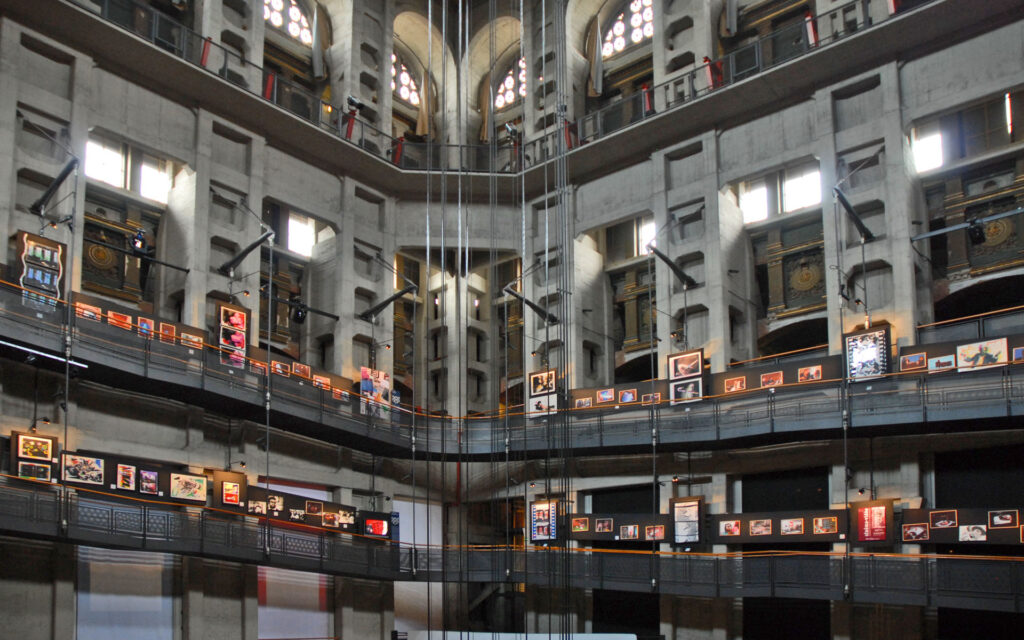
The immediate surroundings also frame the visit; the Mole Antonelliana’s internal elevator ride to an observation deck—though not part of the museum’s core offerings—provides a dramatic preamble to the museum tour for those who choose it. Inside, spatial layouts tend to encourage exploration of thematic and chronological groupings. The building’s multiple floors and open central atrium add a vertical dimension to the circulation, subtly echoing the rise and expansion of cinema itself.
Highlights and Key Exhibitions
The Museo Nazionale del Cinema’s collection covers a wide range of subjects crucial to understanding film history, filmmaking techniques, and cinematic culture. While the museum frequently updates displays to maintain visitor interest, its core exhibitions focus on several key areas.
One major theme is the technological development of cinema equipment. The museum presents a range of historic cameras, projectors, editing machines, and early sound devices. These are often displayed alongside explanatory materials that outline their functioning and historical significance. Such exhibits allow visitors to trace cinema’s technical progress from the invention of the magic lantern to modern film apparatus, clarifying the mechanics behind moving images.
Another significant section is devoted to the art of film promotion and publicity, including an extensive array of film posters, lobby cards, and advertising paraphernalia. This collection pays particular attention to Italian cinema but also includes international examples, illustrating how visual marketing evolved alongside film styles and audiences. The graphic design in these materials reflects broader artistic trends and helps explain cinema’s interaction with wider cultural trends.
The museum also offers insight into the aesthetics and history of cinematic narratives. Exhibits here highlight major film genres, directors, and stars, connecting artifact displays with storytelling traditions. Given Turin’s own film production history, emphasis is placed on early Italian silent films and the prolific period of Italian cinema in the postwar decades. The museum captures both renowned classics and lesser-known titles, broadening visitors’ perspectives on national and world cinema.
Costumes and set pieces constitute another noteworthy component. These tangible elements make concrete the artistry involved in filmmaking beyond images on screen. Visitors might encounter original costumes from significant films, as well as detailed reconstructions of sets or props. These displays underscore the collaborative nature of filmmaking and illustrate how visual design contributes to narrative effects.
Multimedia installations and interactive exhibits augment the traditional displays. Through digital kiosks, video screenings, and sound zones, the museum offers guests opportunities to engage with moving images directly. These features support thematic narratives such as the relationship between sound and image or the evolution of film editing.
While the museum is known for its permanent collection, it largely concentrates on film history up to the contemporary era rather than extensively covering the latest cinematic technologies or digital media innovations. Its strength lies in combining historical artifacts with contextual interpretation rather than presenting cutting-edge media art or experimental cinema.
Visitor Experience
The Museo Nazionale del Cinema is likely to appeal most to visitors with an interest in film history, technology, and material culture. The museum’s thematic and chronological layout allows for both linear progression and selective exploration by topic or medium. However, the vertical and sometimes complex arrangement in multiple floors requires visitors to prepare for navigating stairs and ramps, which may affect those with mobility issues.
Interpretive materials are generally clear, with a combination of brief texts, labels, and multimedia components offering varied levels of detail. The use of Italian and English translations facilitates access for a broad international audience, though visitors less confident in either language may find some explanations limited in depth. The balance of textual and visual information remains a strong point, helping to contextualize objects and media within film history and production.
For cinephiles familiar with film technology or Italian cinema, the museum delivers detailed insights and a coherent narrative structure. Casual visitors or those new to cinema history may appreciate the visual richness but could find the focus on technical and archival items less immediately engaging without supplemental guidance. In this respect, the museum’s educational potential is substantial but arguably benefits from prior knowledge or clear interests in cinema studies.
The atmosphere of the museum tends to be contemplative rather than interactive in an entertainment sense. It avoids excessive gimmickry or overly theatrical installations, which may please visitors seeking a relatively sober and scholarly presentation. However, those expecting hands-on experiences or cutting-edge media technology may find parts of the displays somewhat traditional.
Overall, the flow seems designed to enable a paced visit, though individual preferences or mobility may influence how much of the collection a visitor can comfortably cover. Accompanying the collections are film screenings or special events that sometimes take place off-gallery, further enhancing the institution’s role as a cultural center. Checking the official program in advance is advisable for those hoping to integrate these activities into a visit.
Tickets, Access, and Planning
Specific details about ticketing, opening hours, and visitor services change periodically, so prospective visitors should consult the museum’s official website before planning their trip. Information about discounts, group rates, and special provisions generally fluctuate, and it is prudent not to rely on secondary sources.
The museum’s location within the Mole Antonelliana places it in a central area of Turin, which is generally well served by public transport. However, the site’s urban setting may pose some challenges for visitors arriving by car regarding parking options. Accessing the various floors may involve elevators, ramps, and stairs; the building’s historic character sometimes presents limitations for full accessibility, so detailed access information should be reviewed beforehand.
Given the multiple levels and the museum’s depth, visitors naturally benefit from allocating sufficient time to explore without rushing, especially if engaging with film screenings or events. Seasonal crowding is a potential factor on weekends or holidays, so considering these elements ahead of a visit is useful.
Audio guides, guided tours, and educational materials might be available but are not guaranteed as standard at all times. Confirming these options through official channels is recommended for visitors seeking additional interpretive assistance.
Final Verdict
The Museo Nazionale del Cinema in Turin offers a well-rounded, substantive experience for those interested in the historical and technical dimensions of cinema. Its unique setting in the Mole Antonelliana provides a memorable architectural context, although the building’s layout may challenge some visitors’ mobility or circulation preferences.
The museum excels in presenting film technology, promotion, and narrative history with depth and clarity while integrating physical artifacts such as equipment, posters, and costumes. Its focus on Italian cinema contributes important national specificity but it also provides international perspectives that situate Italian film within broader cinematic developments. Multimedia and interactive elements complement the traditional displays thoughtfully, even if they do not dominate the experience.
The interpretive approach favors precision and clarity over entertainment spectacle, making the museum particularly suitable for visitors with existing knowledge of or curiosity about cinema history. Those looking primarily for hands-on fun or the latest audiovisual media innovations might find the fare more conventional. Family groups with young children or casual visitors may find some exhibits more challenging to engage with without guided support.
Planning a visit should include checking current opening times and ticket policies directly through the official museum channels to ensure a smooth experience. Practical considerations regarding accessibility and crowd patterns are also worth exploring in advance.
In sum, the Museo Nazionale del Cinema stands as a serious, focused institution for exploring cinema’s historical and material culture. It provides a dense, layered narrative that appeals to film enthusiasts and scholars alike, while its setting fosters a distinctive dialogue between architecture and cinematic heritage.