GeoCenter Møns Klint
Borre, Denmark. GeoCenter Møns Klint is a specialized natural history and science museum located near the village of Borre on the island of Møn, Denmark. It serves primarily to interpret and present the geological and natural…
Best forMuseum lovers, culture travelers, first-time visitors
Setting / nearbyBorre, Denmark
Overview
GeoCenter Møns Klint is a specialized natural history and science museum located near the village of Borre on the island of Møn, Denmark. It serves primarily to interpret and present the geological and natural heritage of the region, especially focusing on the dramatic white chalk cliffs known as Møns Klint. These cliffs, formed during the Cretaceous period roughly 70 million years ago, expose layers of chalk and fossils that are significant for understanding Earth’s geological past. The museum aims to illuminate these geological processes, the fossil record, and the local natural environment for visitors of varied interests and backgrounds.
The museum’s identity is tied closely to its environment. Møns Klint is an internationally recognized geological site, and this museum provides the scientific context and educational interpretation that helps visitors appreciate the natural features seen on the cliffs and surrounding landscapes. GeoCenter Møns Klint fits within the tradition of geological museums that combine exhibits with natural outdoor experiences. Its focus on Earth sciences and fossils may appeal especially to families, school groups, amateur naturalists, and anyone curious about geology or the long history written in stone.
Collection Highlights
The core of GeoCenter Møns Klint’s exhibits revolves around the chalk cliffs and their paleontological and geological significance. Visitors can expect detailed displays about how the chalk was formed from microscopic plankton during the late Cretaceous era when much of northern Europe was submerged under a warm sea. The museum’s collection includes fossils embedded within the chalk strata, such as ammonites, sea urchins, and various types of microfossils that reveal clues about the prehistoric marine environment.
Beyond fossils, the museum presents geological processes such as sedimentation, erosion, and tectonic activity that have shaped the cliffs and the region’s landscape over millions of years. There are often models and interactive exhibits showing the structure of the Earth and how chalk forms, which can help demystify these natural phenomena for non-specialist audiences.
Additional exhibits may cover the broader biodiversity and ecology associated with the area, including flora and fauna adapted to the unique chalky soil. This links the geological story to living nature, providing a more rounded perspective on local natural history.
In assembling this collection, the GeoCenter does not rely on rare artifacts but rather on scientific displays, samples, and interpretative materials that explain natural processes clearly and accessibly. This can make the experience especially informative for visitors interested in Earth sciences or visiting the cliffs themselves to better understand what they see.
Building and Setting
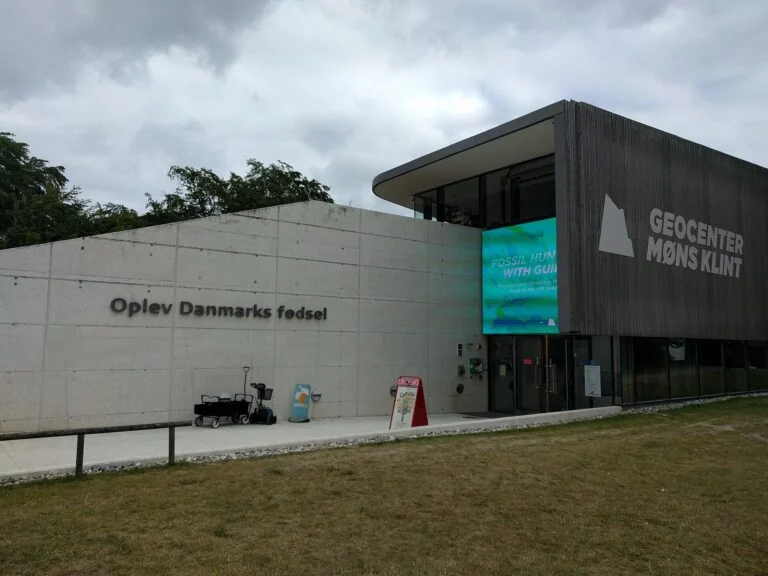
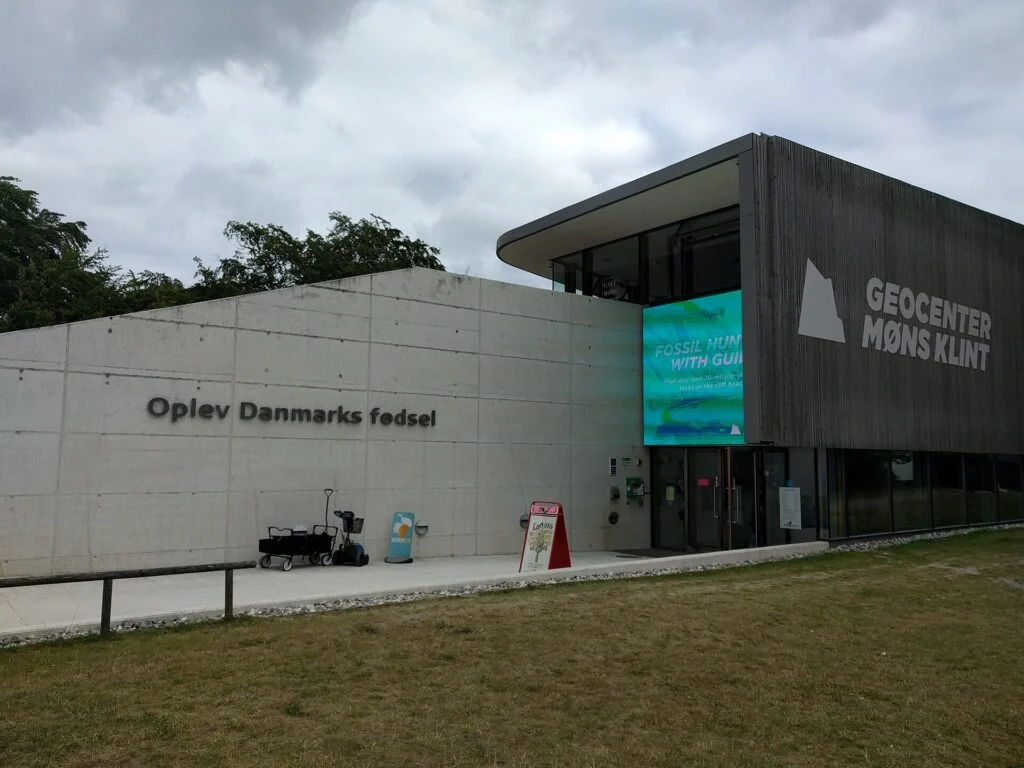
GeoCenter Møns Klint stands close to the entrance of the Møns Klint cliffs and is designed to integrate with its natural surroundings. The building’s architecture uses local materials and forms that echo the landscape without overwhelming it. Large windows and exhibition spaces often look out toward the cliffs, creating a strong visual link between the indoor exhibits and the outdoor geological feature that is the museum’s focus.
The immediate setting is rural and peaceful, with walking paths and nature trails nearby, allowing visitors to combine a museum visit with exploration of the cliffs and surrounding woods. The museum serves as a gateway to the Møns Klint natural area, helping to orient visitors before or after walking down the cliff paths.
The location on Møn also means the museum lies in a somewhat remote setting compared to urban centers, which may affect travel planning. However, the setting enhances the authenticity of the experience, as visitors are immersed directly in the environment that the museum explains and celebrates.
Practical Information
Visitors considering a trip to GeoCenter Møns Klint should check the museum’s official website for the most current information regarding opening hours, ticketing, and any visitor services. Given the museum’s specialized nature and location, practical details such as transportation, parking, and accessibility are also important to confirm in advance.
The museum’s exhibition spaces are generally designed to accommodate a broad range of visitor types, but outdoors visits to the cliffs may require moderate physical activity and suitable footwear. Weather conditions on the cliff paths can vary and affect the visitor experience.
While the museum is primarily focused on geological and natural science content, it may offer temporary exhibitions or educational programs alongside its permanent collection. However, those interested specifically in fossils or geology will find the core offerings particularly relevant.
Because the GeoCenter resides outside major urban hubs, visitors who plan to travel by public transport or those with limited mobility should carefully review logistical information beforehand. Families and groups should also verify any special arrangements or services that might cater to their needs.
Why Visit
GeoCenter Møns Klint presents a unique opportunity to deepen an understanding of geology and natural history directly connected to a remarkable geological site. Unlike more general natural history museums, this center concentrates on the scientific story of chalk formation and the ancient sea that dominated northern Europe millions of years ago. For many, visiting the museum enriches a walk along the chalk cliffs, providing context that transforms the striking landscape from a scenic view into a tangible record of Earth’s deep past.
The museum’s approach aims to be accessible without oversimplifying, making it suitable for families, students, and laypeople curious about the natural world. It is also a relevant stop for those interested in fossils, paleontology, or the science of Earth’s substances and processes. This focus means that visitors in search of broad cultural exhibits or art may find the content narrower in scope.
One limitation of the GeoCenter is its location, which requires some travel planning and may not align with quick day trips for those coming from distant cities. Additionally, while the museum provides ample geological information, it does so with a regional focus that presumes an interest in or curiosity about the specific natural heritage of Denmark’s chalk cliffs.
Overall, GeoCenter Møns Klint acts as both educational hub and interpretative center, helping visitors access and appreciate a noteworthy geological formation beyond surface aesthetics. It encourages a more informed engagement with place and history embedded in the rocks, appealing to those who value learning how natural environments evolve over long timescales.
For visitors willing to invest the time and attention, the museum can enhance understanding of the dynamics that shape coastlines and fossils with clear, scientifically grounded exhibitions supplemented by the impressive natural setting of the Møns Klint cliffs. Anyone planning a visit should check the official site beforehand for updated visitor information to ensure the best experience possible.