Casa Buonarroti Review
Florence, Italy. Casa Buonarroti in Florence, Italy, is a museum dedicated to preserving and celebrating the artistic legacy of Michelangelo Buonarroti, one of the Renaissance's towering figures. The building itself dates back to the late 16th…
Florence, Italy. Casa Buonarroti in Florence, Italy, is a museum dedicated to preserving and celebrating the artistic legacy of Michelangelo Buonarroti, one of the Renaissance's towering figures. The building itself dates back to the late 16th…
Best forMuseum lovers, culture travelers, first-time visitors
Review focusCollections, visitor experience, and practical planning
Historical Context
Casa Buonarroti in Florence, Italy, is a museum dedicated to preserving and celebrating the artistic legacy of Michelangelo Buonarroti, one of the Renaissance's towering figures. The building itself dates back to the late 16th century and was originally the family home of the Buonarroti lineage. It was purchased in 1612 by Michelangelo’s great-nephew, Michelangelo Buonarroti the Younger, who sought to commemorate the sculptor’s genius by transforming the residence into a space for the display of family documents, artworks, and architectural features associated with the master.
Over time, the collection grew to include many important works and relics linked to Michelangelo’s career, including sketches, letters, and sculptures. Although the house was not Michelangelo's actual birthplace or residence, the association with his descendants lends the museum a unique familial and historical dimension. Situated in Florence, a city itself deeply intertwined with Renaissance history and art, Casa Buonarroti is part of the broader cultural landscape that reflects the period’s artistic and intellectual upheavals. The museum’s establishment reflects an early effort to curate and preserve the heritage of an individual artist within the context of broader family history and artistic patronage.
What You See on Arrival
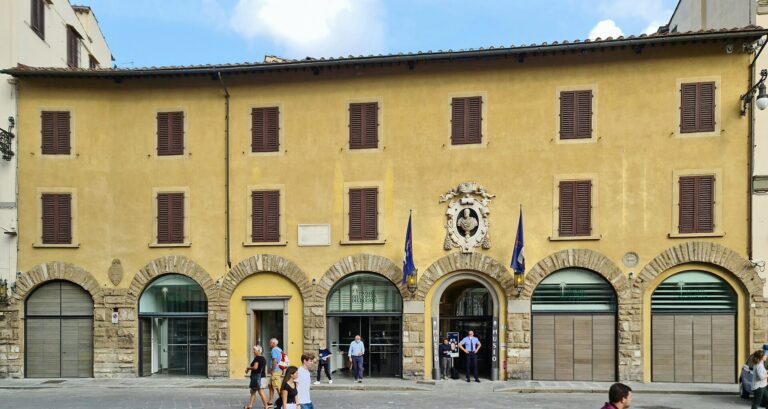
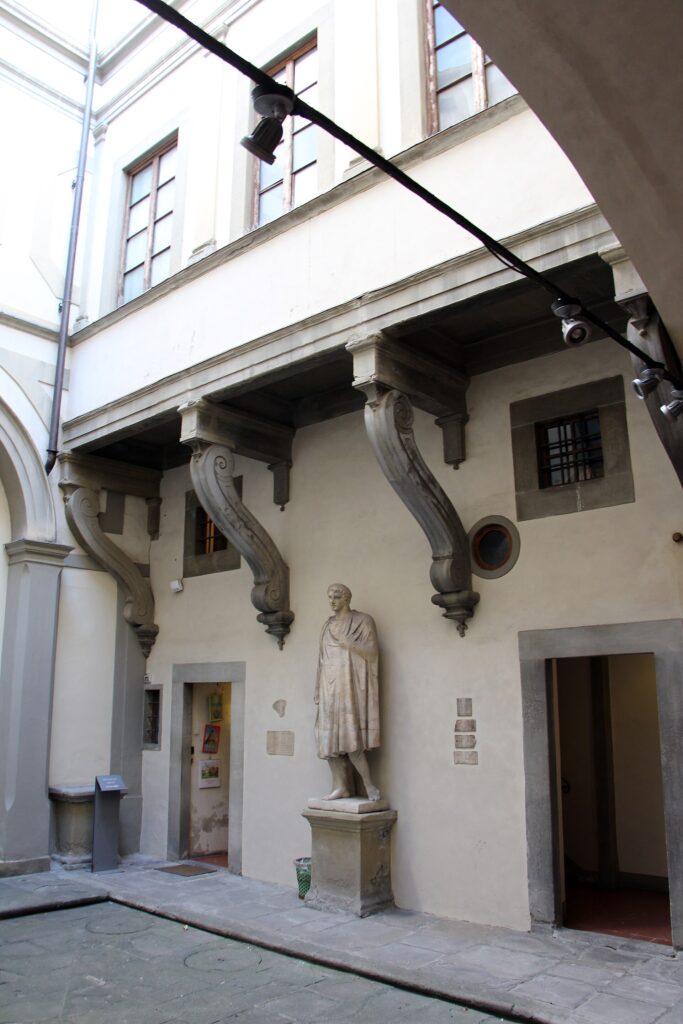
Casa Buonarroti presents itself as a somewhat intimate and specialized museum rather than a large-scale public institution. Visitors approaching the building will notice its Renaissance palace character, which retains the appearance of a private Florentine residence more than a conventional museum. The façade and entrance courtyard suggest a setting that is focused more on preserving and venerating a particular historical legacy than on drawing mass tourist crowds.
The space signals a transition from public to private art collecting, with its relatively small scale and concentrated collection. There is a distinct sense of stepping into a preserved environment where the emphasis is on the lineage and artistic production of a singular, luminary figure. Visitors encounter an atmosphere less about broad, thematic exhibitions common in larger museums and more about focused displays related to Michelangelo’s oeuvre and his family's stewardship of his memory.
This framing may influence visitor expectations, especially compared to Florence’s larger museums such as the Uffizi or Accademia. Casa Buonarroti is likely to appeal to visitors with a particular interest in Michelangelo, Renaissance art, or the history of art collecting. The initial impression is that of a repository devoted to the documentation and presentation of historical materials connected to Michelangelo’s life and work rather than a venue for expansive narrative or experimental curatorial approaches.
Highlights and Key Exhibitions
The museum’s core appeal lies in its collection of works and materials directly related to Michelangelo’s artistic process and early output. Among the notable holdings are some of Michelangelo’s early sculptures, drawings, and preparatory works, which provide important insights into his development as an artist. Particularly significant are two early marble reliefs: the “Madonna of the Stairs” and the “Battle of the Centaurs.” These bas-reliefs, created in Michelangelo’s youth, exhibit his emerging mastery of form and composition. They also illustrate the influence of classical sculpture and the dynamic creativity that would characterize his later masterpieces.
In addition to these sculptures, Casa Buonarroti houses a collection of Michelangelo’s drawings and cartoons, which are crucial for understanding his artistic process, ideas, and working methods. Drawings from an artist of his caliber offer a rare glimpse into the developmental stages of Renaissance art, where draftsmanship was fundamental to all forms of creation, from painting and sculpture to architecture.
The museum also preserves family documents, manuscripts, and letters that illuminate Michelangelo’s life both as an artist and as a historical figure. These archival materials contribute to the narrative that the museum crafts around the artist’s legacy, situating him within his familial and cultural milieu. Visitors interested in the biography and contextual history of Michelangelo will find these documents valuable, though they may appeal more to specialized scholars or serious art historians.
Architecturally, the museum includes elements such as frescoed ceilings commissioned by the Buonarroti family in the early 17th century. These spaces meld art and architecture, underscoring the intersection of art patronage and family identity. While not Michelangelo’s creations, these decorative schemes enhance the overall atmosphere and provide a richer context for the family’s role in preserving their ancestor’s legacy.
Casa Buonarroti’s collection offers a focused and specialized perspective on Michelangelo’s work that complements but does not duplicate the holdings of larger public institutions like the Galleria dell’Accademia, where the famous David is housed. Rather, it emphasizes early works and the process-side of Michelangelo’s output, filling an important niche in Renaissance art presentation. However, the limited size and scope mean the museum is not a comprehensive survey of Michelangelo’s career but a particular segment that emphasizes his beginnings and familial heritage.
Visitor Experience
The experience at Casa Buonarroti is likely to be quiet, contemplative, and tailored to visitors with a specific interest in Michelangelo or Renaissance art scholarship. The museum’s scale and content suggest a slower pace of visitation. It rewards careful attention to detail rather than quick walkthroughs, and visitors may find the concentration of sculptures and drawings beneficial for studying technique and form more closely.
Interpretative materials help orient visitors, though they may vary in depth and language availability. The museum’s focus on archival documents and preparatory works might challenge casual visitors who come expecting a conventional art gallery experience. Those unfamiliar with Michelangelo’s broader career or Renaissance art terminology may find parts of the exhibition less immediately accessible.
Visitors who appreciate historical context and artistic process are more likely to engage fully with the exhibits. The presence of original drawings and early sculptures expands understanding of Michelangelo’s evolution as an artist, highlighting his experimentation and skill development. The family documents and interior architectural decoration provide a supplementary dimension that underscores the ways in which personal and cultural memory intersect with art.
While the museum does not offer the scale or variety found in larger institutions, its specificity is a strength for a particular audience. For visitors seeking a broader overview of Michelangelo’s later, canonical masterpieces or the wider Renaissance field, Casa Buonarroti will be supplementary rather than central. On a practical level, the museum’s setting in a residential neighborhood offers a different Florentine environment from the more touristic hubs, which may suit visitors seeking a more localized experience.
Tickets, Access, and Planning
Prospective visitors to Casa Buonarroti should verify current practical details through official channels prior to planning their visit. Information on admission fees, discounts, opening times, and visitor services such as guided tours or audio guides does not appear centrally standardized or routinely published in widely accessible sources. The relatively small scale and specialized nature of the museum may affect availability of services typically found in larger venues.
The museum's location in central Florence makes it accessible by public transportation and walkable from several other major cultural sites. However, parking in central Florence can be limited and may require pre-planning. Accessibility for visitors with mobility challenges should be confirmed in advance, as features such as staircases and historic building layouts might present obstacles.
Given the museum’s size, the visit can be combined with other local cultural or historical venues, offering a layered experience of Renaissance Florence. Visitors interested in Michelangelo or those piecing together a broader study of Florentine art might consider it an important stop on their itinerary.
Final Verdict
Casa Buonarroti offers a narrowly focused but valuable perspective on one of the Renaissance’s most pivotal artists. Its strength lies in the preservation and presentation of Michelangelo’s early sculptural work, drawings, and family-held archival materials. These elements provide insight into the artist’s formative phases and the manner in which his family sought to memorialize him in the years following his death.
For visitors with a particular interest in Michelangelo’s career, Renaissance draftsmanship, or the history of art collecting, the museum provides a measured, scholarly experience. Its small scale and intimate setting encourage reflection and detailed examination rather than casual tourism. This specificity, however, also limits its appeal for those seeking a wide-ranging survey of Michelangelo’s masterpieces or a comprehensive historical narrative of the period.
The museum’s reliance on documents and early works rather than large, familiar sculptures means that for some tourists, especially those less well-versed in Renaissance art, the content may feel specialized or narrowly defined. It functions best as a complementary visit alongside other Florence institutions like the Accademia or the Uffizi, adding layers of depth to understanding Michelangelo’s artistic process and familial legacy.
Overall, Casa Buonarroti stands as a specialized cultural site that preserves aspects of Michelangelo’s heritage that are not the focus of Florence’s larger institutions. While it does not provide a full panorama of Michelangelo’s oeuvre, it enriches the city’s cultural fabric by illuminating the artist’s early work and the family’s role in shaping his posthumous reputation. Visitors should approach it with clear expectations regarding the scope and type of collection on display, and plan accordingly. Checking the official museum website before a visit is advisable to confirm current conditions and offerings.