
Archaeologist Mario Trabucco della Torretta urges museums to transcend modern borders and celebrate culture’s shared global heritage
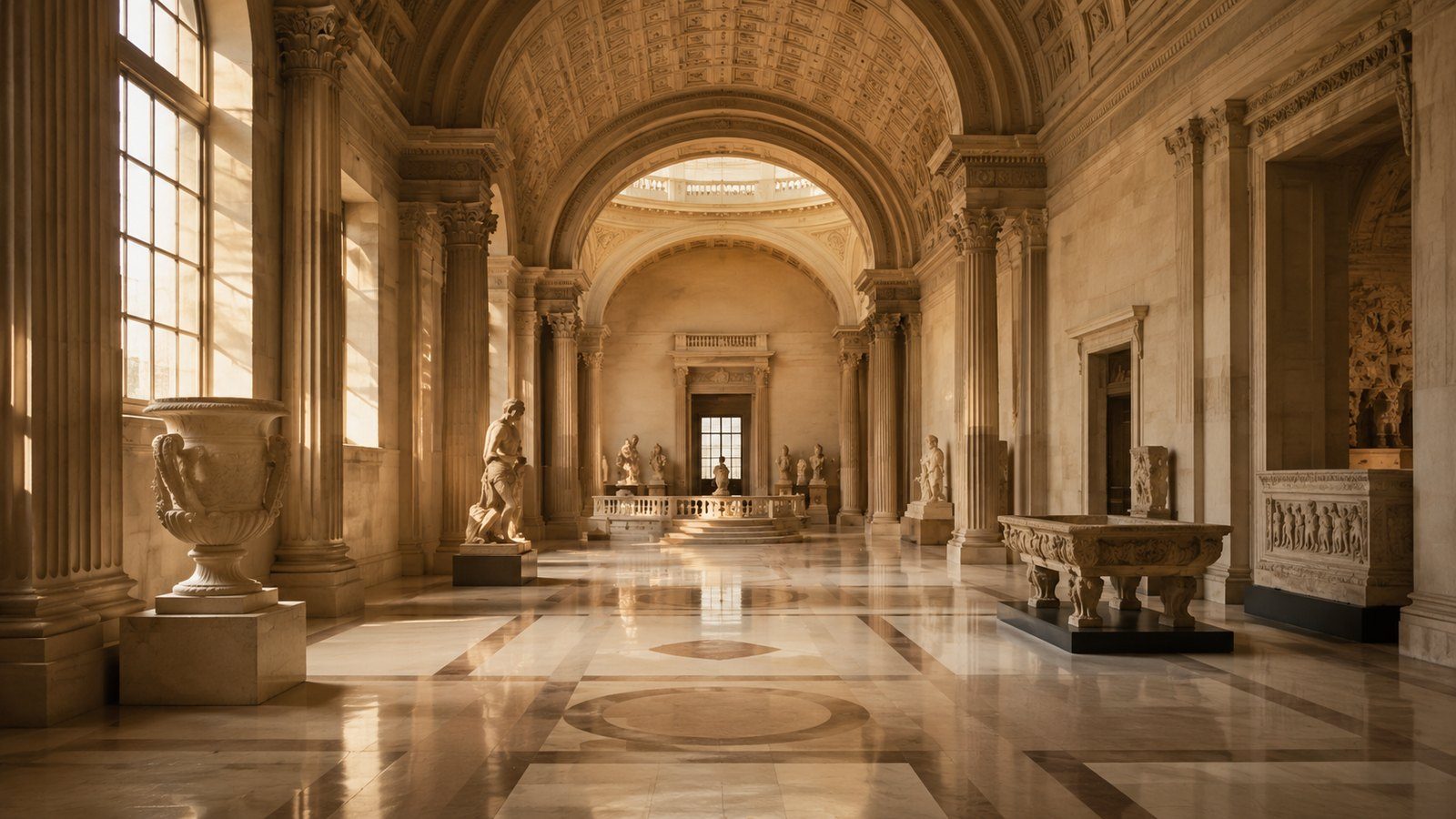
In a world increasingly defined by political divisions and national borders, the timeless nature of culture often feels at risk of being confined and diminished. This is a notion that Italian archaeologist Mario Trabucco della Torretta challenges profoundly in his recent reflections, calling into question the very idea that culture should be hemmed in by the modern map’s lines. His perspective offers a timely and thoughtful counterpoint during an era when questions of identity, heritage, and belonging dominate much of the public discourse.
Culture, as Trabucco della Torretta suggests, is fundamentally fluid and expansive. It transcends the arbitrary borders imposed by contemporary states, borders which themselves are often the products of relatively recent history, colonial legacies, and shifting political landscapes. The archaeologist’s viewpoint encourages us to imagine culture not as a fixed entity tied to a single nation or ethnicity, but as a living, breathing web of human experience that shares, adapts, and evolves across time and space.
This idea resonates deeply in museums worldwide, institutions dedicated to the preservation and celebration of cultural artifacts that often predate modern states by centuries or even millennia. When we view an ancient pottery piece from the Mediterranean, a textile from Central Asia, or a ritual object from sub-Saharan Africa, it is clear that these items emerged from cultures far more connected and dynamic than rigid national labels might suggest. The story of a community’s artistic expression or spiritual life cannot be confined solely within the political boundaries drawn on contemporary maps; rather, these stories are stitched together by exchange, migration, and dialogue across borders.
This conceptual approach has practical implications for how museums operate and curate. Many leading institutions are already moving away from strictly nationalistic presentations, inviting visitors to appreciate the interconnectedness of human history. By framing collections in terms of cultural exchanges and shared heritage, museums break down simplistic categorizations and foster a more inclusive, empathetic understanding of global human creativity.
Trabucco della Torretta’s reflections also invite reconsideration of how we treat contested cultural artifacts. Often, debates surrounding the repatriation or ownership of objects revolve around present-day national identities rather than the broader, cross-cultural contexts in which those objects originally belonged. When the lens is widened beyond modern borders, it becomes evident that cultural heritage might better be understood as belonging to humanity as a whole, rather than a single country. This viewpoint adds nuance to ongoing conversations about restitution, encouraging solutions that respect historical complexities rather than enforcing rigid ownership based on current geography.
Beyond material culture, the archaeologist’s insight also extends to intangible heritage—languages, music, traditions, and customs—that continue to flow across borders, sometimes resisting the imposition of national uniformity. Many languages, for example, are shared by communities living on different sides of borders, and folk traditions often reveal common roots that defy contemporary political divisions. Recognizing this helps to celebrate cultural diversity without confining it within the constraints set by modern sovereignty.
Mario Trabucco della Torretta’s perspective is a gentle but resolute reminder that, while borders may be necessary frameworks for governance, they are often unsuitable when we explore the human journey. Culture’s natural inclination to cross borders affirms our shared humanity and the myriad ways in which people have influenced, borrowed from, and enriched each other throughout history. It is an invitation to think beyond nationalism, encouraging museums, scholars, and the public alike to embrace a worldview rooted in connection, rather than separation.
For museums, embracing this broader understanding can transform collections from static national symbols into living testimonies of interaction and shared experience. It propels the institution’s role beyond preservation to one of education and bridge-building. In doing so, museums become powerful spaces where visitors encounter not just isolated cultural identities but the beautiful and complex tapestry of humanity—a tapestry woven through time and across borders.
Certainly, discussions of culture and borders should also acknowledge the importance of local identities and the pride communities take in their histories. However, Trabucco della Torretta’s work serves as an important corrective to overly narrow conceptions of culture that risk alienating, excluding, or simplifying. By keeping an open mind about culture’s nature and origins, museums can better reflect the pluralistic and interconnected world we live in.
In the end, the question posed by Trabucco della Torretta—”Why should culture be bound by specific modern borders?”—challenges all of us to reconsider the ways we define belonging and heritage. It’s a question that museums worldwide are beginning to take to heart as they evolve into spaces where history’s many threads are recognized and celebrated in their full complexity. Such an approach does not diminish national pride but enriches it, situating it within a continuum of human connection that history and culture truly deserve.
Join the discussion
Share a thoughtful museum note, correction, or visitor perspective about this article.