Royal Tyrrell Museum
Drumheller, Canada. The Royal Tyrrell Museum, located in Drumheller, Alberta, Canada, is a natural history museum with a strong focus on paleontology. It is dedicated primarily to the study and display of fossilized remains, offering visitors…
Best forMuseum lovers, culture travelers, first-time visitors
Setting / nearbyDrumheller, Canada
Overview
The Royal Tyrrell Museum, located in Drumheller, Alberta, Canada, is a natural history museum with a strong focus on paleontology. It is dedicated primarily to the study and display of fossilized remains, offering visitors a detailed view into ancient life forms, especially those from the Mesozoic era. Situated within the region known as the Canadian Badlands, the museum serves both as a public exhibit space and as a research institution. Its establishment reflects the region’s rich paleontological heritage, with an emphasis on educating the public about Earth’s prehistoric past through fossils unearthed in the surrounding areas.
This museum’s role extends beyond mere exhibition; it functions as a center for scientific study, with a staff involved in ongoing paleontological research and fossil excavation. This dual purpose influences how displays are curated, often integrating recent discoveries with more classic specimens. Visitors interested in natural history, geology, or evolutionary biology will find the Royal Tyrrell Museum an informative destination, although its primary appeal lies particularly with those curious about dinosaurs and other prehistoric creatures.
Collection Highlights
The collection at the Royal Tyrrell Museum is extensive, comprising thousands of fossils, some of which are nearly complete specimens. The exhibits highlight various prehistoric periods, with a strong emphasis on dinosaurs due to the region’s rich fossil beds. Among these, visitors can expect to see impressive mounted specimens, including some of the largest and most complete dinosaur skeletons assembled for public viewing in Canada.
Exhibits are thoughtfully laid out to not only showcase fossils but to provide context about the organisms’ environments, behaviors, and evolutionary significance. These include marine reptiles, early mammals, and plant fossils, which help round out the story of the ecosystems in which these creatures lived. The museum also includes detailed information on excavation methods, fossil preparation, and ongoing research efforts, which deepens visitors’ understanding beyond simply viewing specimens.
Some specific fossil groups displayed include ceratopsians (horned dinosaurs), theropods (predatory dinosaurs), hadrosaurs (duck-billed dinosaurs), and various marine reptiles like plesiosaurs. The museum’s collections also provide insights into the diversity of life forms that inhabited the area during the Late Cretaceous period. Occasionally, temporary exhibits or special displays may focus on particular themes or recent discoveries, although visitors should check current offerings before their visit.
Building and Setting
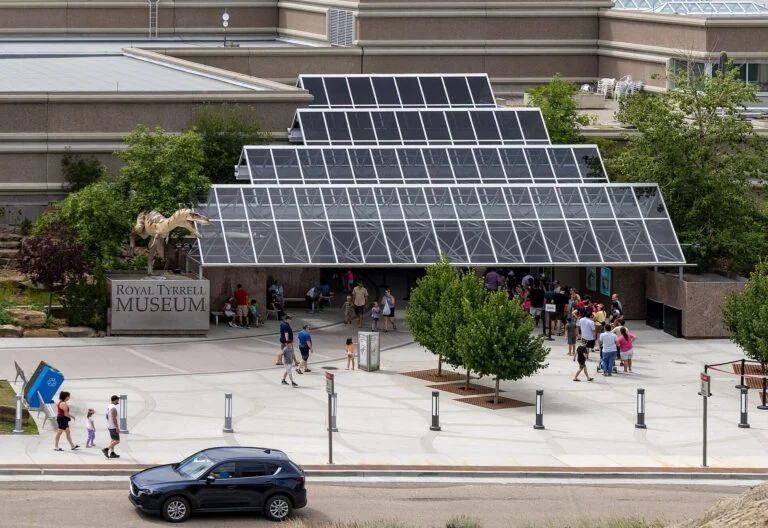
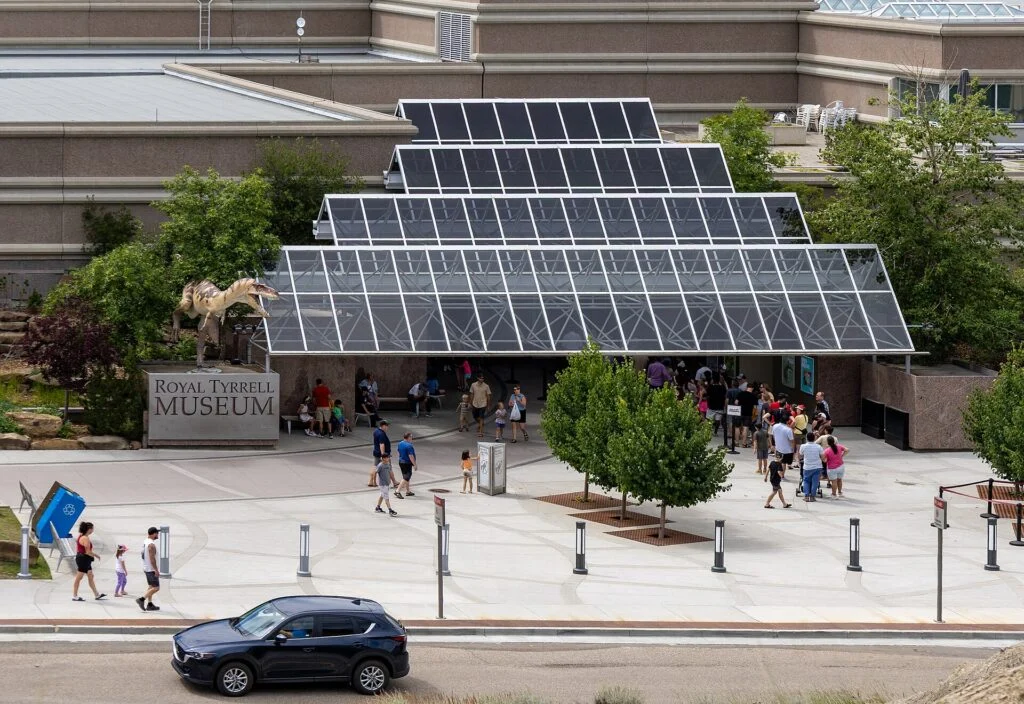
The Royal Tyrrell Museum is located about 6 kilometers west of Drumheller, in a region characterized by distinctive badlands formations. The architecture of the museum reflects its natural history focus while accommodating both public exhibition spaces and research facilities. The building is designed to manage large numbers of fossil specimens and has various spaces suited to displaying fossils at different scales—from small individual bones to massive dinosaur skeletons.
Its setting in the Canadian Badlands places the museum close to some of the most productive fossil fields in the world. This proximity enhances the museum’s authenticity as a site of scientific discovery. Visitors arriving at the museum will find themselves in a landscape shaped by erosion and geological activity, which continues to expose fossils for study. The regional environment adds a distinct geological and paleontological context that supplements the museum experience.
The museum grounds may include outdoor displays or interpretive elements related to the badlands and local geology, but the main focus remains on the collections and in-depth exhibitions housed inside. The physical layout supports a clear visitor flow from introductory displays to more complex exhibits, though the scale and density of information can be challenging for visitors who prefer a lighter, more casual experience.
Practical Information
While this guide does not provide detailed day-to-day operational specifics, prospective visitors should refer to the museum’s official website for the most current information regarding opening hours, admission fees, available tours, accessibility options, and any special events or temporary exhibitions. The museum is an active research institution, so access to some areas may be restricted or subject to change.
Tickets and pricing, as well as any potential discounts, are best confirmed via official channels before planning a visit. The museum’s location outside of Drumheller means that travel arrangements should be considered carefully, especially if relying on public transportation, which can be limited in this rural area. Visitors using private vehicles may find parking facilities at or near the museum, but confirmation is advisable.
The museum’s educational focus means that visitors might benefit from setting aside several hours for a thorough visit, particularly those interested in reading the detailed interpretive materials and engaging with interactive or specialist components. On busy days or during school holidays, the museum may be more crowded, which could affect the experience, especially in narrower gallery spaces.
Why Visit
The Royal Tyrrell Museum offers visitors significant educational value through its carefully curated fossil collections and the connection it provides to the ongoing scientific work in paleontology. For those with a serious interest in dinosaurs and prehistoric life, it presents an opportunity to see some of Canada’s most important paleontological finds up close. The level of expertise behind the displays and the scientific credibility of the research conducted onsite add to the museum’s authority as a source of information.
Visitors looking for a conventional natural history museum focused on living animals or a broader geological context may find this institution more specialized, as it concentrates explicitly on fossil organisms and the prehistoric past. This specialization serves as a strength for enthusiasts and researchers but may offer less to casual visitors without a specific interest in ancient life.
The museum’s connection to its unique setting in the Badlands enhances the visit, providing a tangible sense of place for the fossils on display. While the exhibits themselves are indoors, the surrounding landscape can be appreciated in tandem with the museum’s themes, offering a layered experience for those who wish to explore both indoor and outdoor elements related to paleontology.
In sum, the Royal Tyrrell Museum is suited for visitors who prioritize depth and formal scientific insight within the context of paleontology rather than broad, general-interest natural history. It presents a measured, research-informed narrative of Earth’s prehistoric life, which can be particularly rewarding for those prepared to engage with detailed exhibits in a setting that remains actively connected to fossil discovery and research.