Scuola Grande di San Rocco
Art Museums · Venice, Italy. The Scuola Grande di San Rocco in Venice, Italy, functions primarily as a museum dedicated to the art and history of this remarkable confraternity building. A confraternity, or scuola, was a lay brotherhood engaged…
Best forMuseum lovers, culture travelers, first-time visitors
Setting / nearbyVenice, Italy
Overview
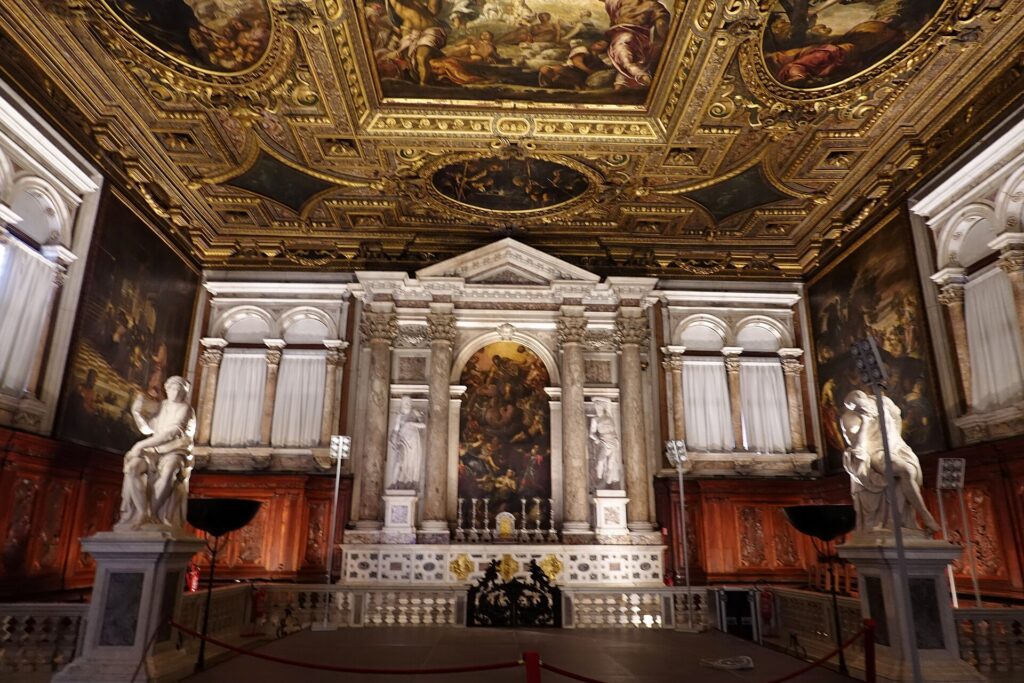
The Scuola Grande di San Rocco in Venice, Italy, functions primarily as a museum dedicated to the art and history of this remarkable confraternity building. A confraternity, or scuola, was a lay brotherhood engaged in social and religious activities, and in Venice these institutions often sponsored art and architecture of notable quality. The Scuola Grande di San Rocco is distinguished by its strong association with the painter Tintoretto, whose work covers many of its interior walls and ceilings. Rather than a conventional art museum with a diverse collection gathered over time, the Scuola serves as a preserved historic site where the original art and architecture coexist as a singular experience.
The building itself dates back to the early 16th century and served as a meeting place and headquarters for its confraternity, whose charitable functions were significant in Venetian society. Today, the museum primarily showcases this original artistic and architectural heritage, focusing on Renaissance art in a civic-religious context. Visitors enter a space where art was commissioned for religious devotion but also as a mark of communal pride and social identity.
Collection Highlights
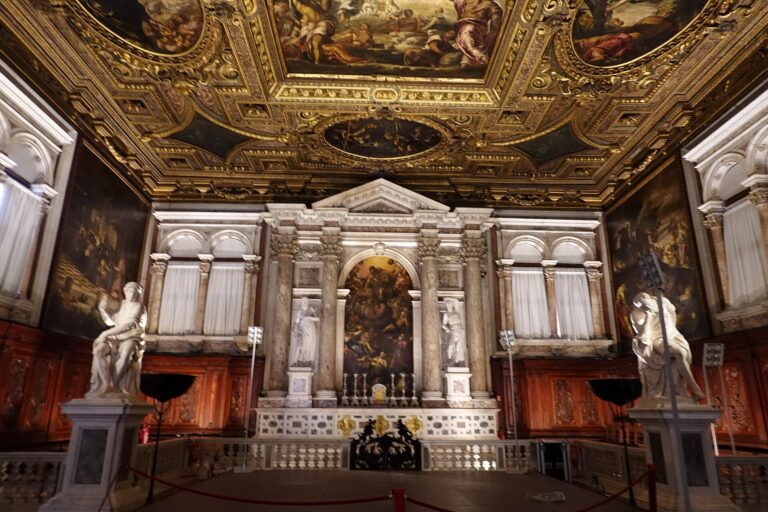
Most of the museum’s interest lies in the collection of paintings by Jacopo Tintoretto, a leading figure of Venetian Renaissance painting, sometimes referred to as the last of the great Venetian Renaissance masters. Over 50 paintings by Tintoretto decorate the walls and ceilings throughout the building, creating a cohesive narrative visually depicting scenes from the Bible, particularly the Old Testament. The paintings are arranged across multiple rooms, including the Sala dell’Albergo (the meeting hall), the Sala Superiore (upper hall), and various staircases and corridors.
These works highlight Tintoretto’s dynamic compositional style, dramatic use of light and shadow, and intense emotional expression. The cycle was completed over several decades, beginning in the early 1560s, and the level of artistic unity and scale within the building is rare. Besides Tintoretto, there are pieces by other artists affiliated with the scuola or the Venetian school, but the primary draw is the comprehensive Tintoretto cycle.
Besides paintings, the museum retains some of the original wooden benches and carved ceiling panels, contributing to the sense of the building’s original atmosphere. The collection is therefore not a conventional museum collection of movable objects but is inseparable from the architectural context in which it was created.
Building and Setting
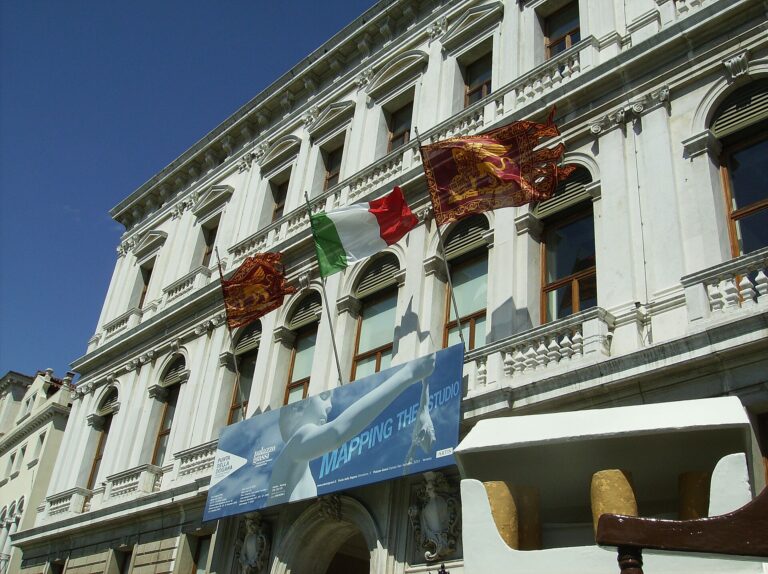
The Scuola Grande di San Rocco is situated near the Campo San Rocco in the San Polo district of Venice, a few minutes’ walk from the Rialto Bridge. The building is a large, four-story Renaissance structure with a façade that is relatively restrained compared to its elaborate interior. Its placement in central Venice means it is accessible on foot but within a dense urban fabric typical of the city.
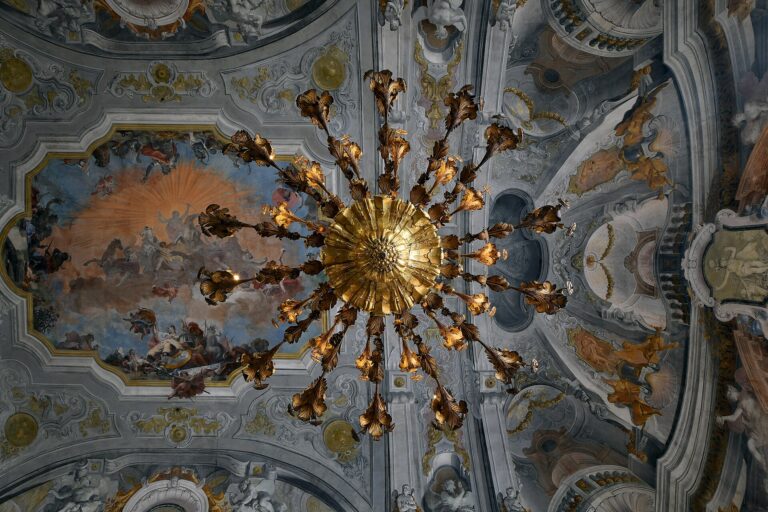
The interior layout follows a traditional scheme for a Venetian confraternity building, featuring a large meeting hall on the ground floor, an upper salle for official functions, a chapel, and ancillary rooms. The building retains much of its original Renaissance architecture and decorative elements, including elaborate ceiling coffers and wooden furnishings.
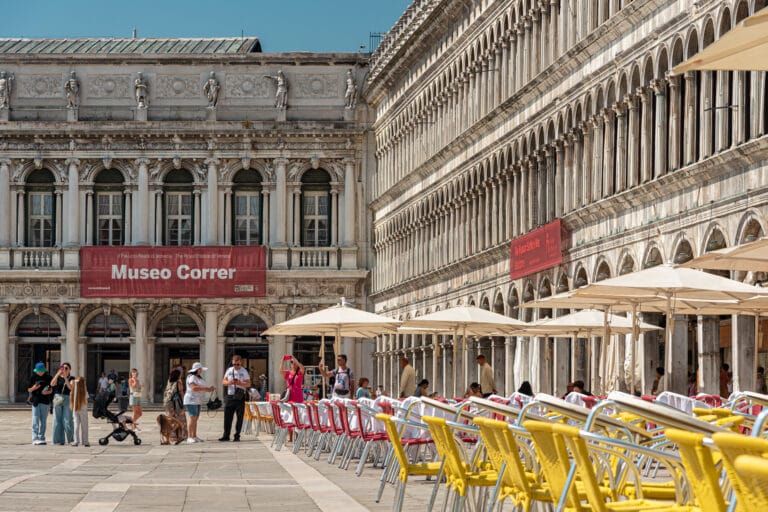
The setting contributes to its atmosphere, as visitors often move through quiet canals and narrow streets into this historic venue. Although the external environment is typically lively and can be crowded with tourists, inside the building the mood is often noticeably more contemplative, encouraging close engagement with Tintoretto’s art.
Practical Information
Visitors planning to explore the Scuola Grande di San Rocco should check the official museum website before visiting, as details regarding opening hours, admission policies, guided tours, audio guides, and accessibility may change or include specific conditions. The museum is a popular attraction, so considerations around booking in advance or potential crowding during peak tourist seasons may be warranted.
The museum is suitable for visitors interested in Renaissance art, Venetian history, and religious confraternities. While the space is generally manageable, those with mobility concerns should verify information about stairs and accessibility.
It may be helpful to allocate enough time to see the entire Tintoretto cycle, as the paintings are extensive and dispersed across multiple floors and rooms. Photography rules may be in place to protect the artwork, so visitors should be prepared to observe those restrictions.
Why Visit
The Scuola Grande di San Rocco offers a focused experience of Renaissance art in a setting remarkably close to its original context. Unlike galleries that have gathered art collections from various sources, this museum presents one of Venice’s significant artistic sites with artworks created for the space they inhabit. This allows visitors to observe Tintoretto’s paintings in their intended setting, which can convey meanings and relationships that can be lost in isolated presentations.
Art enthusiasts will find depth in studying Tintoretto’s work here—his powerful storytelling through painting, his mastery of chiaroscuro, and the scale of his involvement in this project are all impressive. The building itself adds substantial interest, being both an architectural monument and a historical testimony to the social and religious life of Venice in the 16th century.
At the same time, the museum may feel specialized and less varied than larger art museums; if a visitor’s interest is not aligned with either Venetian art or confraternity history, the subject matter can be quite specific. The emphasis is primarily on religious narrative scenes and their theological dimensions, so visitors looking for a broader or more varied collection might find the experience narrow.
In summary, the Scuola Grande di San Rocco holds a strong place in Venice’s cultural landscape due to its unique integration of art and architecture, and its importance for understanding Tintoretto’s contribution to Renaissance painting. It offers a chance to engage deeply with a historic Venetian institution through its surviving artistic treasures. Careful planning is advised to fully appreciate the scale and depth of the display, and visitors should consult the museum’s official resources for practical details before making arrangements.