Australian Age of Dinosaurs
Natural History Museums · Winton, Australia. The Australian Age of Dinosaurs is a natural history museum focused on dinosaur fossils and paleontological research, located in Winton, Queensland. This institution stands out for its specialization in the dinosaurs that once roamed…
Best forMuseum lovers, culture travelers, first-time visitors
Setting / nearbyWinton, Australia
Overview
The Australian Age of Dinosaurs is a natural history museum focused on dinosaur fossils and paleontological research, located in Winton, Queensland. This institution stands out for its specialization in the dinosaurs that once roamed Australia during the Mesozoic Era, particularly the Cretaceous period. Rather than presenting a broad sweep of prehistoric life, the museum is centered on ongoing excavations, fossil preparation, and scientific study related to unique finds from the surrounding area.
Visitors to the Australian Age of Dinosaurs can expect an experience rooted in original fieldwork and the interpretation of significant dinosaur specimens found locally. The museum aims to illuminate the prehistoric ecosystems of Australia, a continent whose dinosaur record is less extensive compared to other regions but growing steadily through dedicated exploration. Situated in Winton, a rural town well-known for its dinosaur fossils, the museum plays a distinct role in both public education and scientific contribution within paleontology.
Collection Highlights
The core of the museum’s collection centers around the fossils and skeletal reconstructions of Cretaceous dinosaurs discovered around Winton. Specimens include large sauropods like the newly described species Australotitan cooperensis, claimed to be among the largest dinosaurs in Australia. The museum’s displays feature substantial skeletal mounts, partial skeletons, and fossilized bones that provide insight into these giants’ size, structure, and environment.
Alongside the sauropods, the collection contains remains from theropods, ornithopods, and other dinosaur groups that inhabited the region millions of years ago. Most of these fossils come from the Winton Formation, a significant sedimentary deposit rich in dinosaur material. The museum not only exhibits these fossils but also integrates evidence about their geologic context, helping visitors understand how these creatures lived and died.
One distinctive aspect is the active fossil preparation laboratory viewable to the public. Here visitors can observe the painstaking work of cleaning, conserving, and reconstructing fragile fossils. This transparency allows an understanding of the scientific process behind the displays rather than treating specimens as static artifacts.
The museum also holds smaller fossil finds such as teeth, footprints, and plant material, which complement the skeletal mounts. These elements collectively offer a rounded picture of dinosaur life and the ancient environment, emphasizing the region’s importance as one of Australia’s best dinosaur fossil localities.
Building and Setting
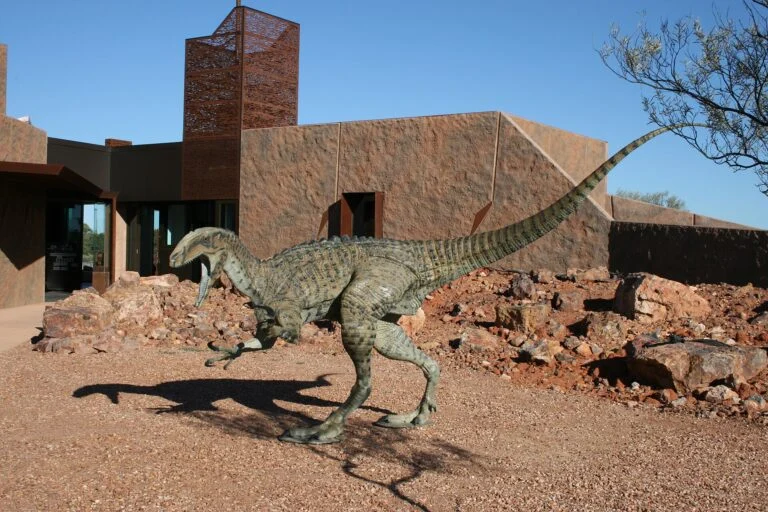
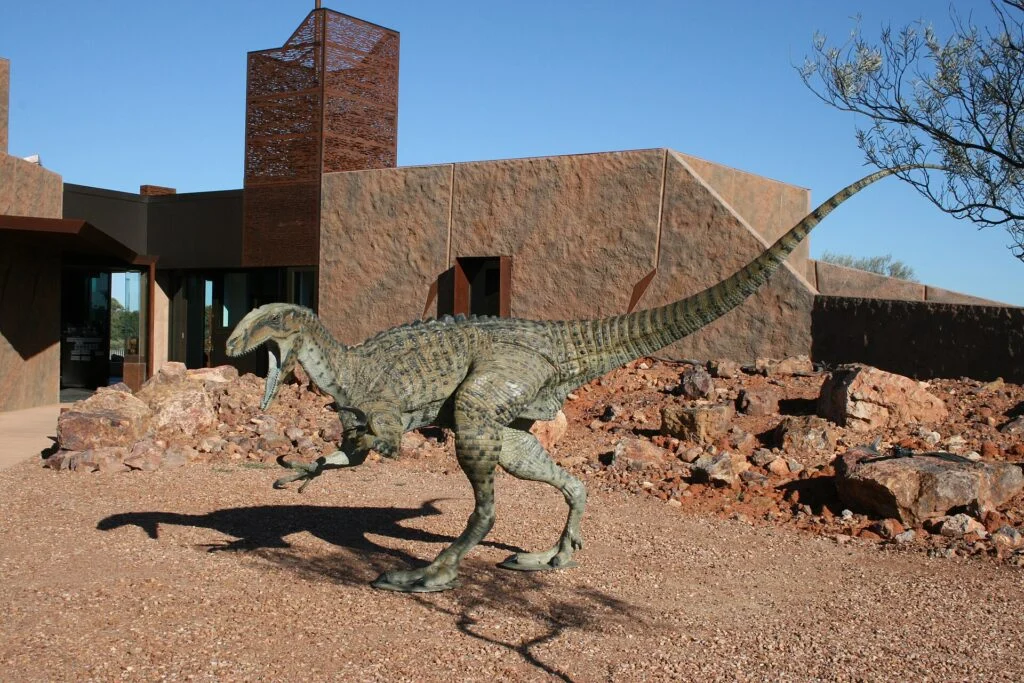
The Australian Age of Dinosaurs is located just outside Winton’s town center, occupying a purpose-built facility designed with its scientific and educational mission in mind. The building itself is straightforward and functional, largely focused on providing ample space for exhibits, research laboratories, and visitor facilities.
The region around Winton is part of Queensland’s Outback, featuring open plains and a dry, expansive landscape. This setting reflects the fossil beds where much of the museum’s collection originates. While the location is somewhat remote, this also adds authenticity to the experience, connecting the museum’s indoor fossil displays with the natural environment where these dinosaurs once lived.
The museum site includes an outdoor area with a large dinosaur skeleton mount visible from outside, offering a striking introduction even before entering. It is a reminder of the scale and presence these animals had in prehistoric times. Visitors should be aware that the setting is rural with limited urban infrastructure nearby, which can influence trip planning.
Practical Information
For anyone planning a visit, it is advisable to verify access details directly on the official Australian Age of Dinosaurs website. Information such as opening hours, potential need for advance booking, admission prices, and the availability of guided tours or educational programs can vary seasonally or due to operational considerations.
Given the rural location, transport arrangements should be made with care. Public transport options may be limited, so private vehicle access is likely the easiest. The museum grounds and exhibits are designed to accommodate a range of visitors, but checking current accessibility provisions ahead of time is sensible for those with specific mobility needs.
Visiting the museum typically involves walking through various exhibition spaces and can include watching fossil preparation sessions. The experience may appeal to a wide range of visitors, from families with children curious about dinosaurs to adults interested in natural history and paleontology. Exhibits are generally presented with clear descriptions, avoiding overly technical language while still respecting the scientific complexity of the material.
Why Visit
The Australian Age of Dinosaurs offers a focused glimpse into a chapter of prehistory that is less visible in many natural history institutions, emphasizing Australia’s dinosaur heritage. Visitors interested in paleontology will find value in seeing original fossil specimens uncovered from local digs, accompanied by explanations that connect these fossils to the broader story of dinosaur evolution and ecology.
The presence of an active lab where fossils are prepared and studied adds a dynamic element to the visit, distinguishing the museum from places that display purely finished exhibits. This ongoing scientific work can spark curiosity about the methods and challenges of uncovering ancient life from rock and earth.
While not an urban cultural destination, the museum brings a scientific subject to life in a rural context, tying local geology and landscape with the global fascination with dinosaurs. It suits visitors who are comfortable traveling to less crowded locations and who appreciate museums that foreground research and discovery alongside educational storytelling.
The depth of the collection might not compare to larger natural history museums with diverse global fossils, but it excels in highlighting Australia's regional paleontological narrative. Those who embark on a visit should see it as an opportunity to explore a meaningful slice of dinosaur history within the unique environment where these fossils were actually found.
In summary, the Australian Age of Dinosaurs in Winton is a specialized natural history museum that offers insight into Australia’s Mesozoic creatures through detailed study and display of local fossils. It combines scientific research with public engagement, providing a clear window on the dinosaurs that once roamed the continent. Planning ahead is advisable due to its remote setting and particular operational aspects, but the museum rewards both dinosaur enthusiasts and general visitors interested in natural history with its focused, well-presented collections and active research elements.