Museo di Capodimonte Review
Art Museums · Naples, Italy. The Museo di Capodimonte in Naples is housed within the Palace of Capodimonte, a grand Bourbon residence originally commissioned in the 18th century as a hunting lodge and royal retreat. Construction of the palace…
Art Museums · Naples, Italy. The Museo di Capodimonte in Naples is housed within the Palace of Capodimonte, a grand Bourbon residence originally commissioned in the 18th century as a hunting lodge and royal retreat. Construction of the palace…
Best forMuseum lovers, culture travelers, first-time visitors
Review focusCollections, visitor experience, and practical planning
Historical Context
The Museo di Capodimonte in Naples is housed within the Palace of Capodimonte, a grand Bourbon residence originally commissioned in the 18th century as a hunting lodge and royal retreat. Construction of the palace began in 1738 under Charles of Bourbon, who intended it to contain the Farnese family art collection, which he inherited through his mother. The building later became a royal palace and has undergone various adaptations throughout its existence, including use as a military barracks and a museum space. Since the mid-20th century, the palace has served primarily as a public museum.
The Museo di Capodimonte has grown to encompass one of Italy’s most significant art collections, with strong roots in Neapolitan cultural history. The museum’s establishment reflects Naples’ historical prominence as a European artistic and political center, particularly during the Bourbon dynasty. Many works in the collection were accumulated or commissioned by the Bourbon kings, fostering an intersection of local and broader Italian artistic traditions. This institution remains a key site for understanding southern Italy’s artistic heritage, as well as Renaissance and Baroque art across Italy and Europe.
What You See on Arrival
The museum occupies a considerable space within the Palace of Capodimonte, situated on a hilltop overlooking Naples and its surroundings. Visitors approaching the site encounter a large, formal palace exterior, characterized by its classical lines and muted stone façade, which contrasts with the urban and coastal views that surround it. The palace’s setting within an extensive park adds a layer of distance from the city below, giving a somewhat removed, contemplative atmosphere.
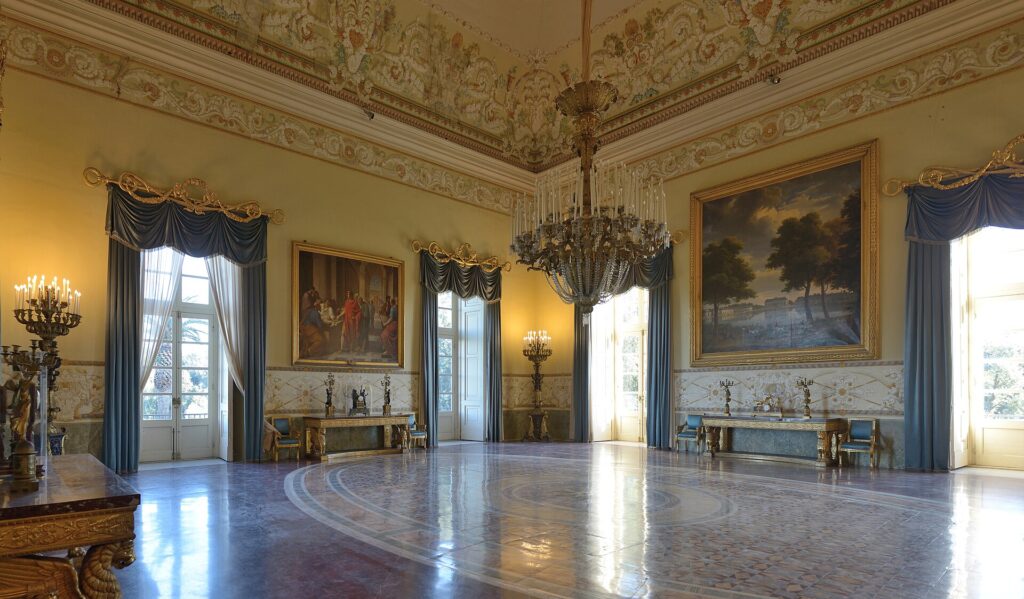
Upon entering, visitors encounter a spacious and orderly interior layout, with galleries arranged over several floors and wings of the palace. The architecture retains its historical elements—such as decorative ceilings and grand staircases—while repurposed as exhibition spaces. The museum’s identity aligns closely with its royal origin, with much of the display designed to emphasize the context of royal patronage and collecting practices. Visitors can expect a steady transition from the palace’s architectural grandeur to the artworks it houses. This approach anchors the museum’s character as a site that balances art appreciation with historical narrative.
Highlights and Key Exhibitions
The Museo di Capodimonte’s collection is extensive, with strengths spanning from Renaissance masterpieces to 18th-century Neapolitan painting. One of the defining features of the collection is its depth in Italian Renaissance and Baroque art. Key names represented include Raphael, Titian, Caravaggio, and Annibale Carracci, whose works are among the most well-known attractions. For example, the museum houses Raphael’s “Portrait of a Cardinal,” a work valued for its refined technique and connection to papal history, as well as Titian’s “Danaë,” which highlights the artist’s skill in mythological subjects.
Caravaggio’s presence in the collection is notable for providing insight into one of the most influential Baroque painters. The “Flagellation of Christ” is a particularly significant work, displaying Caravaggio’s dramatic use of chiaroscuro and realistic figures. This piece stands as an important reference point for Baroque religious painting and influences on later generations.
In addition to those staples, the Museo di Capodimonte is recognized for its strong base of Neapolitan painting, which traces a local school often overshadowed in broader Italian art narratives. Collectors and curators have highlighted the works of Luca Giordano and Francesco Solimena, major figures in Naples’ own artistic development. Their paintings demonstrate exuberant color, dynamic composition, and themes that speak to the Bourbon court and Neapolitan society of their time. The museum’s holdings provide a nuanced picture of regional art history.
The collection also features a varied assembly of decorative arts, including ceramics, textiles, and furniture, particularly from the Bourbon period. These offer a complement to the paintings, forming a fuller picture of court tastes and material culture in southern Italy. In the palace’s historic apartments, visitors get a chance to explore this aspect alongside visual art, grounding the works within lived experience and domestic context.
While the Renaissance and Baroque sections dominate, the museum also includes important works from later periods, including 19th-century painting. This ensures the institution does not focus exclusively on older works but shows the continuity of artistic activity in Naples and its evolving cultural ambitions.
Visitor Experience
The Museo di Capodimonte invites visitors who are interested in complex historical narratives as much as in the artwork itself. The museum’s size and the distribution of its collections across multiple floors and wings mean that it requires deliberate pacing. This is not a quick walkthrough experience but one that benefits from some prior knowledge or curiosity about Italian art history, particularly Renaissance and Baroque painting.
Interpretative materials tend to focus on art historical contexts and the museum’s royal origins. Labels and displays provide factual and stylistic information, but do not always offer broad thematic narratives linking sections coherently for all audiences. This means visitors with little background may find parts of the museum somewhat challenging to navigate intellectually. On the other hand, more experienced art enthusiasts or those with particular interests in Neapolitan history will find considerable value.
The physical layout encourages a progression from grand historical apartments to gallery spaces where the paintings are hung in traditional formats. This creates a flow that gradually transitions from decorative to primarily artistic experience. However, some visitors might find the scale of the museum overwhelming, especially if visiting during busier times when crowds can be noticeable. The palace’s architectural elements remain intact in many parts, adding atmosphere but occasionally limiting exhibition space and flexibility. Lighting and display strategies aim to balance preservation with viewing conditions but can sometimes feel uneven.
Families and those seeking interactive or highly modern interpretive approaches may find the Museo di Capodimonte less directly engaging compared to other contemporary art museums, though the museum does concentrate on well-known works that have broad appeal.
Tickets, Access, and Planning
Before planning a visit to the Museo di Capodimonte, prospective visitors should consult the official website for up-to-date information on opening hours, admission policies, discounts, accessibility services, and any requirements such as advance booking. Details including guided tours or audio guide availability, which can substantially affect the visitor experience, vary and are best confirmed in advance.
Access to the museum involves reaching the hilltop location. While there are public transport options and road access, visitors should be prepared for some uphill approach or walk through the park area that surrounds the palace. This may be a consideration for those with mobility issues. The museum’s physical layout and the historic nature of the building may also impact accessibility within the galleries.
Because of the museum’s size and collection density, visitors may want to plan which sections are their priority in advance. It is possible to spend several hours moving through the galleries, so allocation of time is a practical consideration. In peak tourist seasons, the volume of visitors to Naples and its cultural sites may lead to more congested conditions.
Final Verdict
The Museo di Capodimonte stands as a significant institution within Naples and Italy’s wider museum landscape due to its strong historical associations and rich collections. Its foundation as a Bourbon palace and repository for the Farnese collection grants it a distinctive identity, reflected in both the art on display and the setting itself. For those particularly interested in Renaissance, Baroque, and Neapolitan art, the museum offers a substantive experience with numerous masterpieces and detailed insights into courtly culture.
However, the museum is far from a lightweight or easily digestible attraction. Its considerable size, complex holdings, and sometimes dense interpretive approach mean it best suits visitors with a determined interest in art history or local heritage. Casual or less experienced museumgoers may encounter challenges engaging fully with the breadth of material, especially without supplementary interpretation.
Architectural and environmental factors both enhance and complicate the visit: the grand palace context enhances understanding of the collection’s origins but can limit gallery design and visitor flow. Planning ahead and managing expectations about time and access will enhance appreciation.
Overall, the Museo di Capodimonte remains a valuable destination for visitors willing to engage with its layers of history and art. It affords a unique perspective not only on some of Italy’s finest painters but also on the role of art collecting and cultural politics in southern Italy. For those exploring Naples beyond its more frequented attractions, it offers an essential, if demanding, window into the city’s artistic heritage.