Benaki Museum Review
Archaeology Museums · Athens, Greece. The Benaki Museum stands as one of Athens’ most significant cultural institutions, playing a pivotal role in preserving and presenting Greek history, art, and cultural heritage. Founded in 1930 by Antonis Benakis, a passionate…
Archaeology Museums · Athens, Greece. The Benaki Museum stands as one of Athens’ most significant cultural institutions, playing a pivotal role in preserving and presenting Greek history, art, and cultural heritage. Founded in 1930 by Antonis Benakis, a passionate…
Best forScience, technology, hands-on learning
Review focusArchaeological collections, context, and visitor planning
Historical Context
The Benaki Museum stands as one of Athens’ most significant cultural institutions, playing a pivotal role in preserving and presenting Greek history, art, and cultural heritage. Founded in 1930 by Antonis Benakis, a passionate collector and philanthropist, the museum embodies a comprehensive vision of Greek identity through its vast and diverse collections. The museum's mission extends beyond classical antiquities; it embraces a wide chronological range, from prehistoric times through Byzantine and Ottoman periods to modern Greek history. This breadth provides a deep understanding of the evolution of Hellenic culture in its multifaceted forms, encompassing artistic, social, and everyday dimensions. Housed primarily in a neoclassical former mansion in the heart of Athens, the Benaki Museum has developed a reputation for its rich assemblage of artifacts, artworks, textiles, and decorative arts that challenge the conventional narratives of Greek art history. The museum effectively bridges ancient heritage with contemporary cultural dialogues, making it vital for understanding Greece’s national identity as well as its connections to Mediterranean and broader global contexts.
What You See on Arrival
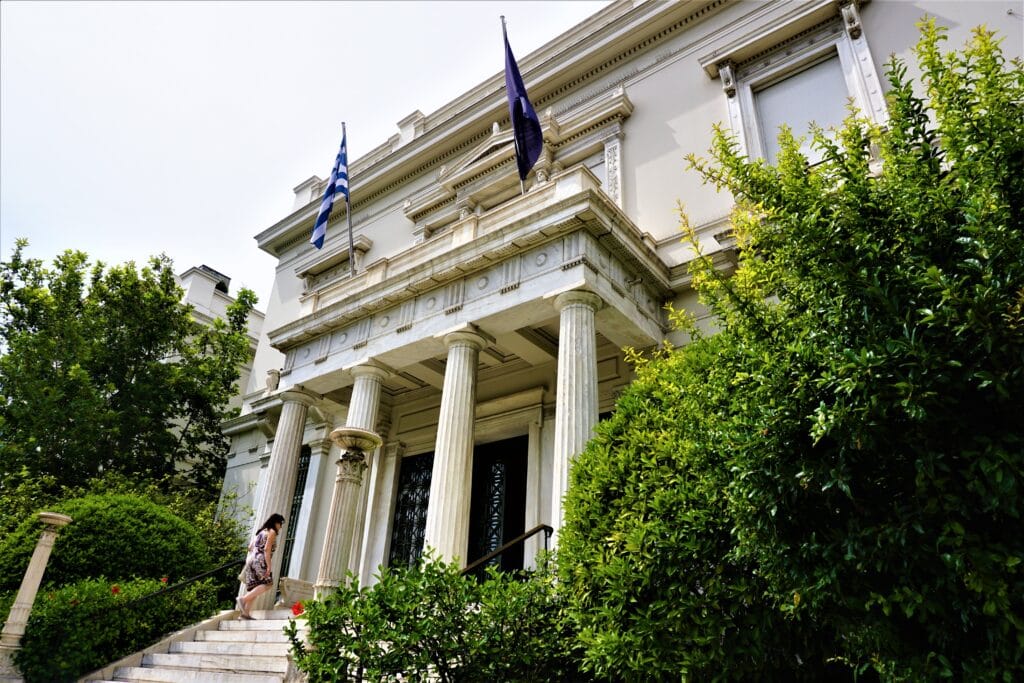
Approaching the Benaki Museum, visitors are immediately struck by the building’s elegant neoclassical façade, which conveys both grandeur and approachability. The museum is situated in a lively central neighborhood of Athens, blending seamlessly into the historic urban fabric with its stately columns and symmetrical design. The entrance is marked by subtle signage, encouraging inquisitive exploration rather than ostentation. Upon entering, a tranquil courtyard often serves as a moment of respite before the museum experience unfolds further. The interior spaces initially reveal a well-curated layout that merges traditional architectural elements with thoughtfully modernized exhibition spaces. The reception and information area are welcoming, with clear guidance available for navigating the museum’s extensive collections. The overall visual impression on arrival is one of refinement mixed with accessibility, setting a tone for a journey that is at once educational, inspiring, and reflective of Greece’s layered cultural identity.
Highlights and Key Exhibitions
The Benaki Museum’s collection offers a multifaceted narrative of Greek cultural history that spans millennia but does not focus exclusively on the classical Greece often emphasized in Athens. Among the highlights is its formidable array of artifacts from the prehistoric to the late Byzantine periods. One of the museum’s strengths lies in its extensive collection of Byzantine icons and ecclesiastical art, which provides crucial context to Greece’s medieval past and Orthodox Christian tradition. Another highlight is the Ottoman-era collection, including fine examples of textiles, costumes, and household items, illustrating the cultural synthesis that shaped much of Greece’s historical experience under Ottoman rule. The museum also houses an impressive section on modern Greek art and design, showcasing how contemporary artists engage with their historical roots.
Not confined solely to ancient relics or paintings, the museum’s ethnographic displays emphasize everyday life in Greece across centuries, featuring traditional costumes, jewelry, and tools that offer an intimate glimpse into rural life and local customs. This diversity of subject matter helps to foster a fuller understanding of the complexities and continuities in Greek culture. The museum’s presentation balances scholarly integrity with accessible interpretative materials, including detailed labels, multimedia installations, and informative guides, enhancing visitor comprehension without overwhelming.
Visitor Experience
While the Benaki Museum caters to a broad audience, from scholars and art enthusiasts to casual visitors and families, the experience is enriched by the museum’s clear curatorial voice and thematic coherence. The galleries are spacious and well-lit, though some visitors may find the layout somewhat labyrinthine, requiring attentiveness to signage for optimal navigation. The museum excels in providing multilingual explanations and offers a variety of educational programs, lectures, and workshops, which complement the exhibitions. Staff members are generally regarded as knowledgeable and helpful, contributing positively to the overall visitor experience.
For those particularly interested in specific historical periods or artistic styles, the museum’s detailed catalogues and publications are a valuable resource, and the on-site bookshop offers related literature and souvenirs that reflect the institution’s ethos. Visitor amenities such as rest areas and cafés are available, though they are modest in scale in keeping with the museum’s focus on cultural substance rather than commercialism. The absence of excessive crowds is often noted as a benefit, enabling a more contemplative engagement with the exhibits.
Tickets, Access, and Planning
Ticketing at the Benaki Museum is straightforward, with options for single admission or combined tickets that grant access to its multiple branches spread around Athens. Pricing is reasonable relative to the breadth and quality of the collections, and concessions are available for students, seniors, and groups. Visitors are advised to check the official website in advance for any temporary changes in opening hours or special entry requirements.
The museum is situated in central Athens and is easily reachable by public transportation, including metro and bus services, making it accessible to both local and international visitors. Wheelchair access is thoughtfully provided, though some areas within the historic building may pose minor challenges due to architectural constraints typical of older structures. Those with mobility concerns or other accessibility needs are encouraged to contact the museum ahead of their visit for tailored guidance. Photography is usually permitted in certain areas but often with restrictions to protect delicate objects. The museum’s digital presence includes virtual tours and online resources that can be useful for those planning their visit or unable to attend in person.
Final Verdict
The Benaki Museum is a cornerstone of Athens’ cultural landscape, distinguished by its expansive and inclusive portrayal of Greek history and art. Its collection is remarkable for its chronological and thematic range, moving beyond the orthodox classical emphasis to embrace Byzantine, Ottoman, and modern Greek cultural expressions. This breadth, combined with carefully considered exhibitions and interpretative materials, makes it an essential destination for anyone seeking a deeper understanding of Greece’s rich and varied heritage. While the logistics of navigation within the building may demand some effort, this minor inconvenience is outweighed by the wealth of knowledge and artistry on display.
Its accessibility, educational programming, and thoughtful presentation render the Benaki Museum not only a repository of artifacts but a dynamic center for cultural dialogue. Whether one’s interest lies in ancient civilizations, religious art, folk traditions, or contemporary interpretations, the museum offers a rewarding and nuanced experience. In a city saturated with iconic historical sites, the Benaki Museum provides a distinctive and enriching complement, ensuring that visitors leave with a more comprehensive appreciation of Greece’s cultural identity across time. It is highly recommended for both first-time visitors to Athens and seasoned cultural explorers seeking to deepen their engagement with the multiplicity of Greek heritage.