Museo del Novecento Review
Art Museums · Milan, Italy. Museo del Novecento, located in Milan, Italy, stands as a dynamic institution dedicated to the art and cultural movements of the twentieth century. Established to capture the transformative spirit of the century, this museum…
Art Museums · Milan, Italy. Museo del Novecento, located in Milan, Italy, stands as a dynamic institution dedicated to the art and cultural movements of the twentieth century. Established to capture the transformative spirit of the century, this museum…
Best forScience, technology, hands-on learning
Review focusExhibits, interpretation, visitor flow
Historical Context
Museo del Novecento, located in Milan, Italy, stands as a dynamic institution dedicated to the art and cultural movements of the twentieth century. Established to capture the transformative spirit of the century, this museum fills a critical niche in a city renowned for its design, architecture, and historical legacy. Milan, deeply intertwined with both the flowering of modernism and the upheavals wrought by two World Wars, provides a fitting backdrop for a museum dedicated to the rich and often turbulent developments of the 1900s. Since its inauguration, the Museo del Novecento has aimed to present a comprehensive overview of Italian and international modern art, emphasizing dialogue between various artistic currents, from Futurism to Abstract Expressionism and beyond. Housed inside the Palazzo dell’Arengario, a governmental building originally built during the Fascist era, the museum’s very walls echo the socio-political transformations that shaped much twentieth-century art. Thus, it is not merely a repository of art but a place where history and creativity intersect to provide context and deeper understanding.
What You See on Arrival
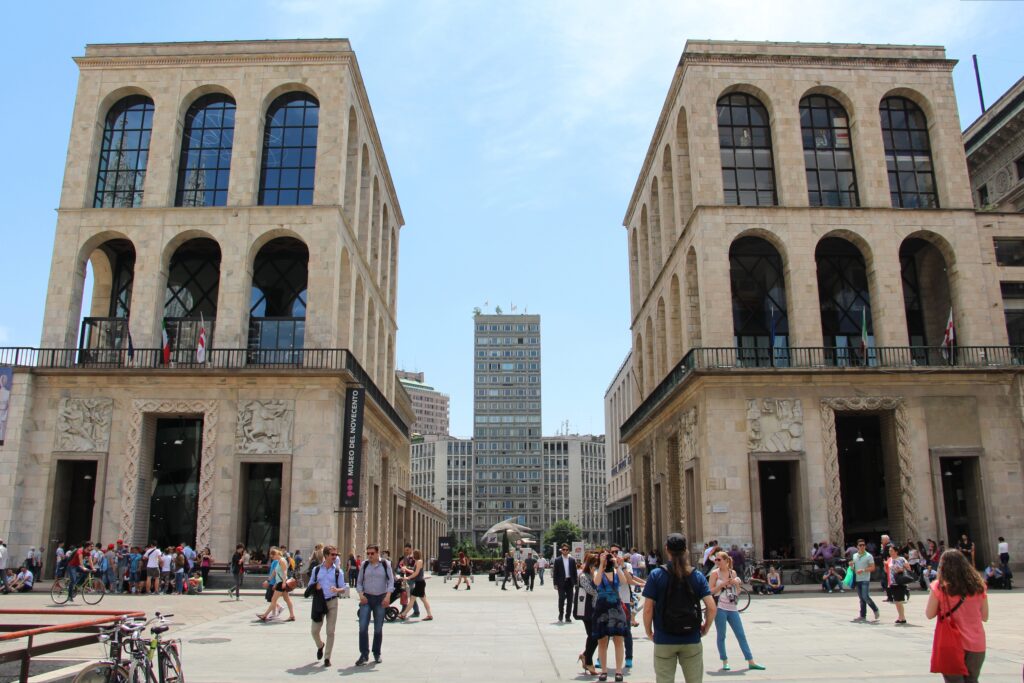
The museum’s location in Piazza del Duomo places it at the cultural heart of Milan, allowing visitors to experience an immediate connection to the city’s vibrant urban atmosphere. On arrival, the museum’s façade reflects the imposing and historic character of the Palazzo dell’Arengario, a structure marked by its austere architecture and streamlined symmetry, emblematic of its fascist-era origins. The entrance to the Museo del Novecento is situated on the ground floor, where visitors are welcomed into a modern, light-filled lobby that contrasts gently with the building’s external austere appearance. From here, the layout leads upwards via escalators or lifts into the exhibition galleries, set across multiple floors. The internal design aims to provide an accessible route through a chronological and thematic journey of twentieth-century artworks. Large windows offer glimpses of the Piazza del Duomo, lending a continuous sense of place and history even as one moves through the museum’s modern interiors.
Highlights and Key Exhibitions
Within the exhibition spaces, the Museo del Novecento organizes its vast collection in a way that traces the evolution of artistic innovation and cultural movements throughout the century. The focus is primarily Italian artists, many of whom played pivotal roles in early modernism and post-war avant-garde movements. An exceptional highlight is the museum’s extensive collection of Futurist works, a movement born in Milan itself, characterized by its fascination with speed, technology, and the energy of modern life. Works by Umberto Boccioni, including striking sculptures and paintings that capture kinetic energy and fragmented forms, are central to the collection, offering visitors a firsthand look at Futurism’s revolutionary ideals. Another cornerstone is the presence of key figurative and abstract artists from the mid-century, such as Giorgio de Chirico and Lucio Fontana, whose spatial and conceptual innovations challenged artistic norms. The museum also dedicates substantial space to Italian post-war artists who grappled with the legacies of fascism and warfare, reflecting broader European cultural dialogues. International artists appear less frequently but are present where their work intersects with Italian themes or movements. Throughout the museum, thematic clusters explore topics such as social realism, surrealism, and abstraction, allowing visitors to comprehend the diverse avenues that twentieth-century art embraced.
Visitor Experience
The museum’s visitor experience balances educational enrichment with artistic appreciation. Interpretative labels and multimedia aids help contextualize the artworks for a wide range of visitors, from scholars to first-time museum-goers. The flow through the galleries encourages a paced progression through time and style, though some visitors might find the density of material overwhelming if attempting to engage with the entire collection in one visit. The lighting and spatial arrangement of the galleries enable close yet respectful viewing of the artworks, many of which include delicate and experimental mediums. The museum’s staff receive praise for being knowledgeable and approachable, capable of assisting with inquiries or guiding visitors through the collection. Additionally, there is an underlying commitment to accessibility, with audio guides and some tactile elements available for visitors with different needs. The museum’s location facilitates visitors spending additional time in the vibrant city center of Milan before or after the visit, enhancing the overall cultural outing.
Tickets, Access, and Planning
Planning a visit to Museo del Novecento typically involves consideration of its ticketing structure and opening hours, which align with standard cultural institution practices in Italy. Admission prices are moderate, and reduced rates or free entry may be available for EU citizens under a certain age, residents, or other eligible groups, such as students or seniors. The museum offers a variety of ticket types, often including options for temporary combined entry with other Milanese museums or timed tickets to manage visitor flow. For international visitors, additional language support is usually provided through available printed materials or audio guides. Access to the site accommodates those with mobility challenges, featuring elevators and step-free routes throughout the building. The museum’s proximity to Milan’s central transport hubs ensures ease of arrival, whether by metro, tram, or walking from major landmarks like the Duomo or Galleria Vittorio Emanuele II. It is advisable to check the official website before visiting for updates on opening hours, ticketing conditions, and any planned closures or changes in policy.
Final Verdict
Museo del Novecento emerges as a pivotal cultural venue within Milan’s dense museum landscape. It successfully conveys the complex narrative of twentieth-century art, balancing Italian cultural specificity with broader international dialogues. The museum’s housing within a historically charged building adds layers of meaning and contextual resonance to its collection that few institutions can replicate. While its focus leans strongly toward Italian modern and contemporary art, the quality and range of works on display, especially the Futurist and post-war pieces, provide compelling insights into the era’s artistic developments and socio-political upheavals. The visitor experience is generally positive, with thoughtful curation and accessible interpretative resources, though the breadth of the collection may require a focused approach to avoid sensory overload. Its central location in Milan’s most iconic square further enhances its appeal, creating a convenient and enriching cultural attraction for museum enthusiasts, scholars, and casual visitors alike. Overall, Museo del Novecento deserves recognition as a major repository of twentieth-century artistic heritage and a testament to Milan’s enduring status as a hub of creative innovation and historical reflection.